


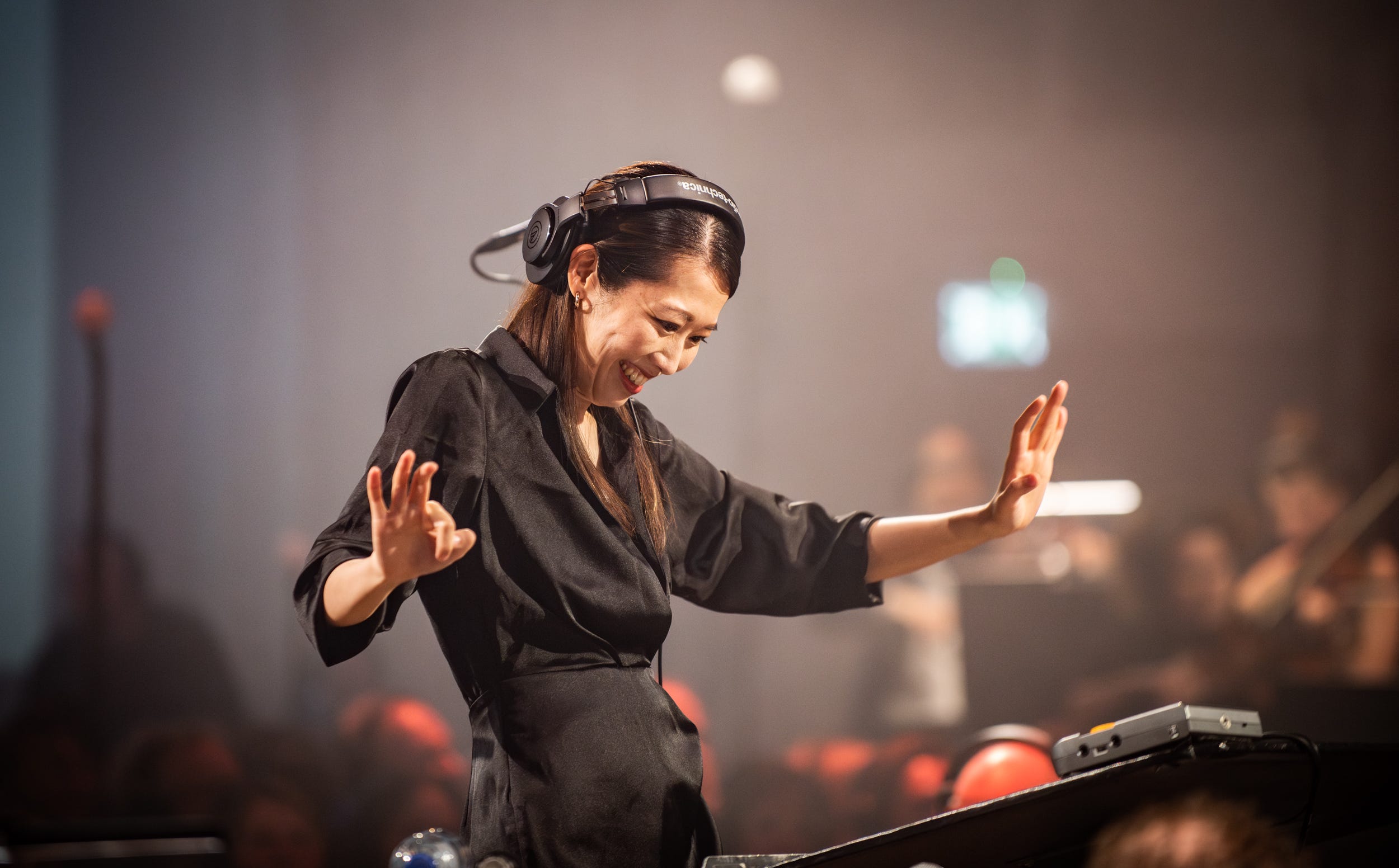
One of the albums that has caught my ear in recent weeks is the new release by the Metropole Orkest, titled “Arakatak“. Although I’ve been listening to a lot of small ensembles and solo albums this year, this band—with its sheer grandeur—brought an interesting contrast and a much-needed listening balance. Even though we’re talking about an ensemble with an impressive 80-year tradition and top-tier professionals, I couldn’t help but wonder how difficult and challenging it actually is to bring everything into a cohesive whole, when you have an orchestra of symphonic proportions at your disposal. And on top of that—eight pieces by eight different composers on a single album.
That’s why I found it particularly interesting to talk about this release with conductor Miho Hazama, who has been on a remarkable rise in recent years and has also been one of the orchestra’s regular guest conductors for some time now. She composed one of the tracks, while the other contributors featured on the album include Vince Mendoza, Donny McCaslin, Tineke Postma, Mark Guiliana, Shai Maestro, Louis Cole, and Morris Kliphuis. We also briefly touch on her new album “Frames”, which will be released on Edition Records on April 24.
On the new Metropole Orchestra album, eight different composers are represented, and several compositions have credited arrangers. You are the composer of one track, but the conductor for the entire project. Could you describe your process of working on material that involves so many creators, as well as a large ensemble of instrumentalists?
Before being a conductor, I was a part of producer-team to make sure that we get together a collection of music that could be an album together. On behalf of Metropole Orkest, we commissioned a piece to the composers, but we didn’t have any specific request to each person, so we didn’t know what piece we were going to have until we took a look at scores! Making a decision of which pieces we are going to put together as an album was a long, yet very important process of the producer team.
Then as a conductor — I already knew which pieces to conduct! So, studying the music was easy and comfortable. But as rehearsal went on, I discovered so many new aspects of the amazing compositions we had. The music inspired me (my brain as composer part!), so that I could suggest some balance issues or form (drama-making) issues as a conductor. It was a phenomenal experience.
I still get goosebumps conducting “Arakatak”. This piece has so much depth that I can dig in and in!
You have been working with the Metropole Orchestra for several years. What was special for you about this particular project and album?
It was special that I got to conduct compositions by my heroes!
Also, I have been a big fan of Vince Mendoza since I was in high school. Conducting Vince Mendoza’s piece is so magical. I want to study as much as possible, and his composition still sounds like magic to me.
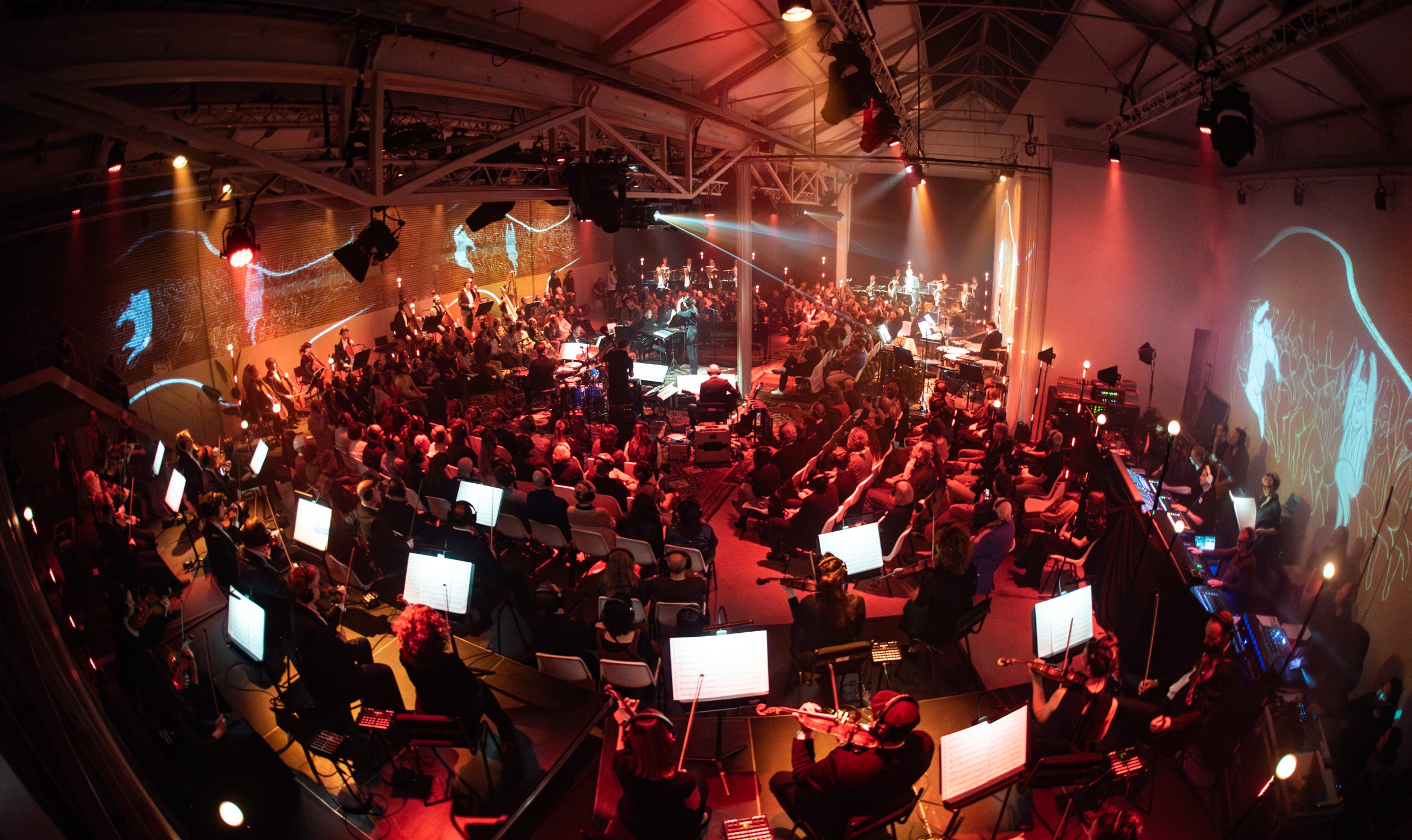
You have extensive experience with big bands of various sizes. What is specific about working with the Metropole Orchestra, considering its scale?
MO’s strength is groove. Everyone can groove. It is usually tough or unfamiliar for strings, harp, classical percussionists to groove - because they are not used to this approach. This orchestra - every single person - can swing and groove!
When discussing influences and musicians who have shaped your work, Jim McNeely (with whom you studied) and Maria Schneider, probably the greatest living jazz conductor, are invariably mentioned. How did they help you form your jazz style and find your own voice?
I studied with Jim McNeely for two years in master’s degree at Manhattan School of Music. Although I was the only student who didn’t have a bachelor’s degree in jazz major before coming to the school, the compositional process Jim taught me was very similar with what I learned from classical music college in Tokyo. That helped a lot. I didn’t have to “improvise” and come up with compositional ideas right away, but spent A LOT OF TIME to sketch, think, get ideas together, and write on scores. “Every note has to have a meaning.” This used to be a motto of my classical composition professor, and it was technically same with Jim. It was very inspiring to see his crazy sketches, ideas and explanations of his works. It was also really meaningful to observe how he made his career, too.
Other heroes, such as Maria, Vince, Gil Goldstein and Mike Holober — I mainly studied their scores. I haven’t really had specific lessons with them.
You come from Japan, live and work in New York, but are increasingly collaborating with European orchestras. How similar—or different—is it to work with big bands in the U.S. versus Europe?
NYC is a distinctive city not only in the US, but in the world. I’ve never seen a city with such high competition for jazz musicians! People in this city also have incredible energy, passion and intensity. I personally can’t keep living in this city for consecutive 5 months, or I would get crazy (haha). I appreciate that energy/pressure, but that’s too intense to keep getting into my life.
Having said that, musicians in NYC are very talented, cool and very practical (rational). They need a conclusion/decision right away, and I have to be clear with my opinion. There is only YES or NO.
On the other hand, European bands need discussions. This doesn’t necessarily mean that you need a conclusion right away. I can’t be that intense in front of European bands, but I would need a lot more time to rehearse.
Your new album “Frames” with the Danish Radio Big Band will be released soon. You’ve mentioned that “This project reflects on the legacy of the Danish Radio Big Band and its former chief conductors, whose musical language has shaped generations of composers and musicians.” What in the history of the Danish Radio Big Band is particularly appealing to you?
Denmark has a very rich jazz history from 1960’s. And I have a privilege to work with the Danish radio big band, who is a good part of the Danish jazz history. A lot of amazing guest artists have played with the band, and amazing people have led the band. They have a fabulous collection of music that is dedicated to them. Learning their musical heritage became a big encouragement and inspiration to me. At the same time, I obviously didn’t want to copy-and-paste the past. So, I studied compositions/music repertoires from 7 former chief conductors of the band and took a time to experiment materials till I “digest” these as a part of my musical language.
I hope the listeners can feel essence of our legacy, but something fresh, too. The other big concept of this album is “unconditional love” - as we love each other, we love music, we lost loved one (Jim McNeely) right before our recording, and we shared so many emotions together. I hope you are going to hear the love we have.
More interviews on Eurojazzist.com:

