


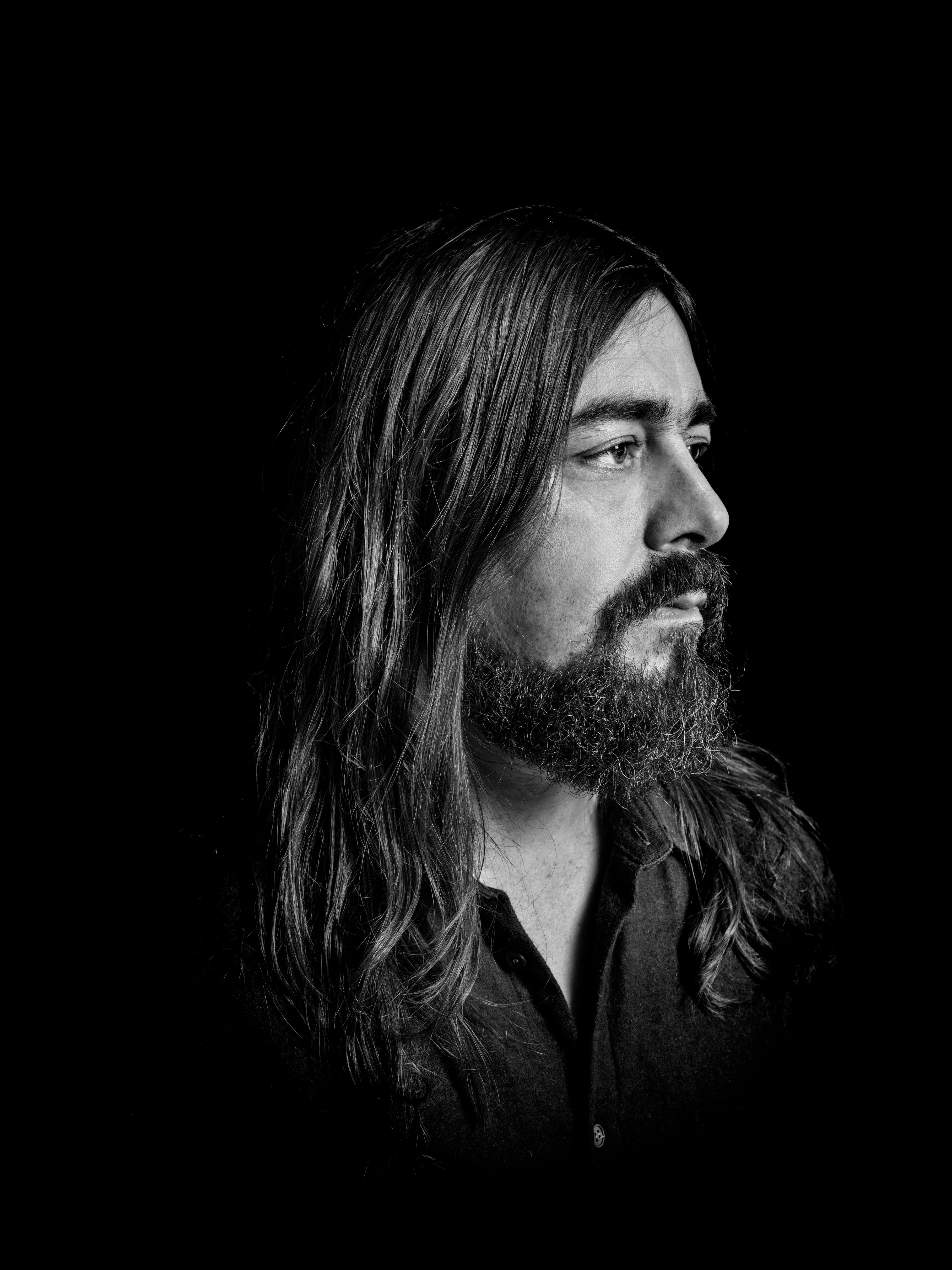
Goran Kajfeš has been among my favorite jazz musicians for a long time. He is involved in numerous projects: he leads Tropiques and Subtropic Arkestra under his own name, and we’ve also heard him with Oddjob, Cosmic Ear, Fire! Orchestra, Angles 9, Gard Nilssen’s Supersonic Orchestra… In short, he is a musician everyone enjoys playing with, and as a composer and arranger he has a refined style at the crossroads of groove/repetition, a retro sound with a touch of the seventies, free jazz, post-bop, and so on.
I previously mentioned him on Eurojazzist in a review of a Cosmic Ear concert, which we will return to later. As for me personally, I first heard him in 2010 on the album Clint by Oddjob. This album was specific precisely for what its title suggests – it featured interpretations of themes from films starring Clint Eastwood. Here we encounter him as a band member, and over the course of his career he has established himself as a strong “team player.” His contribution has always been noticeable, but never imposing – he is not “the guy who steals the show.”
However, he released his first album, Home, back in 2000. “I had a pretty clear idea about the music I wanted to record working in an electronic environment. So, in one way, it was a kind of a pretty extended writing and recording process in the studio, inspired by sound and a mix of my musical inspirations and my roots. I wanted to explore and find ways around the traditional jazz form,” says Goran about his early discographic beginnings.
We return to the album Clint, as well as his later work with Subtropic Arkestra. Although these are stylistically and structurally somewhat different bands, both are characterized by arrangements of compositions by other authors. Goran’s choices are often unconventional, and the interpretations carry a certain “vintage” flavor. In that sense, I was particularly intrigued by how he chooses the pieces he performs. Are these compositions “easier” to arrange, or perhaps precisely those that, through deeper reinterpretation and reconstruction, gain a new shape?
The Swedish trumpeter explains: “It always starts with a direct love for the piece of music, but it was always important for me that I could hear (in my head) the group making an interpretation of it that is connected to the group’s identity and sound. I usually preferred to look for music that wasn’t musically too close to what we were doing. Once I tried to do a version of Louis Moholo, and it sounded way too close to the original and pretty bad, actually, so it ended up in the waste bin. Some recordings are so brilliant in form, sound, and feeling that they shouldn’t be touched, I guess”-
The names of his best-known bands directly evoke tropical landscapes: Tropiques and Subtropic Arkestra. At first glance, one might say that Kajfeš is, in one way or another, fascinated by Africa.
“Well, I wouldn’t say that it is directly connected to a region, more to dreams of being somewhere else, connected to the temperature and mood in my music,” he responds. “I always loved the idea of traveling with the help of music, taking me or us to unknown places. With Tropiques I early on felt that the music had a strong connection to nature, so the name just felt right. And also, Tropiques was a group formed out of certain elements in Subtropic Arkestra that I wanted to explore more deeply and zoom into. So the names were connected in that way, and have actually been a problem sometimes, because the groups get mixed up even if they don’t sound alike.”
During our conversation, we arrive at the point that he first fell in love with African music through Fela Kuti. “And after that it was like opening Pandora’s box – everything from Ethiopian music, Moroccan Gnawa, desert blues, kora from Mali, and yes, basically a never-ending well of extraordinary music that has inspired me in many ways and whose traces you can find in almost all my work”, he says, adding an important experience of playing with Majid Bekkas. “It was a big moment for me, meeting a musician with deep knowledge of music from many countries in Africa: Morocco, Mali, Mauritania, and others.”
Although I have been listening to Goran Kajfeš’s music for years, the idea for this interview came to me after watching a livestream of a Cosmic Ear concert at the Vienna club Porgy & Bess a little over a month ago. On that occasion, I wrote:
As a listener, I had the full sense of witnessing a collective musical statement, without dominant leaders or highlighted soloists, however much I may value some of them as improvisers. Through a series of small gestures or musical figures, Cosmic Ear builds a sound that is more important than any one of them individually, yet at the same time remains intimate, almost private – without the pomp and spectacle one might expect from a lineup of this magnitude.
Now is also the right moment to bring up Cosmic Ear as a topic, as it is his most recent project, featuring some truly outstanding musicians – for me, particularly significant is Mats Gustafsson, while for the band itself the veteran Christer Bothén is of crucial importance. We are aware of his historical experience with Don Cherry, and he is also at the center of the stage in concert settings. “Christer is a force of nature. He is an incredible musician that I felt I had an immediate connection to. Many things in music that I was searching for, he had already explored (laughing). I often think that if I can keep the curiosity and urge to explore and evolve music when I am his age, I will feel blessed. A true inspiration.”
In this band, as in some other projects, Goran Kajfeš also plays keyboards, which again brings us back to that “vintage” aesthetic. I was interested in what kind of relationship he has with this instrument, given that he is primarily a trumpeter. “I wouldn’t see myself as a keyboard player, but I am obsessed with synthesizers and that universe of sound. I spend a lot of time in the studio working with modular synthesizers, and that has opened my ears to hearing in a new way. And also I have used it as a compositional tool, that suggests ideas I feel I wouldn’t be able to come up with otherwise,” explains Kajfeš.
Up to this point, we have already mentioned several overlapping collaborations: musicians on the Swedish scene naturally intersect across numerous projects and play in one another’s bands. All of this gives me the impression that the Swedish scene is quite homogeneous, with a strong collective spirit and mutual support. Still, that is only one side of the coin. “Yes, we are a bunch of musicians who inspire each other to move forward with the music, but I would still say that many days you are by yourself making decisions.”
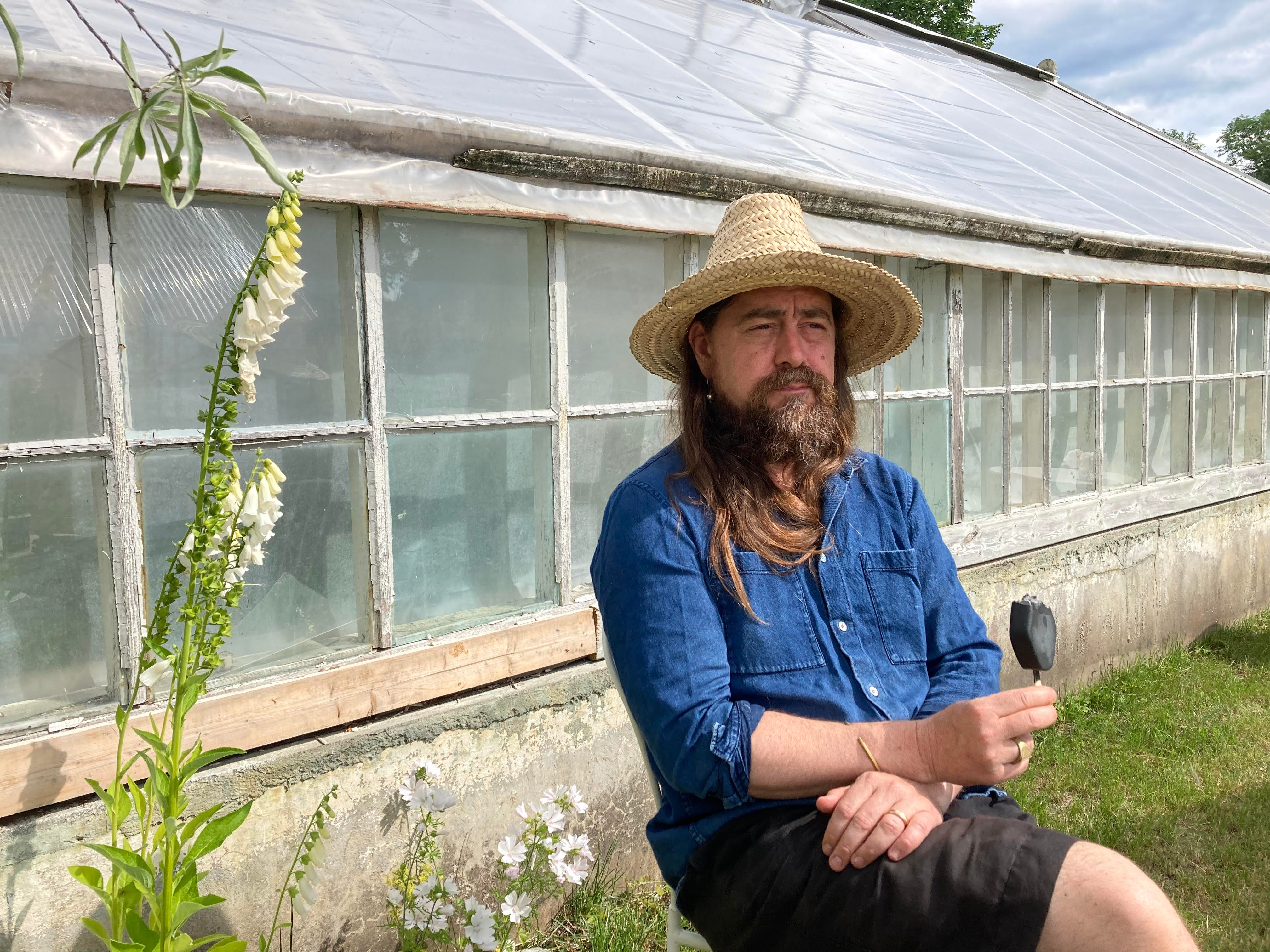
We now slowly move on to “economic topics” and the ever-relevant issue of the sustainability of a jazz musician’s life. In the Balkans, we tend to view Sweden as a welfare state, a place where musicians of different stylistic orientations can feel and live relatively comfortably. While support for non-commercial musical genres does exist, every country in Europe certainly has its own specific circumstances – not to mention individuals who navigate these systems as best they can.
“I have always loved doing many different things, so that has made my life easier in that way,” Goran said. “Writing music for movies, TV, theatre, dance, producing and playing on pop albums, and so on, has helped me make a living from music. And I have always spent part of that money on realizing my own music. But also, we still have some public funding in Sweden, and that has helped me a lot in working with my different solo projects. It would indeed be much harder to make that happen otherwise. I am very grateful for that support.”
In recent years, musicians’ income from streaming services has been a major topic, as well as the question of how artists might connect more directly with their listeners. It is clear that revenue from Spotify and similar platforms is marginal, and the question is often raised: what alternatives work best, and how do musicians build a “fan base” willing to spend money on concert tickets, LPs, and merchandise. “Well, as many of us know by now, streaming generates zero money. It is hard to break even on music that I release, but I see some light on the horizon: more and more listeners realize that if they buy music from me at concerts or on Bandcamp, they help us – musicians – to release new music.”
In such an uncertain economic environment, with low income from albums, the role of record labels also comes into question. Is the best label the one that sells the most, or are other qualities at play? Goran Kajfeš long had his own label, Headspin Recordings, but as he admits, it was too much work. He was losing valuable time needed for composing, playing, practicing, and life itself. “With the last Tropiques album, I decided to move on with another label. And We Jazz was an easy choice, as I felt Matti Nives had a great appreciation and understanding for my work. As I had my own label, I know what it means to run one, so I think that makes our cooperation easier, finding creative ways to work everything out.”
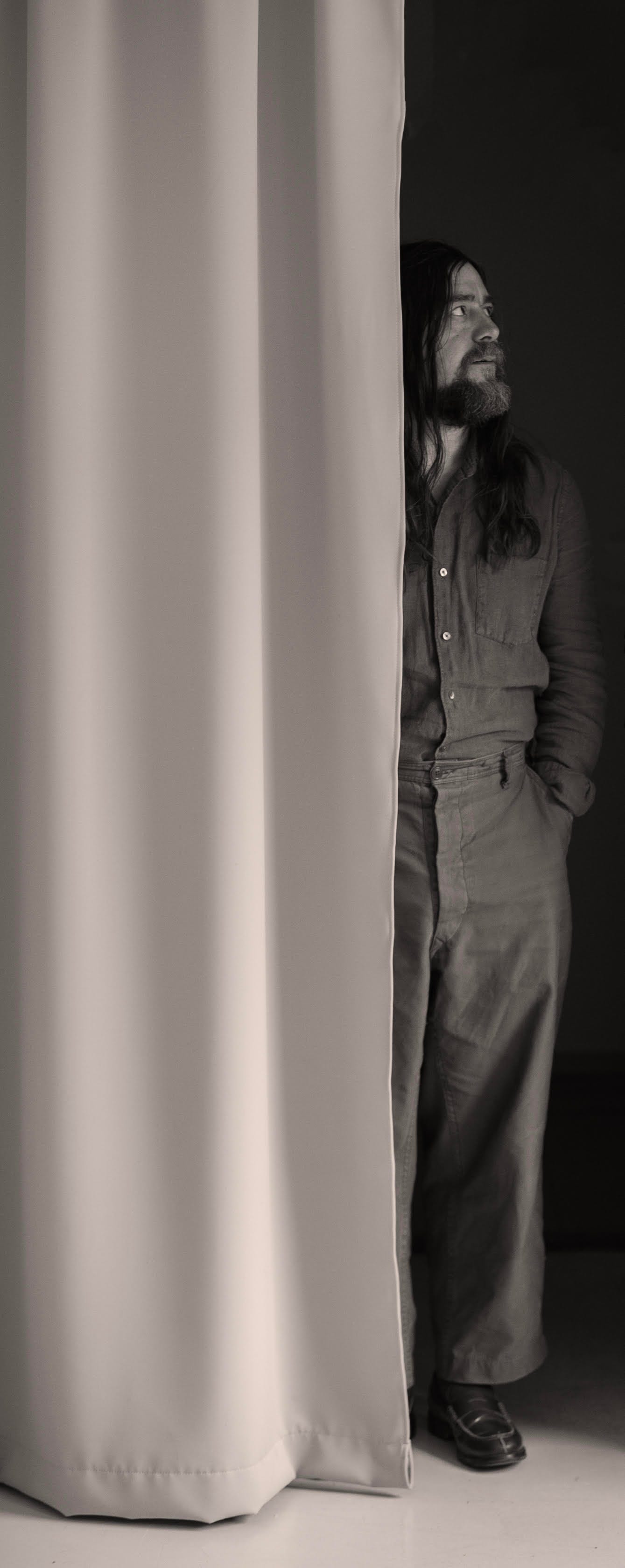
We conclude the conversation with the “eternal question” of what jazz is. Many years ago, when I spoke with Mats Gustafsson, I mentioned that he was one of my favorite “jazz” musicians – and he was not particularly pleased with the genre label. So I was curious to hear what Goran Kajfeš thinks about this topic.
“I prefer not really thinking in genres. I love music that is hard to label. Music is so much greater than that. And even if I have studied, loved, and played jazz since I was young, I find more inspiration in other art forms and nature these days.”