


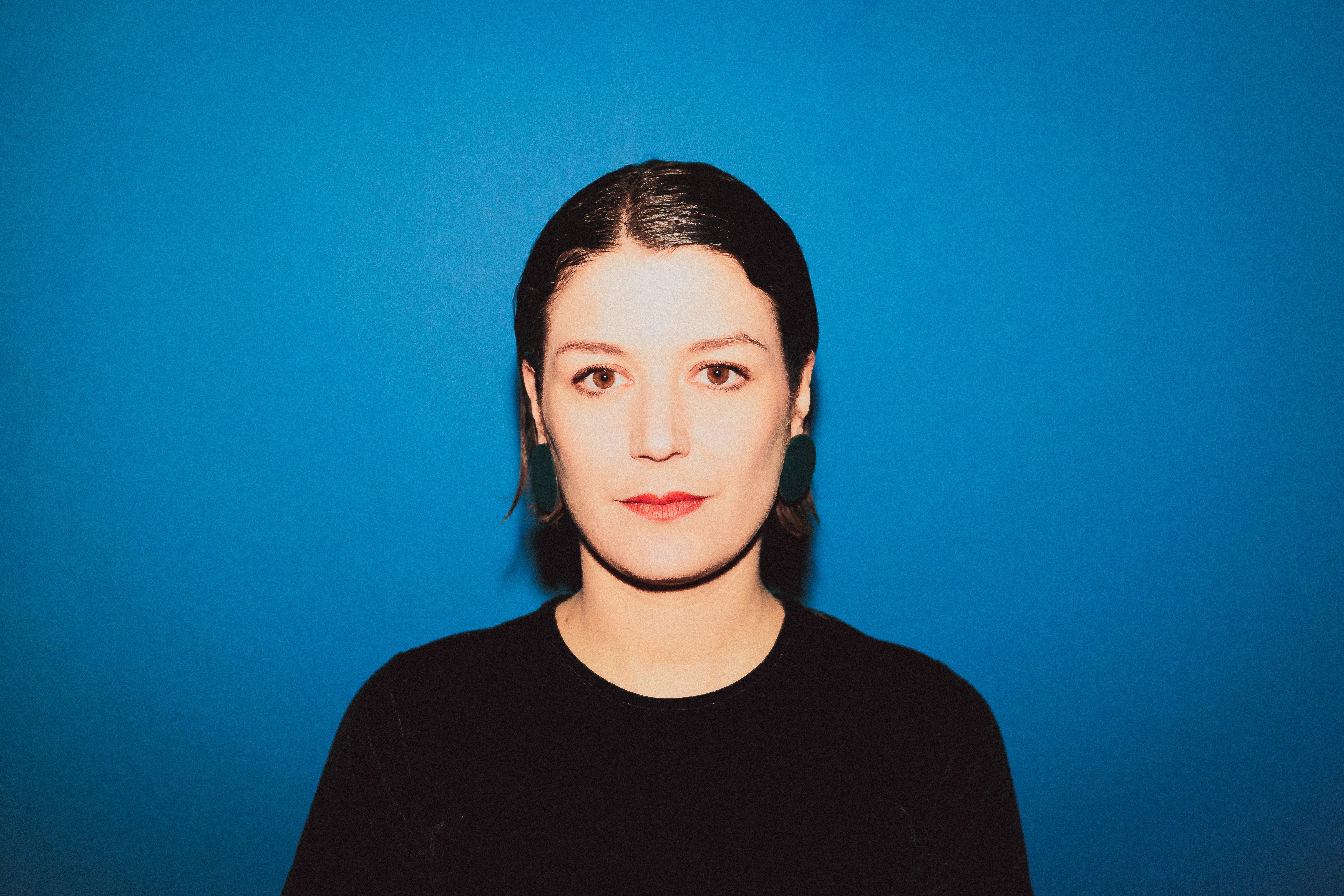
Evi Filippou is having a remarkable year. She has been selected as this year’s artist-in-residence at the prestigious Moers Festival in Germany. She has also been nominated for the Deutscher Jazzpreis in two categories: Drums/Percussionist of the Year, and Live Act of the Year for her performance in the duo Filippou & Lucaciu.
A vibraphonist and percussionist originally from Greece, who has long been living and working in Germany, released a compelling new album this March, Love at Last Sight, on the Hungarian label BMC Records. The album is a duo collaboration with bassist Robert Lucaciu, with whom she has been working and performing for the past three years. This release is also the occasion for the interview you are about to read. It is a record that flows effortlessly and invites deep enjoyment, captivating listeners with its unpretentious character. As we listen, we can imagine being in the rehearsal room with them, or hearing them play just for us and a small group of close friends. Love at Last Sight is an album filled with love, warmth, and a genuine sense of intimacy.
Without further delay, here is my conversation with Evi Filippou.
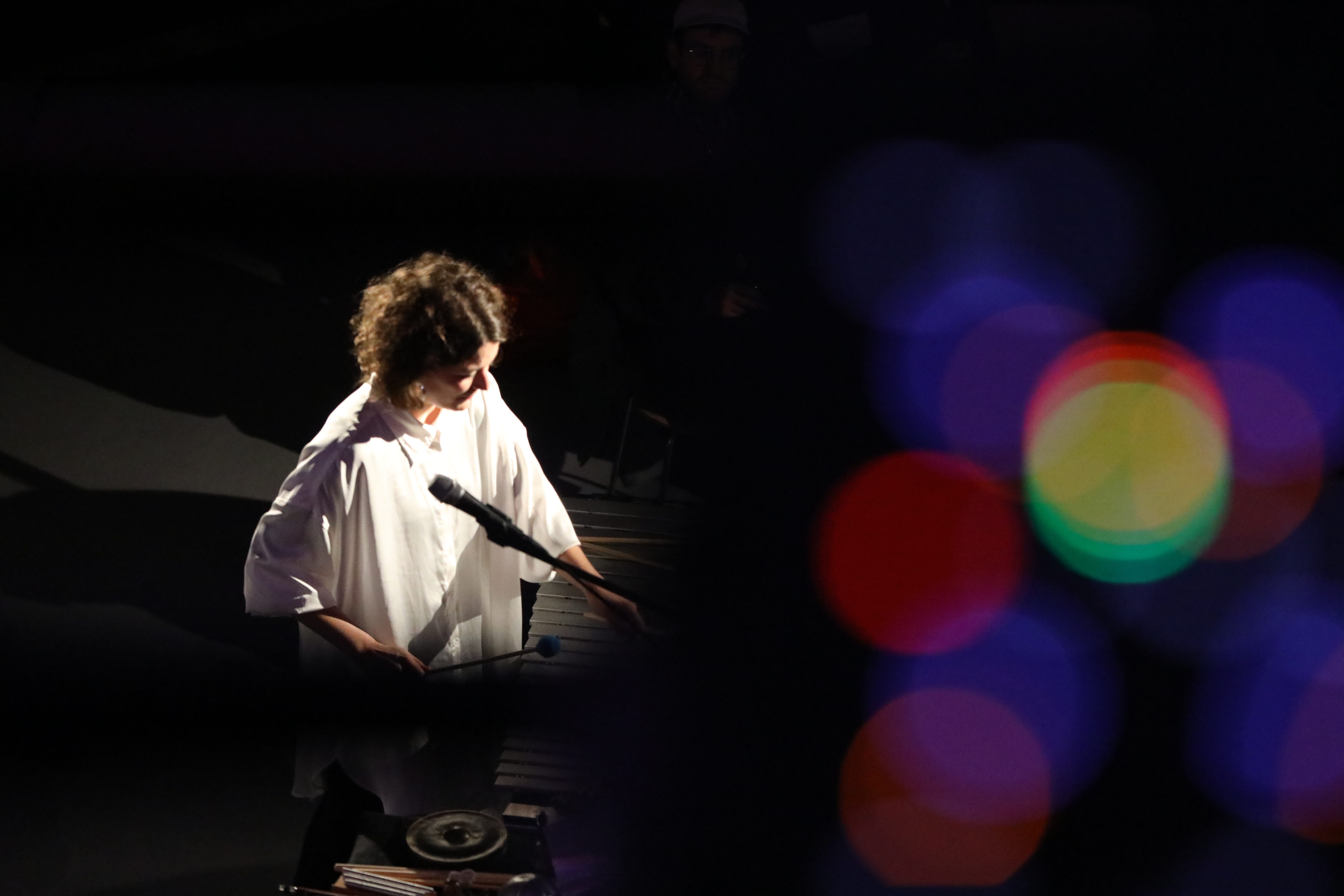
What do you love about Robert Lucaciu’s playing in general, and what about it specifically in the duo format? Do you remember how you first decided to play as a duo, and what you particularly liked about this reduced sonic setting?
For me Robert is like fifteen musicians in one. Not only is he an incredible bass player, I mean technically he can do anything: sing like a soprano, groove like three old school drummers, resonate like a roaring brass band but he is also very inspired. Endless inspiration at improvisation, never plays it safe, always follows through and always has my back. When we met I kind of have decided for myself to not play any more duos because of how fragile they are - three is a band, two are a duo, you know - but after our first rehearsal I forgot all about that and here we are.
The reduced sonic setting is a challenge which helps us grow. I mean, it’s terrifying most of the time (hahaha). But keeps me on my toes and the limitations push us towards different approaches. I feel like with every rehearsal, with every concert, I learn something really valuable. And of course the more I learn, the less I feel like I know. Robert is the perfect duo partner to explore the unknown with.
On the album, we hear several original compositions as well as a number of arrangements. How did you choose pieces by other composers? Some are well known to the wider jazz audience, such as Geri Allen, while others—like the 20th-century Greek composer Leo Rapitis—might be less familiar.
We practice and try out lots of tunes we like, for fun and to see what works for our setting. What is more fun than learning songs together? This album is a collection of pieces we really like and pieces we composed, the common thread is us.
Do you prefer your arrangements to retain the original substance of a composition, or are you more inclined toward deconstruction?
Depends on the day! Funnily enough we never play the same tune with the same arrangement. We always check in the day of the concert and play accordingly. So some days are very structured and some others we only play the ‘’erased’’ versions.
While listening to the album, I had the impression that the music is being created in the moment, regardless of whether these are your own compositions or covers—as if everything emerged spontaneously. Do you lean more toward an open approach, or do you favor thorough preparation before recording?
Our preparation is to learn the scores and tunes as good as possible and then rediscover them at every gig. Robert always says let the song play, you don’t play the song. And I think that is a lot our approach. There’s a lot of talking about life and art, we listen to a lot of music together, we talk about it, we dream together, we practice sometimes things we will never perform and somehow this is our process.
I absolutely believe in that supernatural power that takes over once we let go of that childlike feeling ‘’I wanna be good’’. Kind of letting go of what we think we know of ourselves and reaching for the sky of what we could be. So prepare and then forget all about it.
Tell us more about the recording itself at the Budapest Music Center. To what extent does the space shape what you play? What is your relationship to specific spaces, and to the idea of spatiality when performing music; especially in small ensembles like this one, do you experience the space as a kind of “musical ally,” or perhaps even as a third instrument within the sonic image?
I think what for me is a game changer in recordings but also in every collaboration is not only the spatial setting but the people. I believe that we take crazy magical risks when we feel safe, appreciated and supported, in life and in music. And BMC was all that and more for us. We felt seen, appreciated, trusted, taken care of and had all the help and assistance to make a great record. People tend to underestimate how important the production and the organization is in projects and recordings.
So I would say the space and the people were our musical ally and I’m so glad it is forever documented in this album.
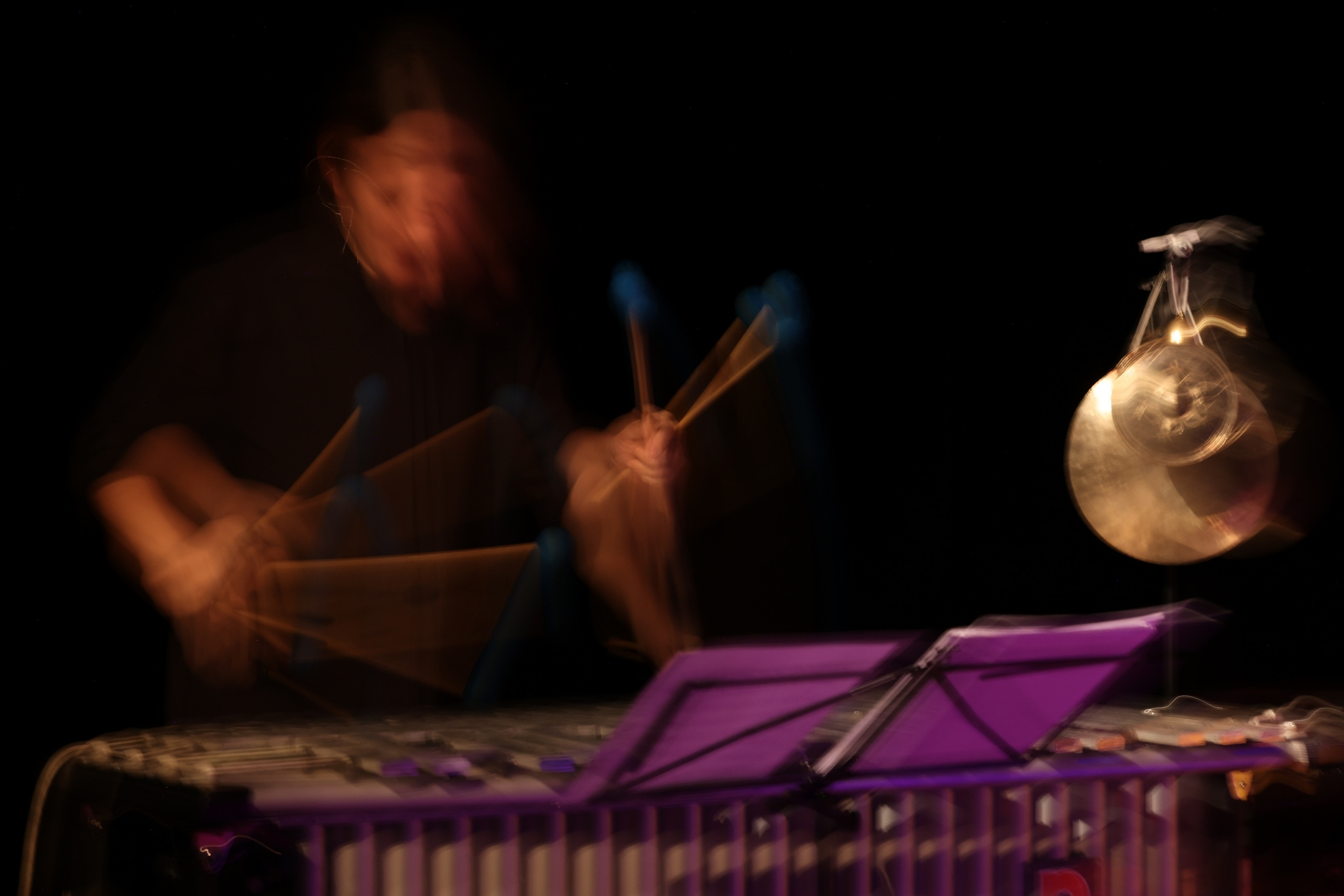
How did you shape the album with Hayden Chisholm as producer? How do you see his contribution, and what did he bring to the record?
Hayden Chisholm was the first person who I admired that told me in a young age ‘’you can be whatever you wanna be’’ and I know that doesn’t sound like a lot but 15 years ago when I started studying and was experiencing sexism and harassment pretty much everywhere, it was all I needed to start doing my thing. Since then he has been a close friend, a collaborator and someone I would always ask for opinions and advice, because he is a daring artist with a very broad collection of skills and styles and I know nobody else who can do so much so good and deep.
In recording situations I find it rather challenging to be the performer and the outside eye. So it was my idea to ask Hayden to be our outside eye, simply check if the takes are good enough and close enough to our vision or throw any constructive feedback from the control room, which he of course did and it was really helpful. Recording can be a stressful situation so someone with a bit of distance is really helpful. No wonder all the records we like from the past had many producers contributing to the final result.
“I Love the Way You’re Breaking My Heart” is an interesting vocal interlude between instrumental tracks. Why this particular piece? Did you have a specific musical quality in mind, the lyrics, its simple beauty—or something else?
I just love this song and most simple songs, jazz standards or greek folk songs, any folk songs actually from all around the world. They are so similar in a way, for me it’s the unshakeable proof that people all around the wold: we are pretty much the same.
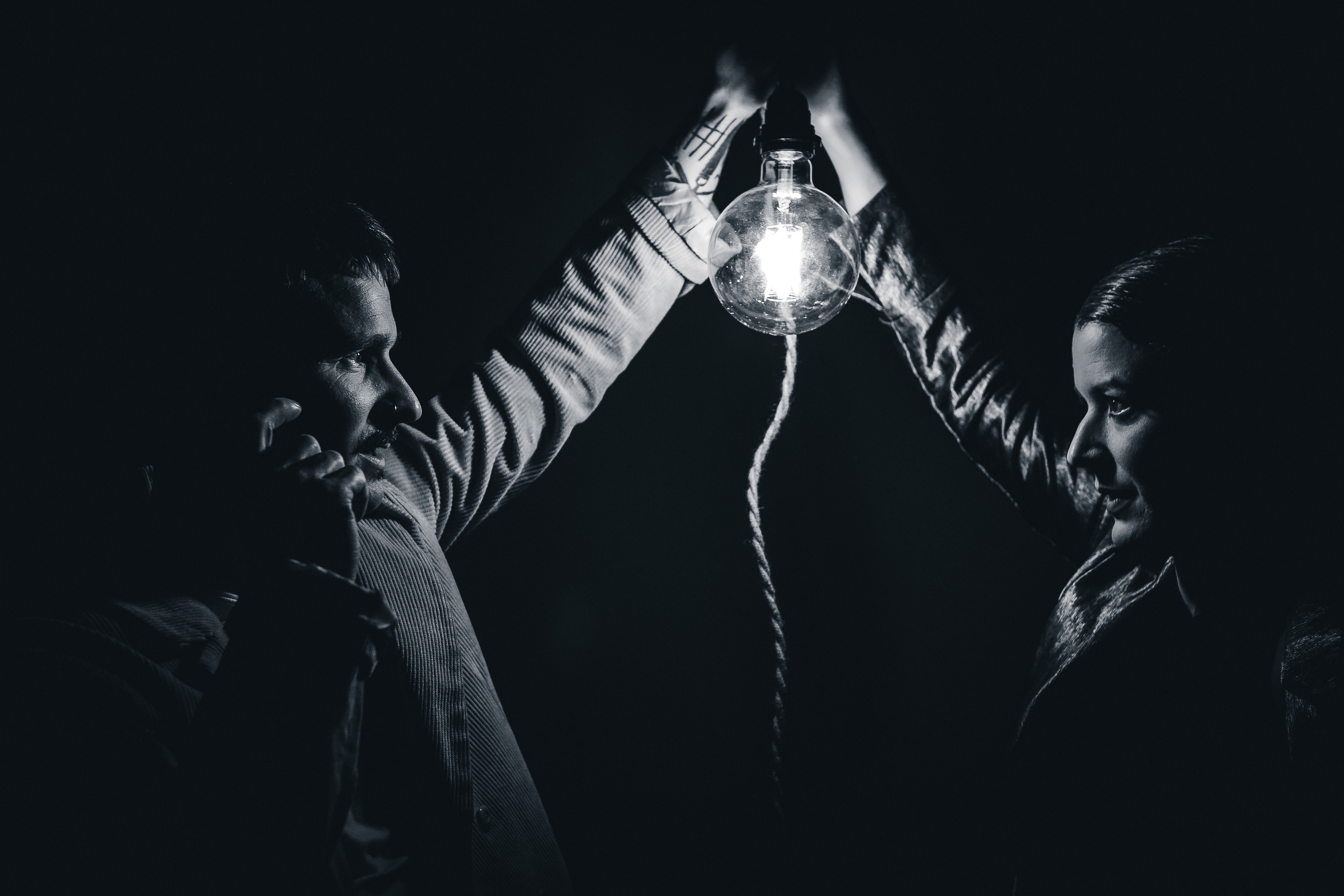
I enjoyed reading Chisholm’s texts about your pieces in the liner notes. How do you perceive your own compositions? Are they, for you, “like a dream,” and do you associate certain compositions—or arrangements of others’ pieces—with specific images or cinematic visions?
I think me and Robert are very different that way. He has studied composition and has a lot of experience in writing music. I have always written what I hear and tried to use my knowledge and what I have learned from analyzing other composers to limit my material and shape as good as possible the feeling or image I want to share. ‘’She dreams’’ for example is simply about a girl dreaming, and ‘’your own’’ about the melancholy in the joy of change.
I love arrangements, because I think it is interesting and funny how we all focus on different things even if we love the same songs. So I focus on what I love and explore that space. For example in the song ‘’alma Mia’’ I love the lyrics to the bone and the rhythm of the language so our whole arrangement is about that prosody. Let the song play you kind of thing.
You live and work in Germany, but you come from Greece. How much has your experience in your home country shaped you musically, and to what extent do you still feel part of that scene? It seems that in recent years the Greek jazz scene has been on the rise, with musicians such as yourself, Tania Gianoulli, Petros Klampanis, Andreas Polyzogopoulos…
I left Greece when I was 18, was barely a person yet so I would say that I became an adult and a professional musician in Germany. I admire all these artists you named and many more but I think it is the German scene and Greek musicians that live abroad like Katerina Fotinaki or Antonis Anissegos that shaped me. Their music and approach, completely different but equally influential to me, has opened pathways to my brain.
Still Greece is the country of my childhood and my parents loved Greek music, art poetry and literature so of course it has left a strong mark in me, I mean for me composition is like traveling back to childhood and shedding light to the feelings of joy or darkness. It is something that has do with my family my ancestors, my teachers and telling stories about them. I feel like I carry them all, dead or alive in everything I do. They, their memory and what I think they were, shapes me and the perception of them keeps changing and evolving with time. Wild, isn’t it?
What are your most important current projects besides the duo? What draws you to working with larger ensembles, and how do you approach composition and arranging in that context?
Filippou & Lucaciu and inEvitable are my darlings at the moment. I also enjoy working with Andromeda Mega Express Orchestra a lot because I love being a percussionist. I love large ensembles because first of all the more the merrier, and I come from a classical education where orchestra was the hippest thing. So an orchestra where the percussionist has a lot more to do sounds like a dream to me.
I think the energy that large ensembles and orchestras can create could actually change the world.
Composing for inEvitable extended, my large ensemble so to say, is at the moment about reducing the information to its core and let the incredible players that I am honored to call my bandmates (shout out to Keisuke Matsuno, Arne Braun, Marius Wankel, Zuza Jasinska, Robert Lucaciu, Julius Gawlik, Jim Hart, Tim Hagans) fly high. I go with Mary Oliver’s ‘’always leave some room for the unimaginable’’.