


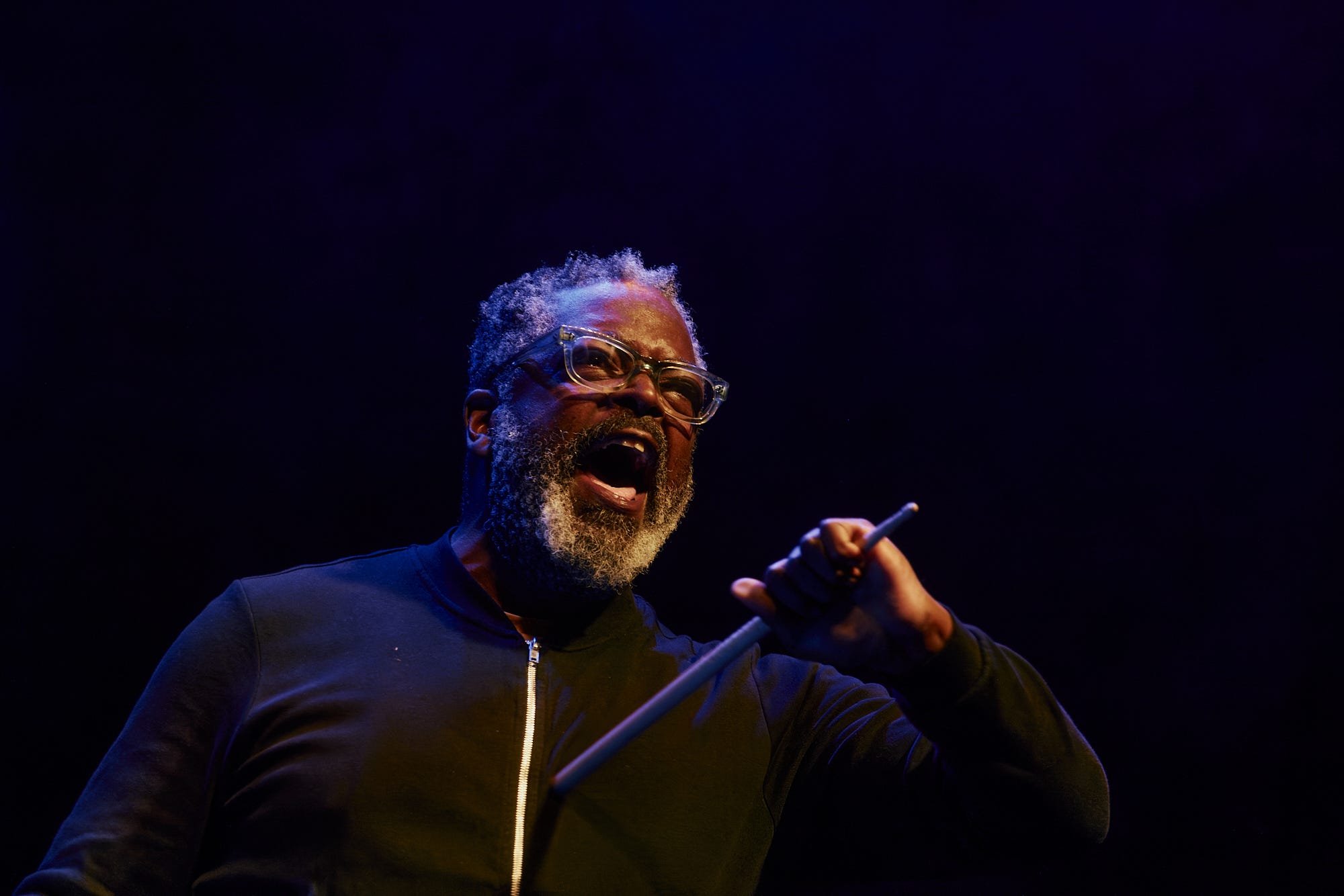
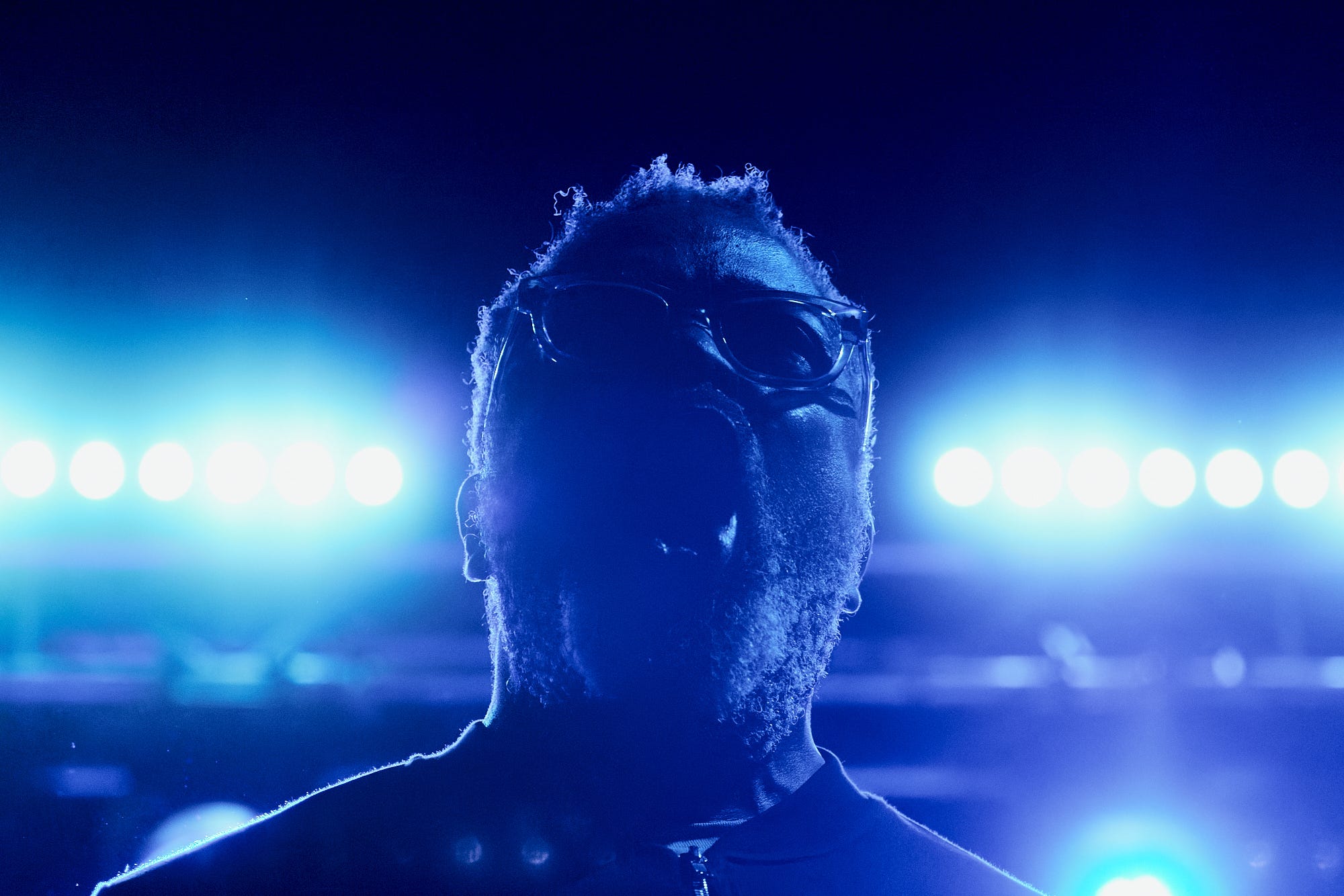
The title of this article isn’t mine. These were the words drummer Gerald Cleaver was frantically shouting at the very beginning of the concert. He stepped to the edge of the stage at Bio Central cinema, right in front of the audience. He was keeping the beat with his drumsticks, while Rodrigo Amado and James Banner had already started improvising.
He was electrified, stern, with a serious expression on his face. He shouted that we hadn’t come for a “show”. That we were here for the heart. It was like a sermon, or an awakening from some kind of emotional or intellectual slumber. A sermon reminding us that we hadn’t come out for a pleasant cultural evening on a Saturday night; that we had come to actually feel something. To experience something true, honest, real.
Once upon a time, about twenty years ago, I went to the Sziget Festival in Hungary with a friend. Back then, the festival had a “jazz tent”, so we went together to see Joe McPhee perform. My friend was into rock and metal music, but he came along and was somewhat surprised by how unpretentious the whole event was. No roadies tuning the instruments (the musicians do that themselves), no fanfare, no light show, no spectacular entrance onto the stage (because everyone is already somewhere around). The music is acoustic, mostly improvised, created on the spot, and sounds incredibly raw and unpolished.
Those of us who make up the so-called “jazz audience” are already quite used to all this, and these observations may seem trivial. But we shouldn’t take any of it for granted. After all, jazz festivals are also a part of the “event industry”, so it’s only logical and natural that we experience them as “entertainment” or a “show”, just from the perspective of the “cultural elites”.
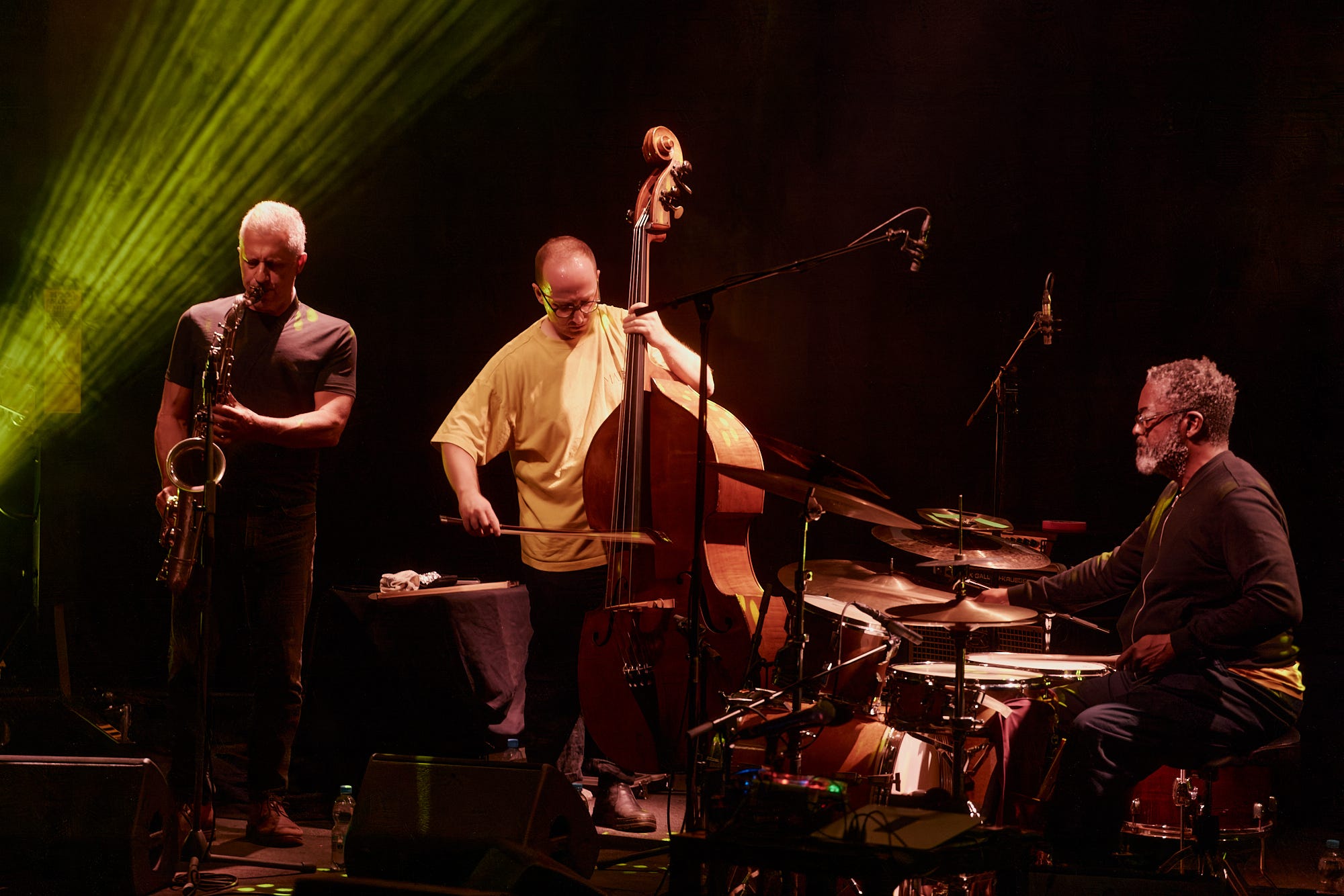
I’ve seen Gerald Cleaver live several times in different formations. I’ve always thought of him as a quiet guy in the background who does his job properly, without too much fuss or spectacle. That made his sermon-like performance at the very beginning of this concert all the more intense and unexpected. It put us in exactly the right frame of mind for music that evokes the spirit of African-American jazz from the 1960s, a tradition in which Rodrigo Amado excels.
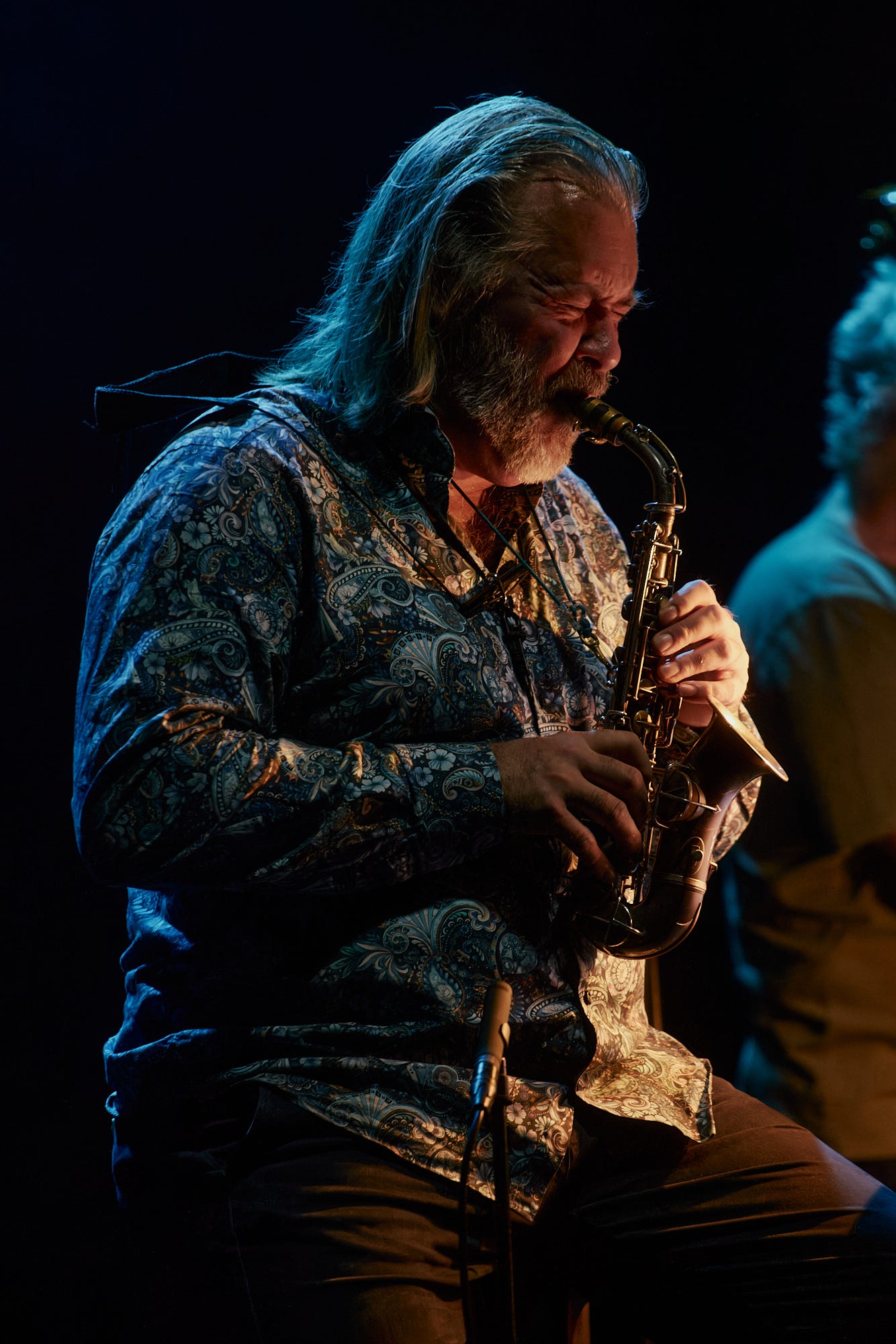
There are few saxophonists today who manage to create that feeling that some “higher power” is playing through them, that through those torrents of notes and furious solos, a kind of “truth” is speaking, something direct and uncorrupted by “concept”. Perhaps we can hear something of Coltrane’s “transcendence” or Rollins’s fundamental jazz sound in his solos, contributing to the wonderful impression of hearing universal jazz music in its spiritual and aesthetic essence.
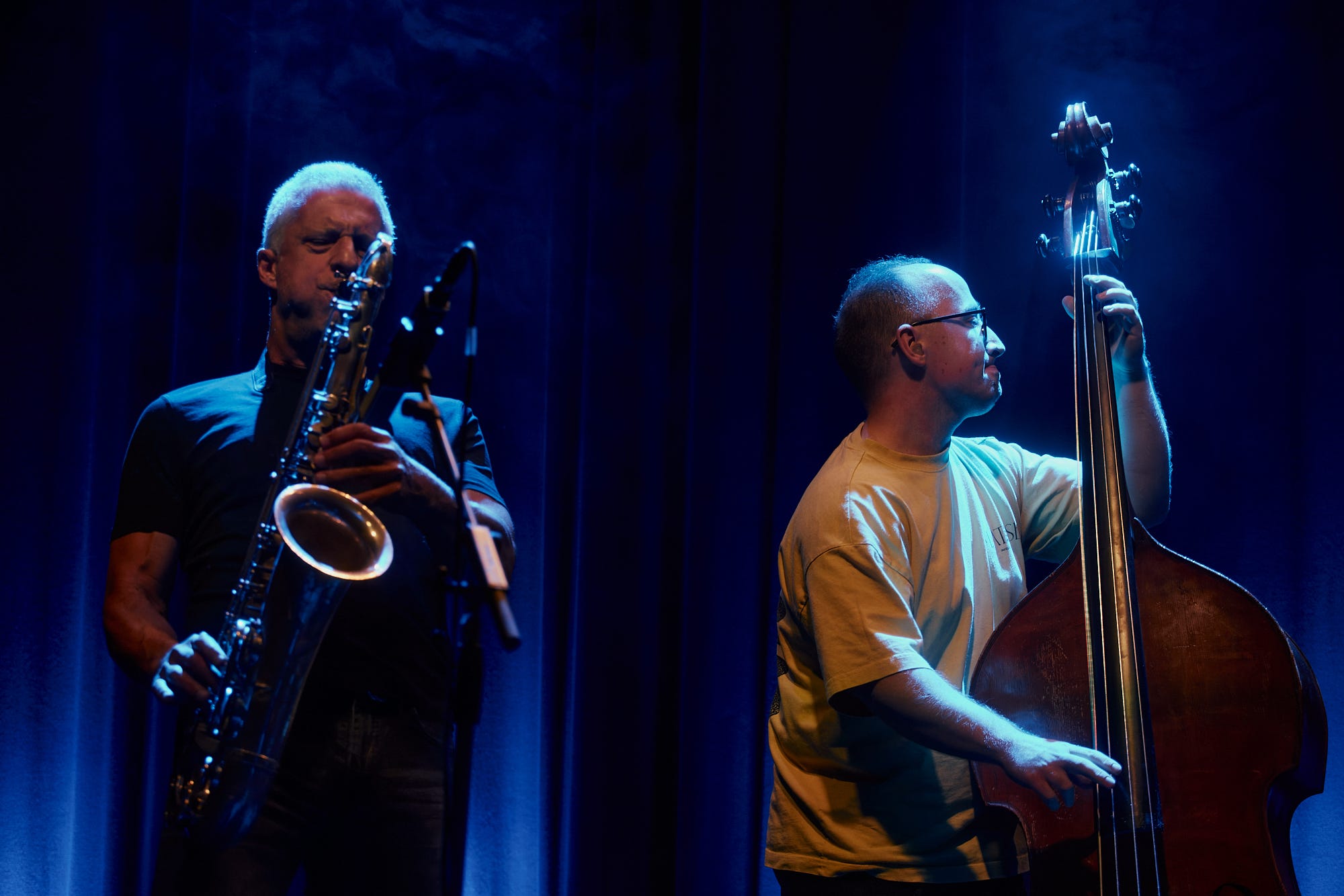
I was very sad to learn that Joëlle Léandre had to cancel her appearance with the trio at the last minute due to illness. She was replaced by Berlin-based double bassist James Banner, who found himself in the rather unenviable position of stepping in for such a legendary figure with practically no preparation, while also performing with Amado and Cleaver for the first time in his life. The fact that everything worked very well – although with the focus naturally shifting towards Amado – is a testament both to the resilience of jazz as a genre and to its ability to find solutions to seemingly “impossible” situations through improvisation.
I’ve started this report in the “wrong” order because Cleaver provided the perfect material for the title and opening section. So we might as well abandon chronology altogether and continue with some thoughts on the concerts that took place at Bio Central cinema during the final two days of the festival.
ECM and beyond
On the same evening, Arcanum Quartet performed, featuring ECM heavyweights: trumpeter Arve Henriksen, saxophonist Trygve Seim, double bassist Anders Jormin, and drummer Markku Ounaskari. Their performance certainly presented a very different vision of jazz music, one we associate with the ECM label and Scandinavia, but we could also say that this was music performed with an equally strong sense of authority.
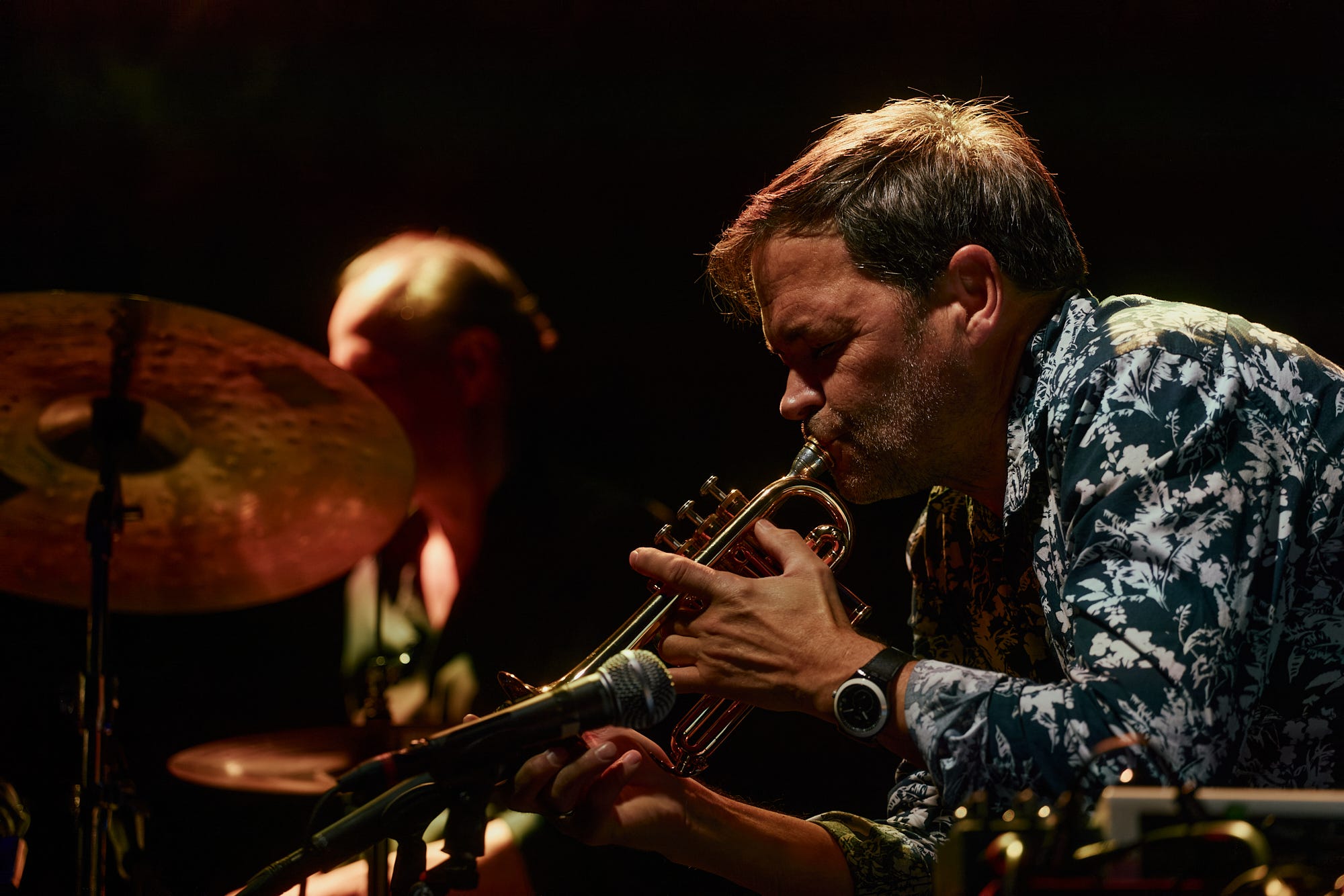
Take Trygve Seim and especially Arve Henriksen, for example. You simply can’t mistake them for any other saxophonist or trumpeter. In a DownBeat blindfold test, recognising one of their solos would be the easiest task imaginable. Few jazz musicians have managed to create such a distinctive and recognisable sound over the years, which doesn’t mean their solos are predictable or boring. Rather, there’s that extra level of excitement, the anticipation of hearing the very first note they play and then simply surrendering to their music.
Arcanum is, however, a collective band of four musicians, and their music moves in different directions, from “ECM-style ballads” to freer and more energetic territory. I was particularly delighted to hear their interpretation of Wayne Shorter’s composition “Nefertiti”, recorded by Miles Davis, which was definitely “ahead of its time” and sounds quite unexpected, yet perfectly natural, in the hands of these musicians today. There was also a striking “vocal solo” by Henriksen, who “sang” through his trumpet pressed against the microphone. And many other wonderful moments in a beautifully balanced concert.
Avant-fun
The day before, I saw the French band BRIQUE, which was again something completely different from everything mentioned above. This band was particularly important to me because it features pianist Eve Risser, whom I’ve been a fan of since the old days when she played with the Orchestre National de Jazz, and later in countless other formations she led as a composer and bandleader.
But unlike her solo projects or the groups in which she stood out as an avant-garde improviser or an accomplished composer and arranger, her role in BRIQUE is somewhat different. This is a band with no obvious leaders, although the very intense vocalist Bianca Iannuzzi naturally dominates. The quartet is completed by bassist Luc Ex and drummer Francesco Pastacaldi, whom fans of more avant-garde jazz may know best from guitarist Julien Desprez’s band Abacaxi.
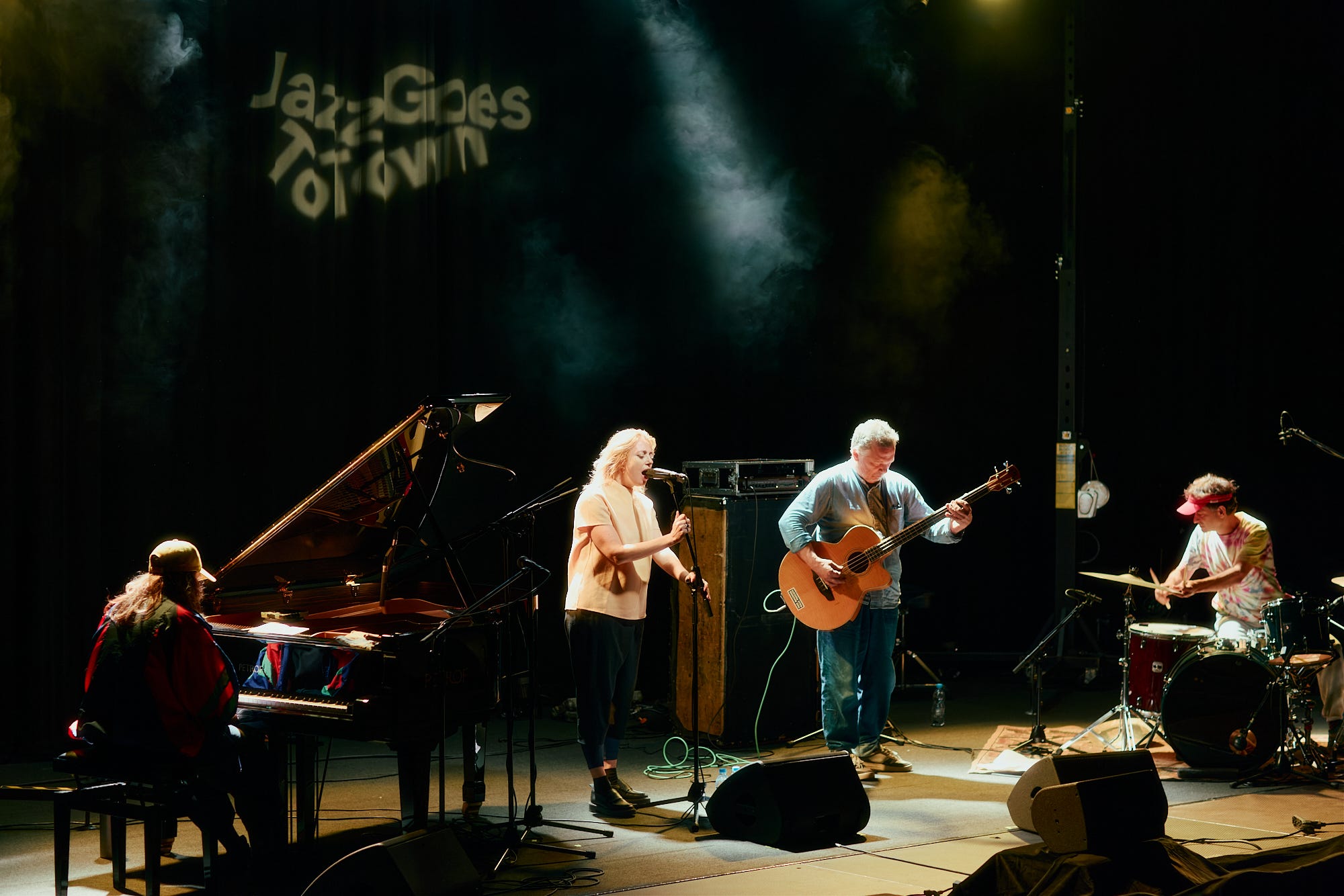
As their official biography puts it, “BRIQUE is a quartet that moves between lyrical song, improvisation, and a rawer urban energy”, and that would be a perfectly adequate short description of their music. While watching their concert, I was also thinking about how great improvisers – when they want to – have an exceptional feel for the “song”, understood through the lens of popular culture or the alternative/indie scene. Think of Fire! Orchestra, for example, or Mariam Wallentin on her latest album, although BRIQUE is certainly a story of its own. What all these bands have in common, however, is a particular sensitivity to subtle nuances and micro-improvisations that enrich music driven by pop or rock energy.
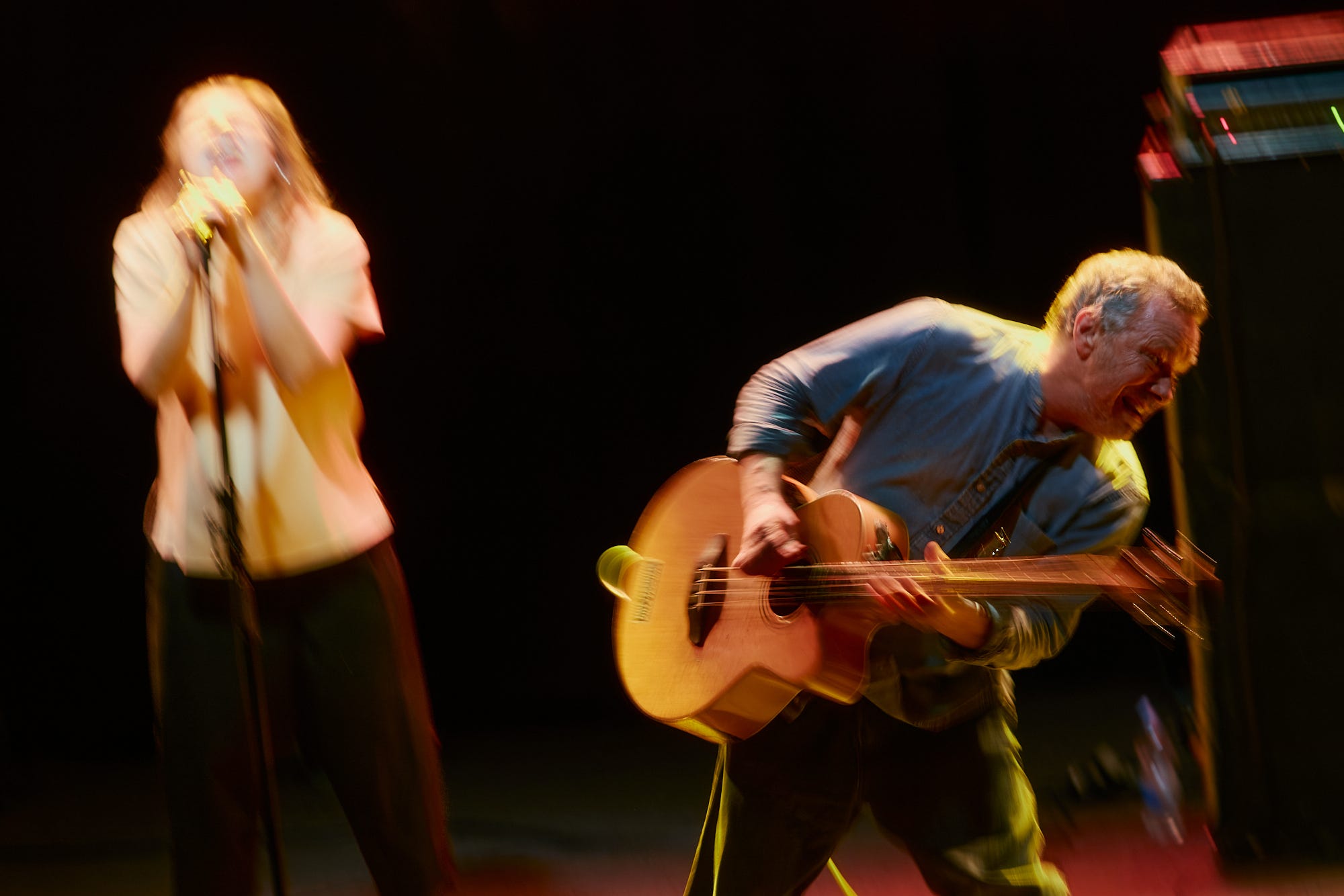
The point isn’t to have a “jazz solo” burst out like fireworks after the chorus, but to shift the song slightly off its axis, enrich it with all kinds of sonic layers, and let improvisation happen through “falling out of rhythm”, making the melody sound unfamiliar, breaks in unexpected places, and, why not, even some carefully measured improvised passages.
BRIQUE masterfully navigate this musical landscape, while Bianca Iannuzzi showers the listener with a lavish performance full of screams, pseudo-operatic excursions, classic rock energy, superb avant-garde improvisation, spoken-word intensity, and who knows what else.
The Czech Scene
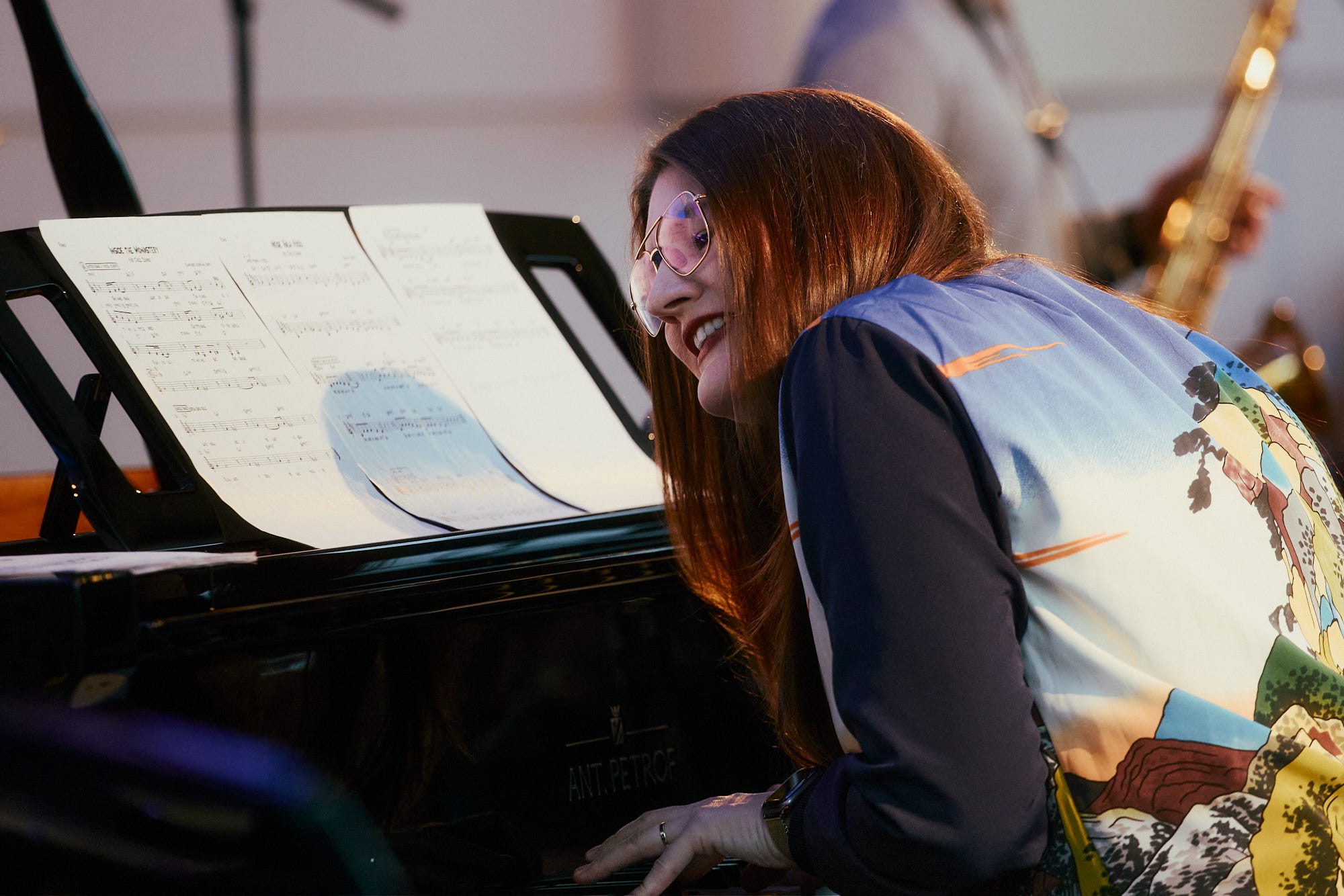
I also saw two Czech bands at the festival. Kristina Bárta’s Red Landscape performed on the 4th evening of the festival at Petrof Gallery. The venue is essentially a showroom for the Petrof piano factory, which was founded in Hradec Králové and continues to operate successfully to this day, giving the concert an interesting historical dimension.
The performance itself had two intertwined elements, alternating between purely instrumental pieces and those in which singer Petra Brabencová played an important role. This is a solid post-bop band with accessible tunes and skilled improvisers, although my own preferences definitely leaned more towards the basic instrumental approach.
On the same evening, before BRIQUE’s performance, Marcel Bárta & Die Clique took the stage, led by the experienced saxophonist of the same name. The band also featured three quarters of the Janoušek-Wróblewski Quartet, a group I helped organise a mini-tour of four Serbian cities for a few years ago, ending with a performance at Radio Belgrade’s Studio 6.
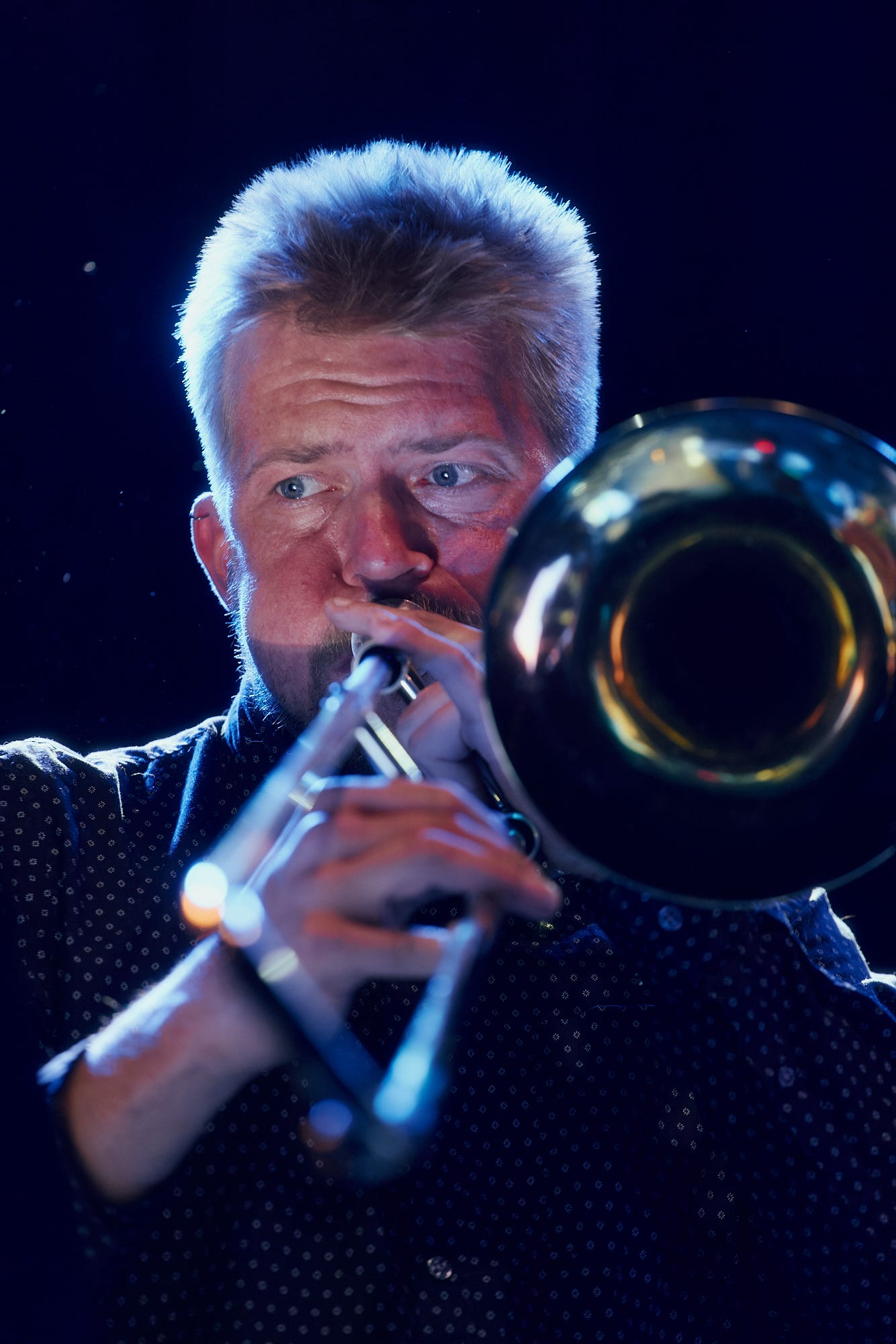
So I was happy to see them again, especially the furious trombonist Štěpán Janoušek, who strongly reminded me of Gianluca Petrella that evening, both in his stage energy and playing style. At certain moments, even the whole band resembled the space jazz of Petrella’s Cosmic Renaissance, with keyboardist Vojtěch Procházka making a significant contribution to that impression.
But this was just one part of Marcel Bárta’s stylistic palette. With his new band, he explores different aspects of broadly defined “contemporary jazz”, ranging from post-bop to neo-fusion. The material performed was of varying quality, and at times perhaps lacked stylistic cohesion and focus. But at its best, this band reached an impressive level of creativity and playing intensity.

(Without) Conclusion
This is the part of the article where I’m supposed to somehow “round off my impressions” and sum up everything that happened over several days of the festival. These days, weeks, and months, AI has been doing a brilliant job of polishing the texts of distinguished and not-so-distinguished cultural journalists and columnists, often delivering the perfect punchlines in introductions and conclusions that manage to be both “catchy” and “smart”. But all those punchlines and “insights” sound painfully uniform and identical in their technical brilliance.
The appeal of jazz music lies precisely in human unpredictability and imperfection, in quick, lucid, and creative responses to “mistakes”, in inventing something new on the spot – in other words, in what we usually call improvisation. In that sense, jazz journalists can (and should) also be “imperfect”, even if our writing isn’t the „smartest ever“ or the most stylistically polished.
So instead of a summary of the festival itself, I’m offering my two cents on jazz writing, and inviting my dear colleagues to remain imperfect, vulnerable, and human together, just like the music we love and listen to with so much excitement and joy.
Bonus points for the (without) conclusion!