


What does it take for a (jazz) concert to be good, great, magical?
Is it enough for the music simply to be good? Or do the musicians need to be particularly inspired and bring something new and unexpected to the live performance, compared to their studio recordings? Or simply improvise like never before?
What happens if the music is excellent and the musicians are inspired, but the sound is terribly mixed and the hall has poor acoustics? Or if the venue is simply bad for some other reason? Or if everything is perfectly fine, but you’re just too tired or weighed down by personal problems and worries to really get into the concert?
In my humble opinion, for a jazz concert to be successful, it’s essential to create a sense of intimacy, of closeness between the musicians on stage and the people in the audience. We don’t need spectacle, giant video screens or flashy light shows. We need to communicate, to feel the emotion directly, to see the expressions on the band members’ faces, to sense their dynamics, the glances they exchange, how they react to feedback from the audience. To feel when they’re excited, and when they’re surprised (by themselves or by their fellow musicians). Even when they make a “mistake”, which in jazz always means an opportunity for a quick reaction and creativity, a chance for something unexpected and therefore all the more exciting to happen.
I was thinking about all this after the second night of the Jazz Goes To Town festival in Hradec Králové, following performances by the Olie Brice Quartet and In Cahoots feat. Ingrid Laubrock at Divadlo Drak (Dragon Theatre). It’s a venue with around 70 seats, very cosy, and one that already creates that much-desired sense of closeness and immediacy, of something “real” in our increasingly AI-generated world.
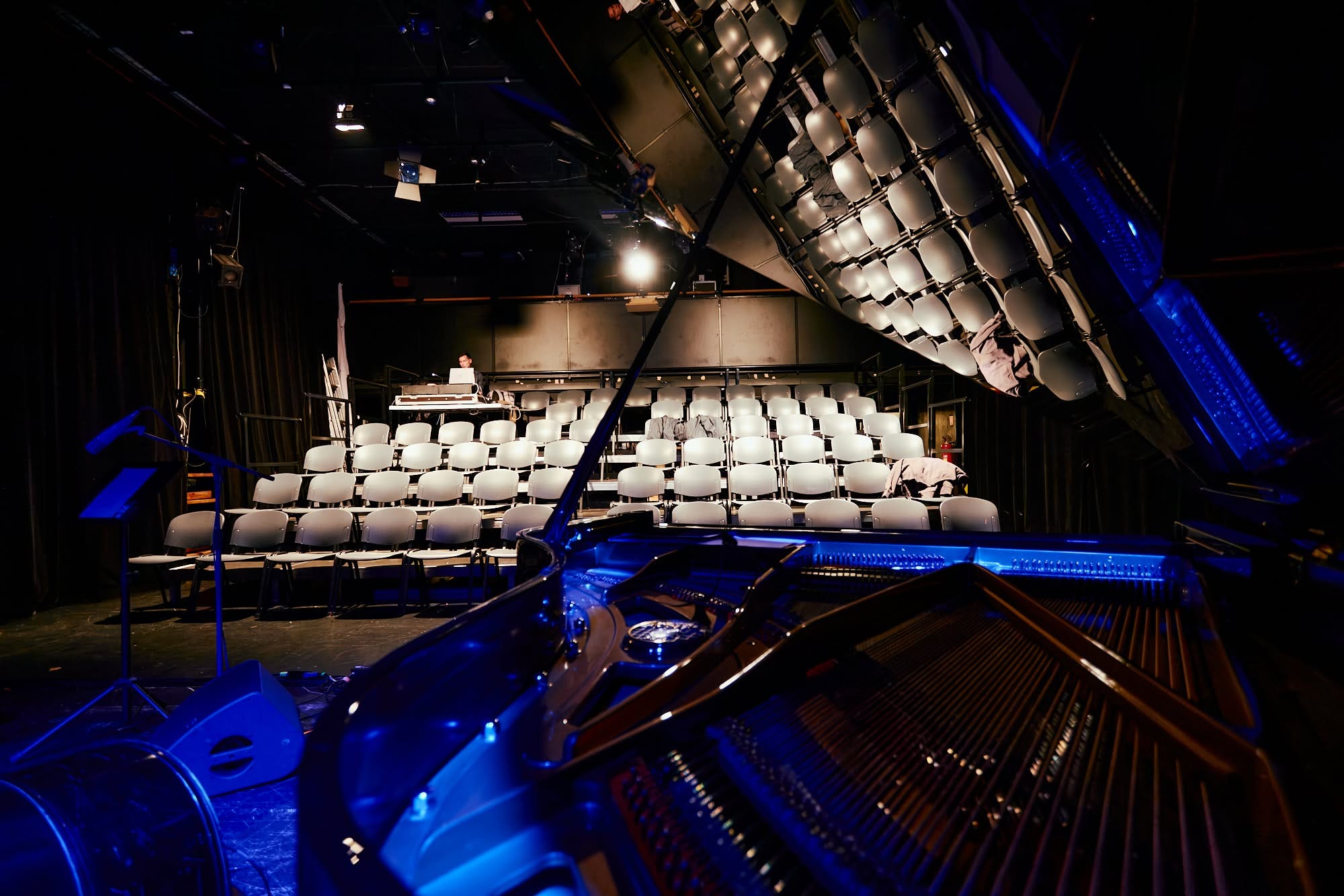
On the other hand, the fact that this is a theatre is far from insignificant. In that sense, we can also see jazz concerts themselves – as opposed to popular music concerts or large-scale productions across different genres – as something akin to theatre performances in a world that values Hollywood spectacle or Netflix binges. None of this means that a “jazz concert” somehow gains additional value by crossing paths with another art form, but rather that jazz and theatre share some very important qualities – a focus on the immediacy of live performance, vulnerability, the ability to improvise, and direct contact with the audience.
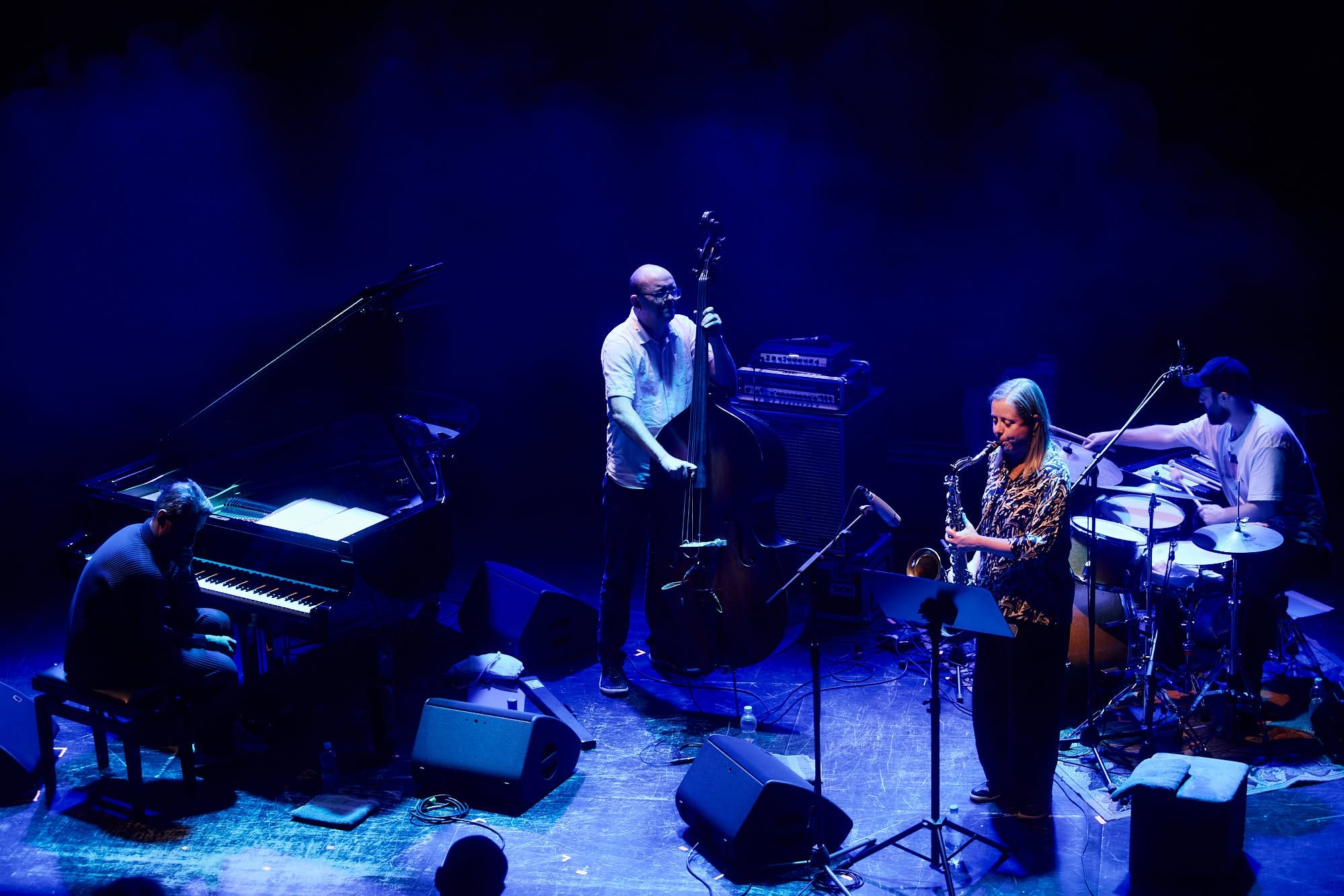
Everything was perfect on this particular evening at Jazz Goes To Town, from the venue to the sound, acoustics and lighting, allowing the wonderful music of the Olie Brice Quartet to come fully into its own. I must admit that I wasn’t familiar with Olie Brice’s work before coming to the concert, nor with his band – with the exception of Alexander Hawkins – so the whole experience of their music was new and exciting to me.
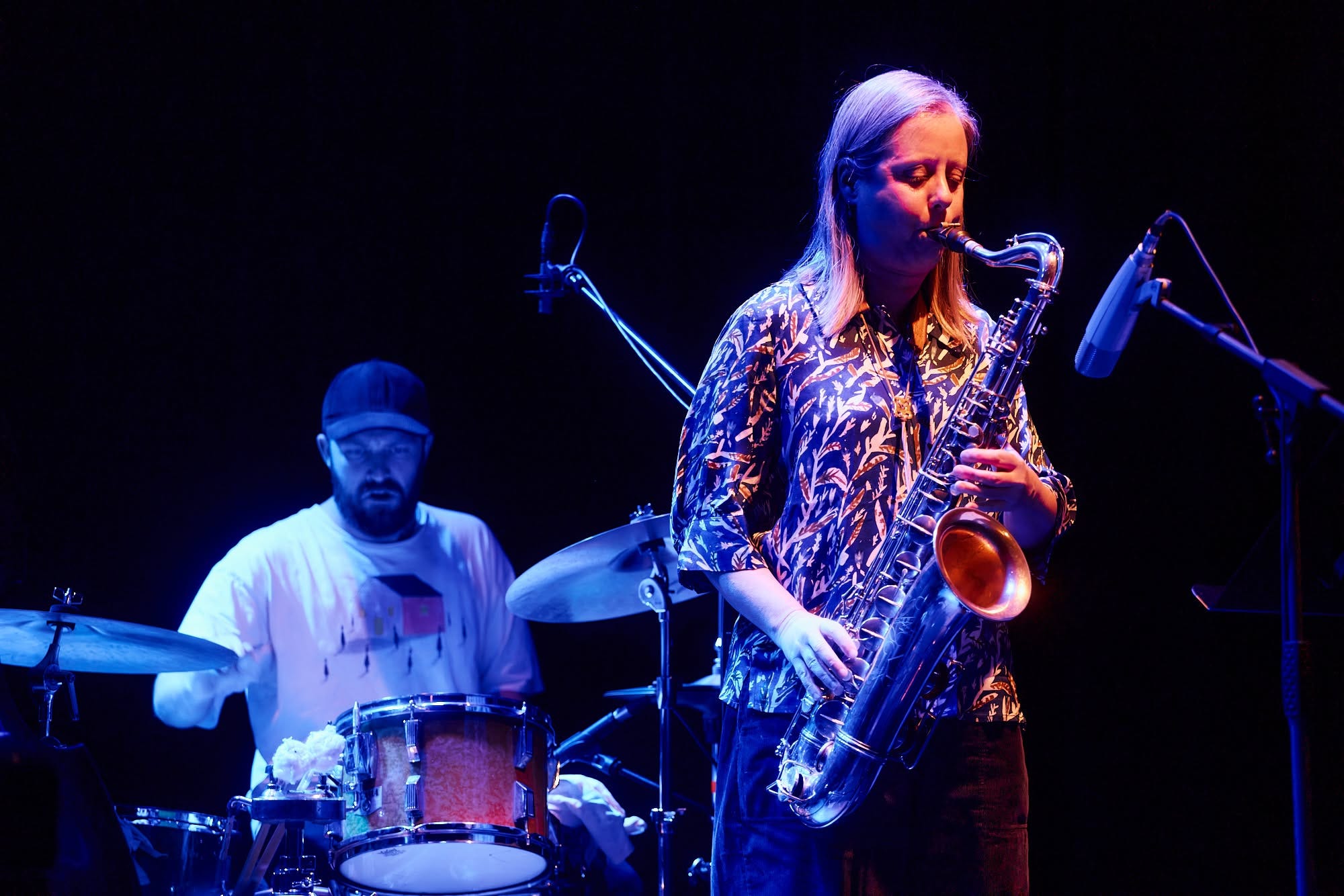
The quartet takes the jazz of the 1960s as its starting point, with certain references to John Coltrane, but from there develops a thoroughly personal approach, without trying to obviously “recreate the sixties” or jump on the modern spiritual jazz revival bandwagon. Rather, I’d say that Olie Brice perfectly understands the universal values and spirit of jazz and embraces them wholeheartedly, just like his fantastic band.
Rachel Musson had a particularly special place in this line-up, a saxophonist with a perfect, warm tone, effortlessly moving between beautiful, melodic phrases and wild growls, always with restraint and a feel for the band and the music itself. In theatrical terms, this would be a classic drama featuring renowned, first-rate actors at the height of their powers.
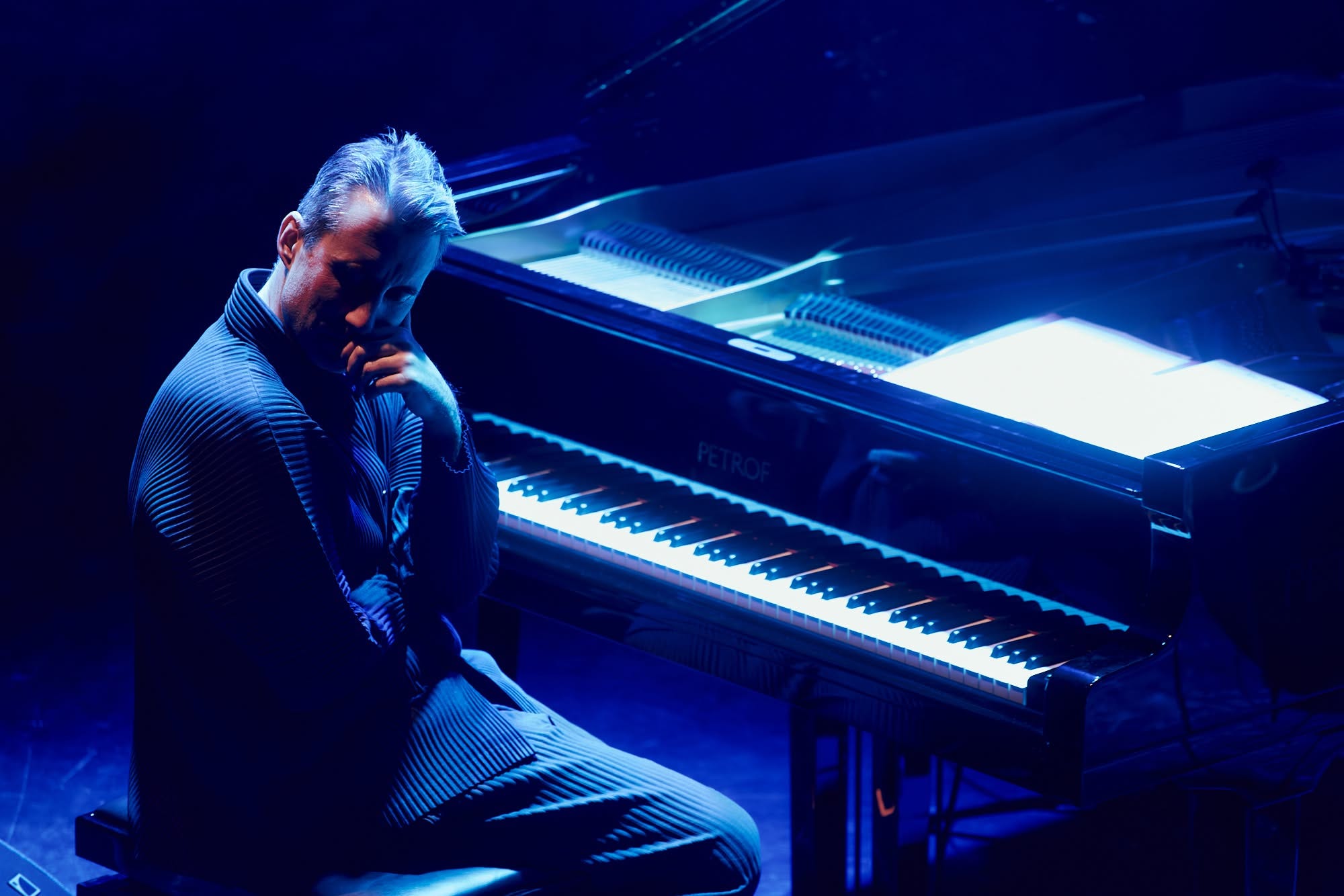
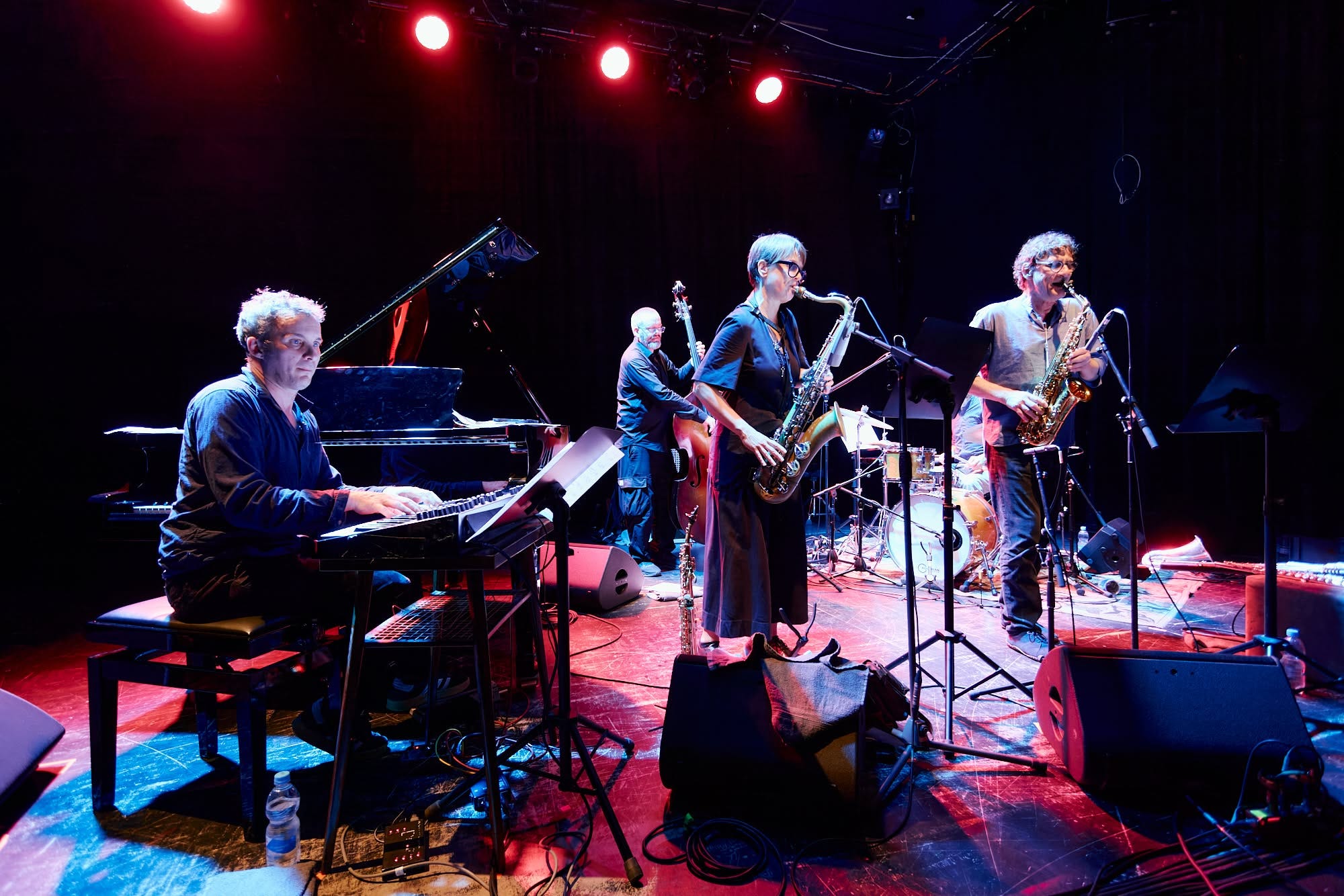
In that context, In Cahoots, led by Frank Gratkowski, would be more like an avant-garde troup or some kind of postmodern theatre, approaching its art in a highly conceptual and complex way, but also with a certain metanarrative approach in which we simultaneously follow the performance itself and the way it is being created from the artists’ perspective. Although all this might sound “pretentious”, Gratkowski approaches the performance with plenty of wit, humour and an easy rapport with the audience, breaking down any possible barriers that might arise.
In practice, this means watching the musicians sort out some problems with timers on their smartphones between compositions; or Gratkowski explaining the concepts or titles of the pieces, charmingly and spontaneously, occasionally wandering off into digressions about translations or memories of earlier concerts, and so on. Of course, none of this is new, and Gratkowski is hardly the first or last musician to have a relaxed relationship with the audience – far from it – but our experience of any art is always shaped by its context.
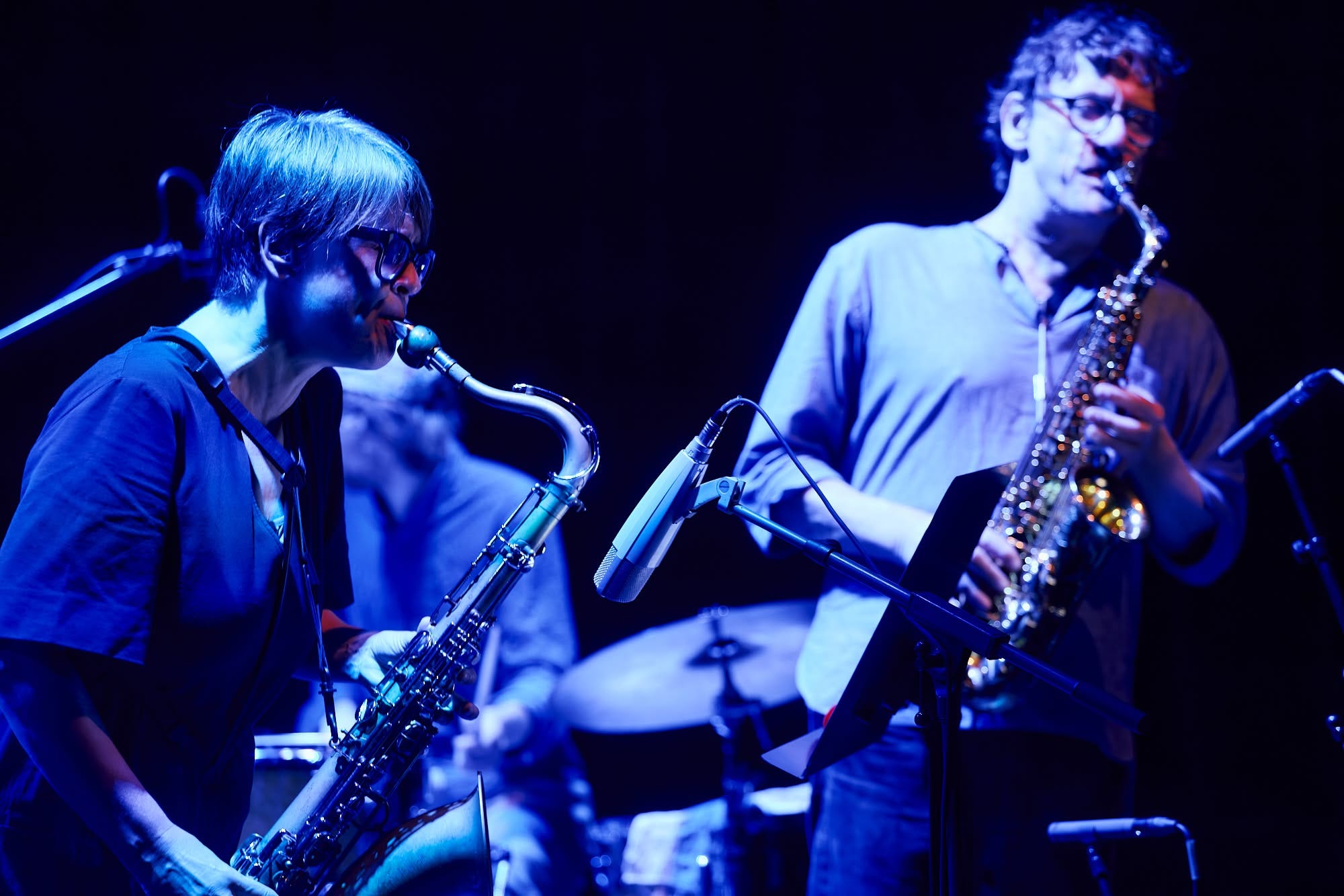
In this case, all of this takes place during a performance of highly complex, compositionally ambitious avant-garde jazz, in which the themes are precisely written out and meticulously performed, and improvisations don’t unfold through a mere succession of soloists, but within defined compositional frameworks. As a result, the concertgoer enjoys the performance on two levels – emotionally, but also intellectually, where they can (potentially) feel the excitement of Gratkowski’s compositional ingenuity and his particular sense of dramaturgy and tension.
We could feel this most clearly during the very long central composition in which the band occasionally played as if in slow motion, and where a couple of deceptive breaks led the audience to believe the piece had ended, prompting (premature) applause. It is in this back-and-forth between the composer’s intentions and the audience’s deceptive perceptions, between the seriousness of the music and the relaxed attitude of its creator, that this “meta-level” of the performance unfolds, adding another exciting layer to an outstanding musical performance.
On the festival’s third night, the theatrical approach to a concert was taken to its highest level with the performance by Jeppe Zeeberg and the Absolute Pinnacle of Human Achievement. Except that here we’re talking about neither classical nor avant-garde theatre, but a kind of humorous performance with elements of classical comedy. At first, the band relies on “ironic” and playful dashes through different genres, starting with hard rock and then wandering through country, ragtime, classical music, and who knows what else.
As the show progresses, these musical “jokes” come thick and fast, until eventually the concert gives way to a full-blown performance piece in which Jeppe Zeeberg marks off the space around the seats with adhesive tape and hands out blank sheets of A4 paper, while the band members perform certain narrative segments into the microphone, take pictures with their smartphones, and so on and so forth. In the end, they return to a handful of shorter musical pieces – all with humorous titles – before bringing to a close a performance that, judging by the loud laughter, delighted the audience.
But what was the “bigger point” or idea behind this musical performance, beyond the the intention to be funny? The whole concept of “ironically mixing incompatible genres” has long been explored on the alternative jazz scene and has already become somewhat canonised, so in that sense it no longer has the “edge” it once did. But Zeeberg takes even this concept to the level of outright parody. Is he mocking postmodern eclecticism in music? Or testing the audience’s patience for “contemporary performance art”, as Ruben Östlund so brilliantly portrayed in his film The Square? Or perhaps there’s no need to overthink it at all, and we should simply accept that even a traditionally “serious jazz audience” could use a little humour and relaxation?
This was one of those concerts where I found myself somewhat out of step with the audience’s reaction, although I have to say that Zeeberg himself is an outstanding performer, and I was genuinely thrilled by one particularly inspired free-ragtime segment he played on the piano. With mixed feelings, but also plenty of inspiration for further reflections on musical performance and performance in music, I bring this piece to a close and look forward to the rest of the Jazz Goes to Town festival.