


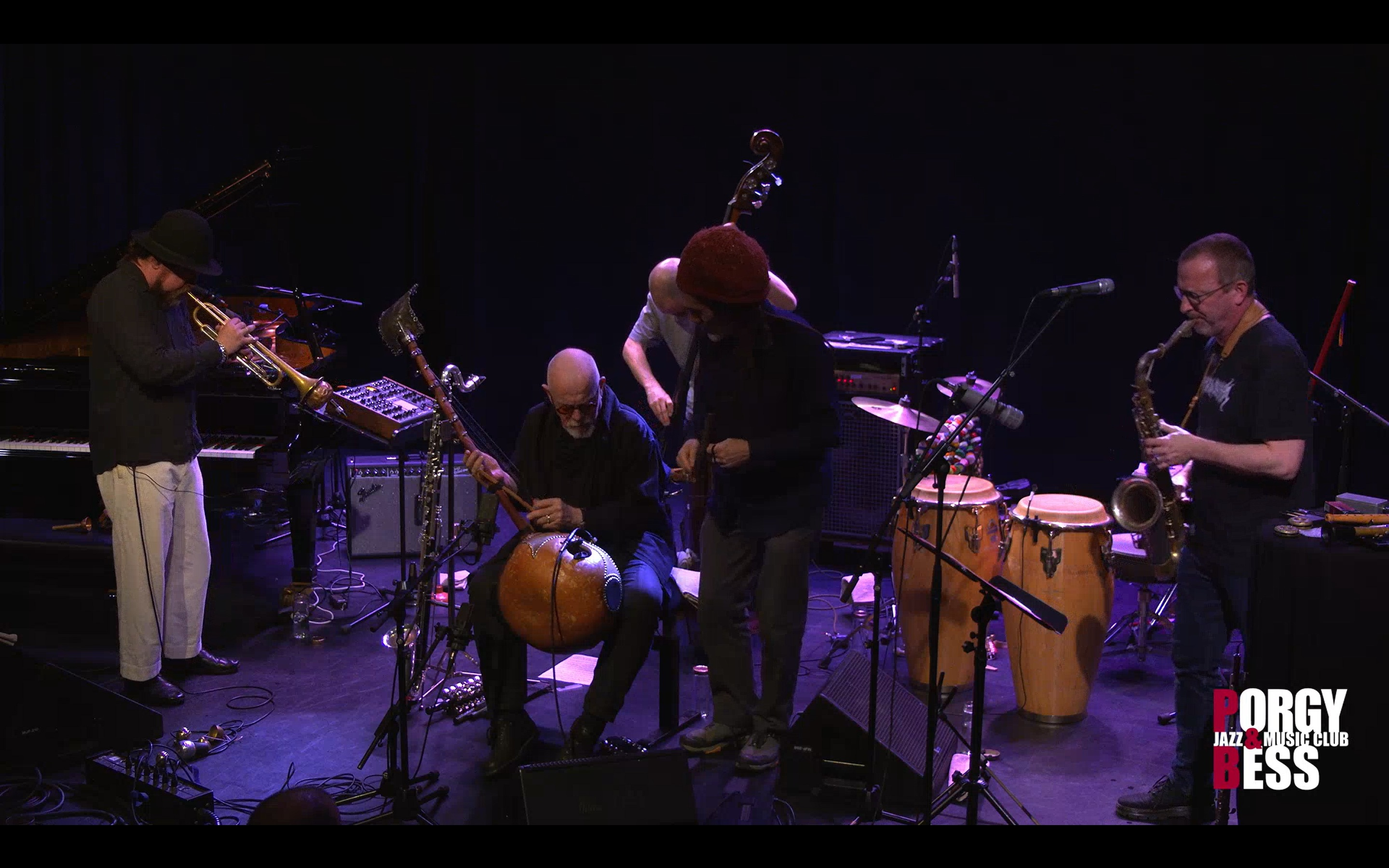
It is very easy to love the Swedish (super)group Cosmic Ear. Even before their album Traces was officially released last year, I received a newsletter from the label We Jazz Records with some basic information. The moment I saw that Goran Kajfes and Mats Gustafsson were in the same lineup, the band was already “sold” to me. The album quickly entered my rotation and became one of my favorites of the year. Reading the accompanying texts more carefully, I also became acquainted with the broader context and the band’s kind of tribute to Don Cherry. In that sense, within this group, the presence of Christer Bothén may be even more significant than that of Gustafsson and Kajfes — “one of Cherry’s main collaborators in his Swedish period and one of the most beautiful bass clarinetists on planet earth,” as stated in the We Jazz press release. The lineup is completed by Kansan Zetterberg and Juan Romero in the rhythm section.
Significant jazz names rarely come to Serbia, and we can usually see them only at a handful of serious jazz and avant-garde music festivals. That is why, every year, I find myself googling where in Europe some of my favorite musicians will be playing and calculating where I might possibly travel for a concert. In the end, because of my job, daily obligations, and finances, many wishes remain unfulfilled. I saw that Cosmic Ear were coming to famous Porgy and Bess jazz club in Vienna, which is not too far from me. But I also noticed there was a livestream option. I hadn’t streamed anything since the pandemic, so I thought — why not?
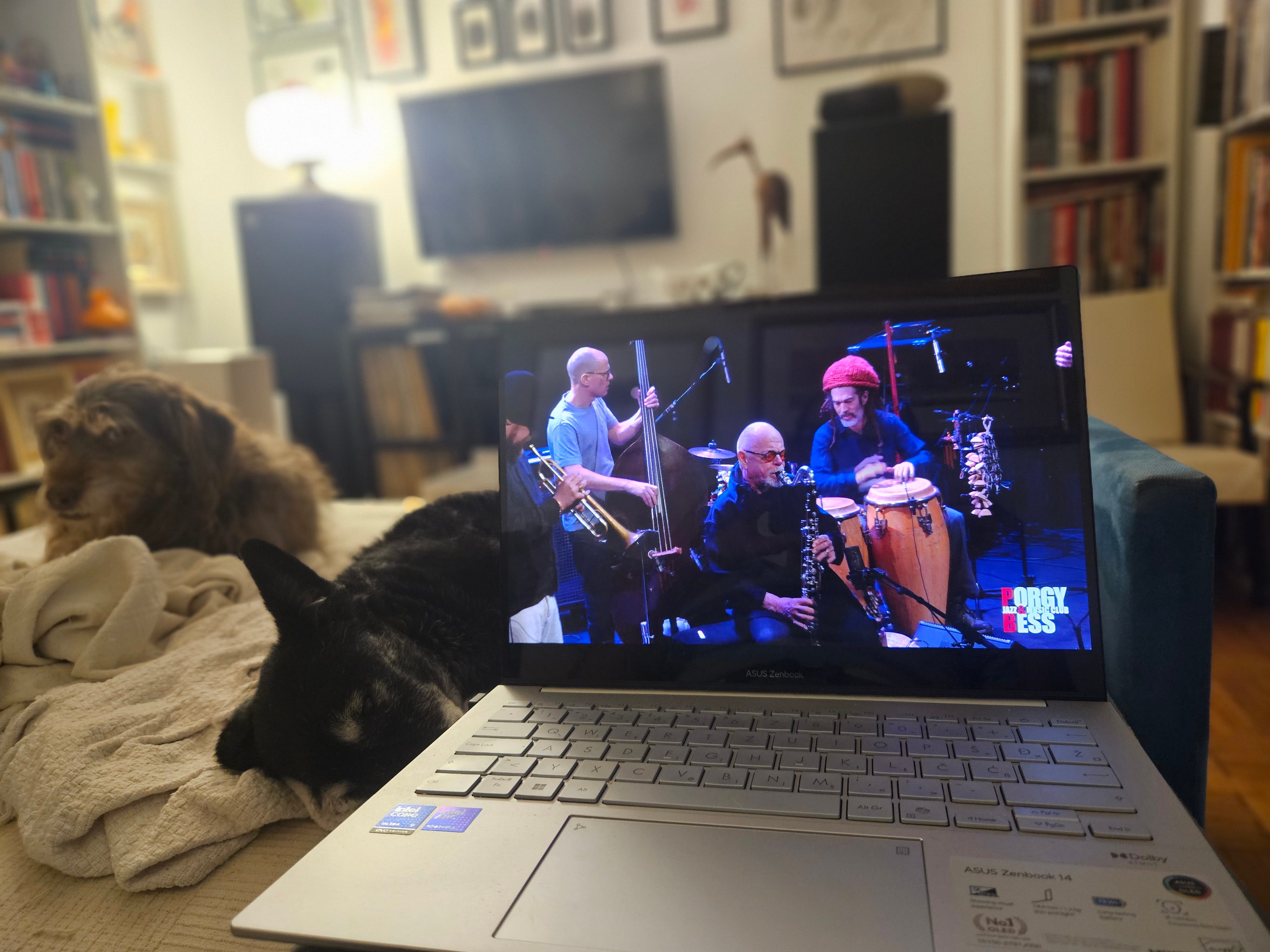
Of course, nothing can compare to attending a concert in person. Live sound cannot be recreated at home, nor can the excitement when your favorite musicians begin to play — when you see and hear them up close and absorb the atmosphere of the venue and the event. All of that was clear to me. On the other hand, isn’t a concert livestream perfectly good home entertainment? If I was going to listen to music anyway, why not pair it with a visual component and focus on that listening/watching with my whole being? I lay down, set up my laptop, connected it to a fairly good Bluetooth speaker, and turned it up just enough to recreate as much of a live atmosphere as possible — without disturbing the neighbors in a building with rather thin walls.
In the concert announcement, it was listed that the five musicians would play the following instruments: trumpet, pocket trumpet, synth, electronics, tenor saxophone, flute, slide flute, Ab clarinet, live electronics, organ, harmonica, bass clarinet, contrabass clarinet, donso ngoni, piano, congas, berimbau, percussion. I deliberately arranged them in this way to better highlight the vibe coming from the stage. Throughout the entire concert, I had the feeling that I was attending not only a musical performance in the narrow sense, but also a kind of sound laboratory. That impression stems from a very open arranging concept in which there is no rush; each musician gradually develops the sound of the instrument they are playing at a given moment.
As a listener, I had the full sense of witnessing a collective musical statement, without dominant leaders or highlighted soloists, however much I may value some of them as improvisers. Through a series of small gestures or musical figures, Cosmic Ear build a sound that is more important than any one of them individually, yet at the same time remains intimate, almost private — without the pomp and spectacle one might expect from a lineup of this magnitude.
Visually, however, Christer Bothén does dominate. For most of the concert he sits in the central part of the stage, and our visual focus naturally gravitates toward him. I believe this is not accidental, and that it is important to his younger (though not exactly young) band colleagues to pay him respect. It is particularly striking when Bothén plays bass clarinet or donso ngoni, yet I experienced his move to the piano in the closing Love Train as the most natural culmination, where a repetitive piano line provides the rhythm and atmosphere for the entire composition.
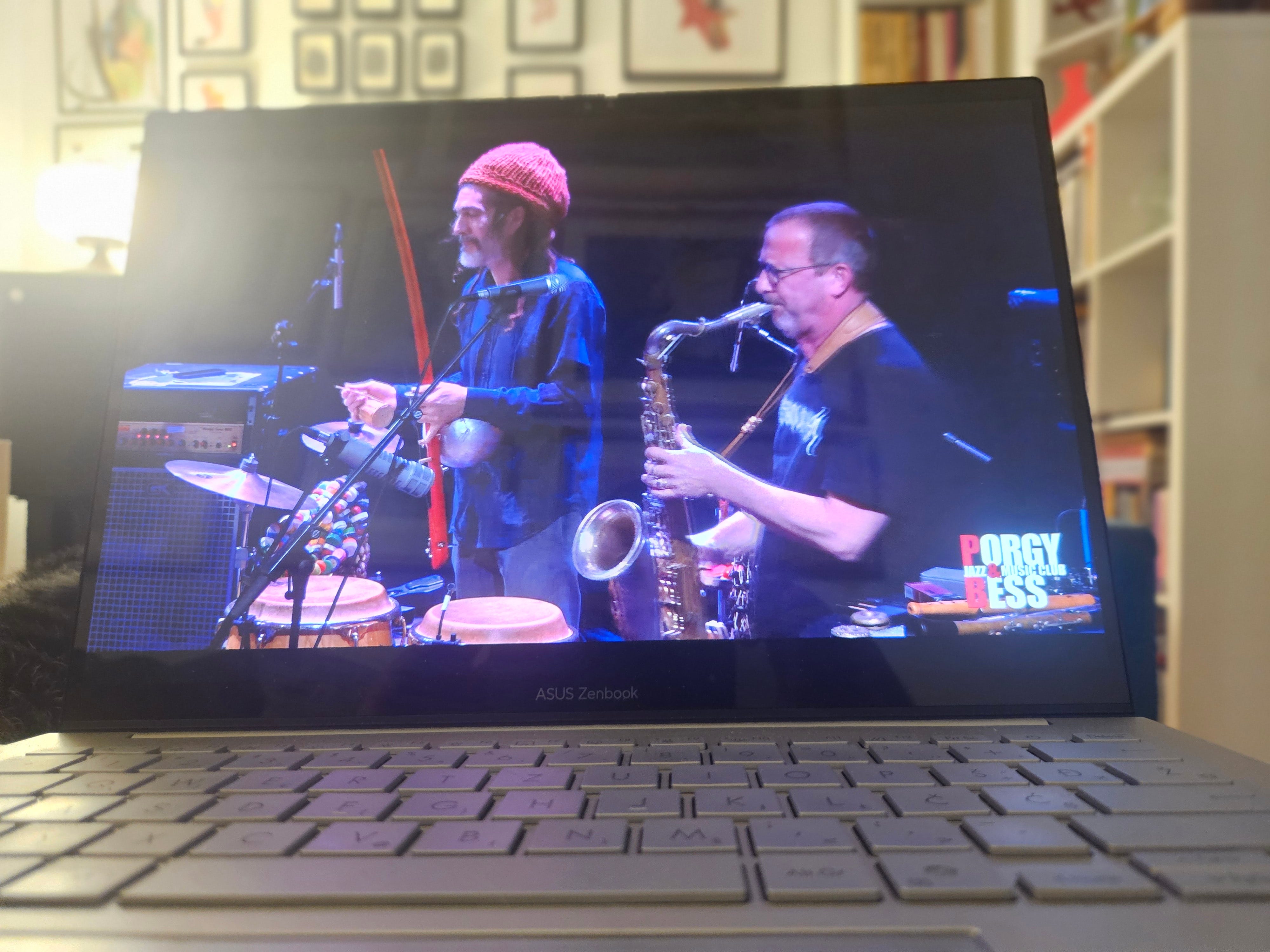
Listening to and watching Cosmic Ear, I also reflected on a kind of paradox: that their music, played mostly on acoustic instruments — some of them quite traditional — sounds very fresh and modern to me. In a way, it feels like we’ve come full circle. For several decades, musical innovation was closely tied to technological progress — the introduction of electric instruments and later computer software. Now, that process is more or less complete, and there is nowhere further to go… except into the very slippery and potentially destructive world of AI technologies. All the more reason why music that sounds humane, alive, and real is increasingly important today — music that steps out of the digital and generic sphere into an experience that is unmistakably human, vulnerable, and in a way humble and modest in the presence of allmighty Art.