


Ever since I’ve been involved in journalism, I’ve always preferred the written form—reviews, long-form essays, and so on. At the same time, I’m fully aware that we’ve already stepped deep into a new era dominated by vertical video. As an introvert, I still resist becoming a “talking head” delivering something to the camera in under a minute, but I’m aware that moment is getting closer.
Many smart people have already written about this, and I don’t have much to add. Everything that applies to jazz musicians and the ongoing discussions about how to balance what you actually do (music) with how you need to present yourself (through dozens or hundreds of short videos documenting your creative process) can just as easily be applied to jazz journalism. Those who have already worked in radio and television probably find it easier, but most jazz critics come from the world of written web journalism or the blogosphere. The older generation comes from the tradition of print media.
All of us should be aware that we are in the midst of one of the biggest transitions in how we do our work. The first major shift in the past 30 years was the move to the internet; the next was mastering the language of social media in general; and this latest one is the transition to short-form video. Just as we once regularly posted on Facebook and shared links, we are now expected to regularly address our followers in a video format that doesn’t scream promotion, but instead follows a “behind the scenes” and “personal” logic.
Against the Jazz Algorithm

In public discourse around Spotify and other streaming services, for years the focus has been on the shamefully low earnings musicians receive from the streaming of their songs, while this year the spotlight has shifted to Artificial inteligence. Particularly striking is the increasingly visible phenomenon of AI impersonation or “AI slop,” which has esc…
There’s also an additional twist here. While we once used Facebook as a tool to drive people to a website, today the entire world of social media functions as a fully independent channel with its own logic and metrics. Musicians face their own set of challenges—whether Instagram/TikTok fans will convert into concertgoers or music buyers. For journalists, the question is how many people from social media will actually click through to a text if they’ve already liked that same text on social platforms.
I recently had a situation where a musician shared my album review on Facebook and received something around 80 likes. The analytics showed that around 10 people actually clicked through to read the text from Facebook. Most people liked the fact that the musician had a review out, but weren’t interested in actually reading it. This isn’t a critique of those people, who manage their free time and interests as best they can—it’s simply a factual situation.
On Instagram, the situation is even clearer. For a post about an interview on Eurojazzist, I recently got around 300–400 likes. I created a nice visual with the artist and added 2–3 quotes in a carousel. In the caption, as always, I wrote that the full interview could be read on eurojazzist.com. I also added a link in the story. For this highly liked post and story combined, I ended up with a total of 3 clicks (from Instagram) to the actual article on the site.
When You Fall Asleep at a Jazz Concert

Ever since I started going to jazz concerts—some 25 years ago, give or take—a whole new musical world opened up to me. But at the same time, I also entered a world of new behavioral conventions. In my teenage years, I went to hundreds of rock and metal shows where you could more or less behave however you wanted wit…
In that sense, Substack—with its newsletter system—is a dream solution to this journalistic problem, because it bypasses algorithmic traps and reliably delivers the text to interested readers who have voluntarily shared their email address and placed their trust in the author. But it’s not the only solution.
Old metrics are outdated. Our real reach is a combination of all these platforms. The solution to this journalistic challenge is clearly in diversifying the platforms through which we communicate. A significant expansion of this field of engagement is the “talking head video,” in whatever format. That can include YouTube, but there you need full professional video production to be competitive. For a good Instagram video, it’s enough to turn on the selfie camera on your smartphone (ideally in portrait mode), use a cheap tripod from Temu, and a solid mic system that can be bought for 70–80 euros. Of course, you can invest more, but it’s not necessary to have a full professional kit worth several thousand euros or dollars and an entire production team.
Let’s build a community
A few days ago, I published my first audio interview with Matti Nives from We Jazz Records. The full audio is below, and I invite you to listen if you haven’t already. Matti is a great guy, and I really like his DIY approach to publishing and the genuine love for music that comes through in the conversation. At the same time, I recorded the entire conversation on my smartphone with Matti in the foreground, and then cut it into segments to share on Instagram. A 45-second video in which Matti talks about Spotify and major labels reached 14,500 views in just a few days, along with dozens of story shares and reposts. I also published a few more videos where he talks about his label philosophy and relationships with other labels, which also gathered several thousand views and plenty of positive reactions.
Eurojazzist | In Conversation With Matti Nives

We Jazz Records is one of the most exciting labels in jazz today. Among my favorite musicians from this label are Linda Fredriksson, Goran Kajfeš, Cosmic Ear, Uusi Aika, Superposition, Joona Toivanen Trio, Gard Nilssen, Koma Saxo, AINON, Pauly Lyytinen, Lampen, and others. Some I was familiar with from before, while others I discovered after I grew fond…
The fact that only a small percentage of those people will listen to the full podcast shouldn’t be seen as a sad lament about the collapse of journalism and its audience. It simply tells us about the diversification of audiences and their interests—not in terms of content, but in terms of format. Some will listen to the podcast, others will watch three short videos. In just 3–4 days, the young Eurojazzist Instagram profile gained around 150 new followers, who will then encounter more interesting content on Instagram, the website, and beyond.
Just as we increasingly talk about “ecosystems” and “communities” in today’s independent jazz publishing, the same applies to jazz journalism. Media outlets and journalists are no longer—and should no longer be—just authors and publishers of texts for passive consumption. The relationship between authors, readers, and viewers is becoming more layered and complex. Success—whatever that may mean—will no longer necessarily be reflected in large numbers on any particular platform, but rather in the depth and the ability to build a diversified “ecosystem” that offers different niche audiences what they need, without sacrificing the authorial quality of the journalist.
What’s Next for Eurojazzist
In that sense, I’ll try to push things further myself. The next step is a video interview with Dave Stapleton, founder and head of Edition Records, now one of the most important independent labels in the jazz world. Alongside major names such as Chris Potter, Dave Holland, Donny McCaslin, and Miho Hazama—whom I’ve already interviewed—the label also releases numerous talented artists like Fergus McCreadie, Joe Webb, and Sun-Mi Hong. For the first time, I used the Substack Recording Studio feature, which will prove very practical in video editing. The interview will be published in 10–15 days, and of course I’ll share a few interesting clips on Instagram for fans of short-form content.
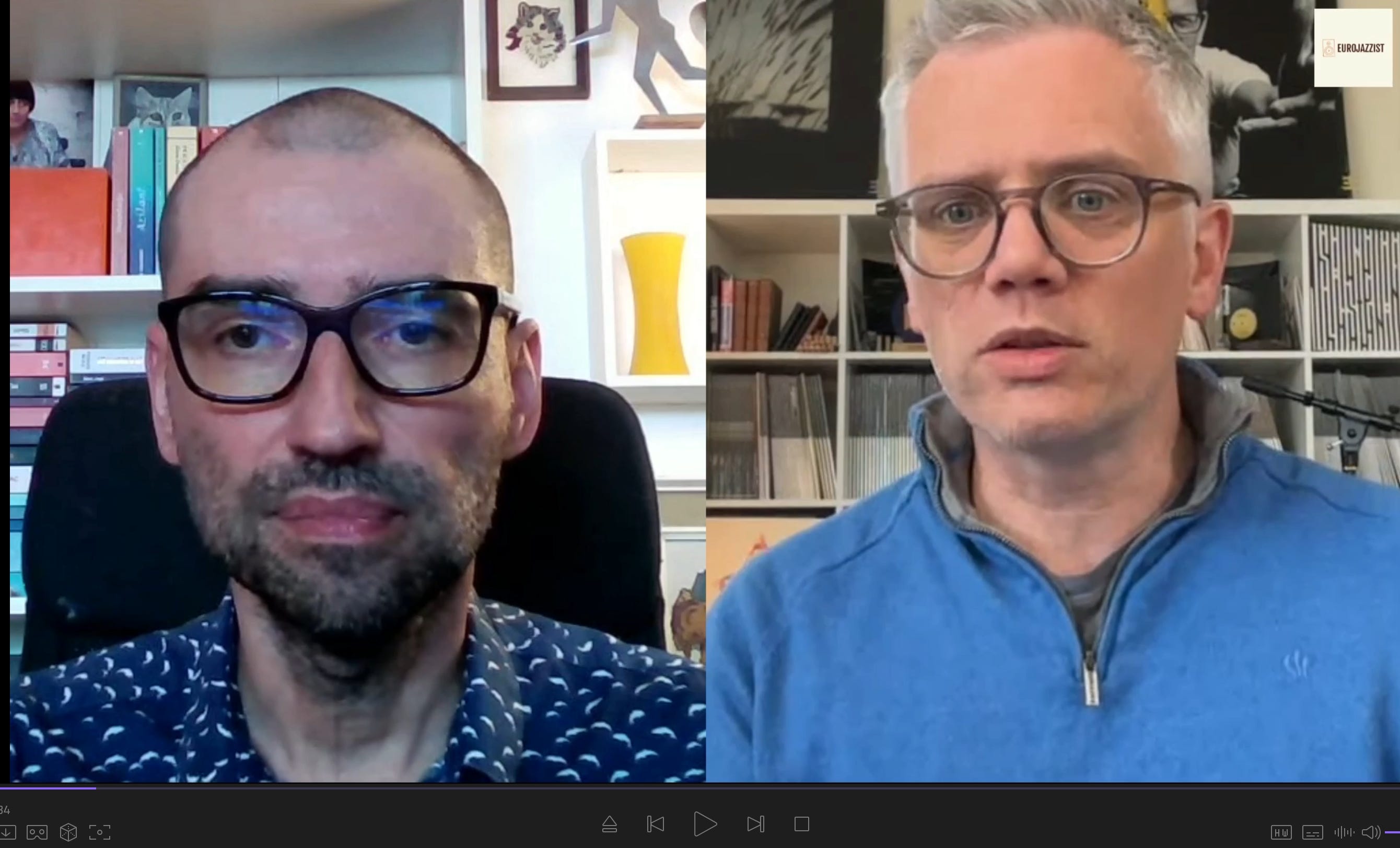
Now that my face is already appearing in that video, it’s probably time to relax about that as well, so I’ll soon start recording a talking head format for Instagram. Maybe in a few days, maybe in a few weeks—but it’s coming. It’s around the corner.
As for traditional written content, an interview is coming up with Serbian accordionist Jovan Pavlović, who has been living and working in Norway for years, where he has performed with Marius Neset and other major figures of the local scene, especially the Trondheim Jazz Orchestra. I’m also preparing a review of the album Tome 1: Beauty and the Queen by the group I’m Not Done Cooking, led by the young pianist Lara Humbert, whose work I recently discovered at jazzahead.
For Radio Belgrade, I’m preparing two shows featuring Miles Davis concerts in Belgrade from the early 1970s. Both are fascinating documents of that phase of Miles’s career, but also of the live jazz scene in Serbia at the time. I’m not sure I’ll manage to write a longer piece about it, but it’s definitely something I’m thinking about, especially in the context of the Miles Davis centennial.
New listens
I first met accordionist Vojta Drnek four years ago at the excellent Jazz Goes To Town festival in the Czech city of Hradec Králové. The program curator is saxophonist Michal Wróblewski, and Vojta was part of the festival team, in charge of media relations. We stayed in touch, and I’ve continued to follow his musical work, which gave me the chance to hear his first solo accordion album Lost Wisdom.
The key PR line reads: The album was recorded inside Reservoir No. 3 of the monumental Water Tanks at Žlutý kopec in Brno, a space with nearly one minute of natural reverberation. Drnek’s meditative pieces thus take on a kind of psychedelic quality, almost as if we’ve stepped into a dream world—or somewhere between waking and dreaming. I liked the album, and I’ll be glad if I get the chance to see him perform live somewhere in Europe—and I hope he’ll successfully solve the “reverb thing” in more conventional concert spaces as well.
The other album I’ve been playing a lot this week is Laurie Anderson with Sexmob - Let X=X. I’ve been a big fan of Sexmob for a couple of decades, while I’ve only listened to Anderson sporadically, usually in other people’s homes. Although I’ve always had great respect for her work, my focus was simply elsewhere. Now felt like the perfect moment to give her more attention, thanks to this collaboration, which works beautifully. The music is very fluid and serves the narrative—the way Laurie Anderson guides the listener through her repertoire is truly wonderful. This live album feels deeply alive and huma, warm and emotional. Thank you, Laurie; thank you, Steven, and the whole crew.
Jazz Across Europe
The Ljubljana Jazz Festival in Slovenia recently announced its program. Given my personal ties to Slovenia—and the fact that it’s time for a short getaway—I’ll be attending a few days of the festival. The headline names are Pat Metheny and Dee Dee Bridgewater, but my personal festival highlights are Aki Takase, Patricia Brennan, and Sun-Mi Hong. You can check out the full program HERE, and I’ll definitely return to it in another piece before the event itself.
After catching everything I’m interested in in Ljubljana on July 2 and 3, the next stop is Pula, Croatia, where Marc Ribot will perform on July 4 with his Ceramic Dog lineup, which hardly needs an introduction. I’ve seen Ribot live many times and will continue to do so whenever I can across Europe. In my opinion, Marc Ribot is the greatest guitarist of all time—regardless of genre or era. Although I usually avoid grand statements about musicians, I’m completely certain about this one.
Thanks. An interesting read. I would be one of those likely to click through to reviews etc on things that interest me or look interesting to explore. I guess based on the numbers I am one of the few. The challenge with these platforms now is that they offer up so much reading/consumption choice that you need to grab the reader in that instant or the moment is then often gone. I look forward to the Dave Stapleton interview. I had a very good chat with him a few weeks ago. Edition are really releasing some great music and I am particularly excited about the upcoming Nils Petter Molvaer duets album which from the bits I have heard sounds great.