


Lately, there has been a lot of discussion about how (jazz) critics put together their lists. A few weeks ago, the DownBeat Critics Poll was published, followed a few days ago by the Francis Davis Jazz Critics Poll (Mid-Year 2026). Substack writers have also been publishing their mid-year lists, and so on. Over the past month, I published two album lists myself, although I deliberately tried to avoid ranking them from No. 1 to No. 10 and so forth. I’m well aware of the limitations of these kinds of lists and of the many factors—some subjective, some a bit more objective—that influence our votes. I’ve touched on this subject several times in previous articles as well.

Musicians have every right to be dissatisfied with critics and to express that dissatisfaction publicly. That happened on my Facebook profile (on a public post) where a jazz musician I greatly respect and whose music I truly enjoy wrote the following in response to the results of the DownBeat Critics Poll:
“If you’re reaching out to journalists, introducing yourself, sending them your albums, lobbying for votes... then a handful of them will end up voting for you. Otherwise, they rarely go looking for musicians on their own; they mostly cover whatever gets served up by the various jazz circles.”

Naturally, I felt that the comment was directed at me as well, since I consider myself a jazz journalist. Although I’m not a DownBeat critic. I wanted to respond in the spirit of a public debate, which I always welcome. So here is my reply, reproduced verbatim:
There is no “neutral” scenario in which every jazz journalist listens to all 5,000 albums released every year in the U.S. and Europe alone, not to mention the rest of the world. We all discover music in different ways: labels send it to us, we follow certain labels ourselves, we get to know some musicians personally over the years, we attend festivals and hear something interesting, we read other journalists, streaming services recommend something, and so on.
What the average jazz journalist listens to over the course of a year is the result of all these different factors. Since the “objective” scenario—where a journalist spends every day independently searching for and listening to every new album released anywhere in the world, while ignoring the emails arriving in their inbox—is simply physically impossible, we’re left relying on these other factors: the connections, contacts, and affinities we’ve built through many years of dedicated engagement with the jazz scene.
The claim that jazz journalists “don’t look around for music” is, in my opinion, a rather reductive conclusion. First, it contains a kind of generalization I never like (”they’re all the same”). Second, many journalists already receive “too much” music from the outset—emails and new albums from labels and musicians in such overwhelming quantities that it’s physically impossible to give all of them the focused attention they deserve.
So yes, I completely agree that it’s impossible to make an “objective” selection of the best musicians or albums, for all the reasons mentioned above—and several others that there’s simply no room to discuss here. If we truly wanted complete objectivity, the only solution would be to abolish polls altogether and simply stop organizing annual jazz awards and critics’ lists. But we all know that’s not how the market works. All I can do is include multiple disclaimers whenever I publish such lists: to emphasize that these are albums I love, albums I’ve actually managed to hear, and not to suggest that anyone is objectively “the best.” For me, such lists serve only as personal recommendations.
End of quote.
In any case, these are my “two cents” on the subject. The discussion could certainly be developed much further, and I’m sure it will be. The major debates in jazz have a way of resurfacing again and again in journalism and criticism, and I’m certain this one will be no exception.
New Listens
I first heard drummer Dejan Terzić live in 2006 at the Belgrade Jazz Festival. At the time, I had no idea who he was, but I saw that Chris Speed was playing in the band, and that caught my attention. The concert was good, although it didn’t leave a particularly lasting impression on me (for various reasons—not least because the venue wasn’t great and the relatively small audience was rather noisy).
When I started working part-time at Radio Belgrade in 2013, I occasionally broadcast his concerts from the EBU radio exchange, recorded at various festivals. Then, in 2022, through the PR agency where I work, I handled the campaign for his two Belgrade performances at BAM Club, curated by Hayden Chisholm. Unfortunately, I couldn’t attend either concert because I happened to be on a vacation that had already been planned.
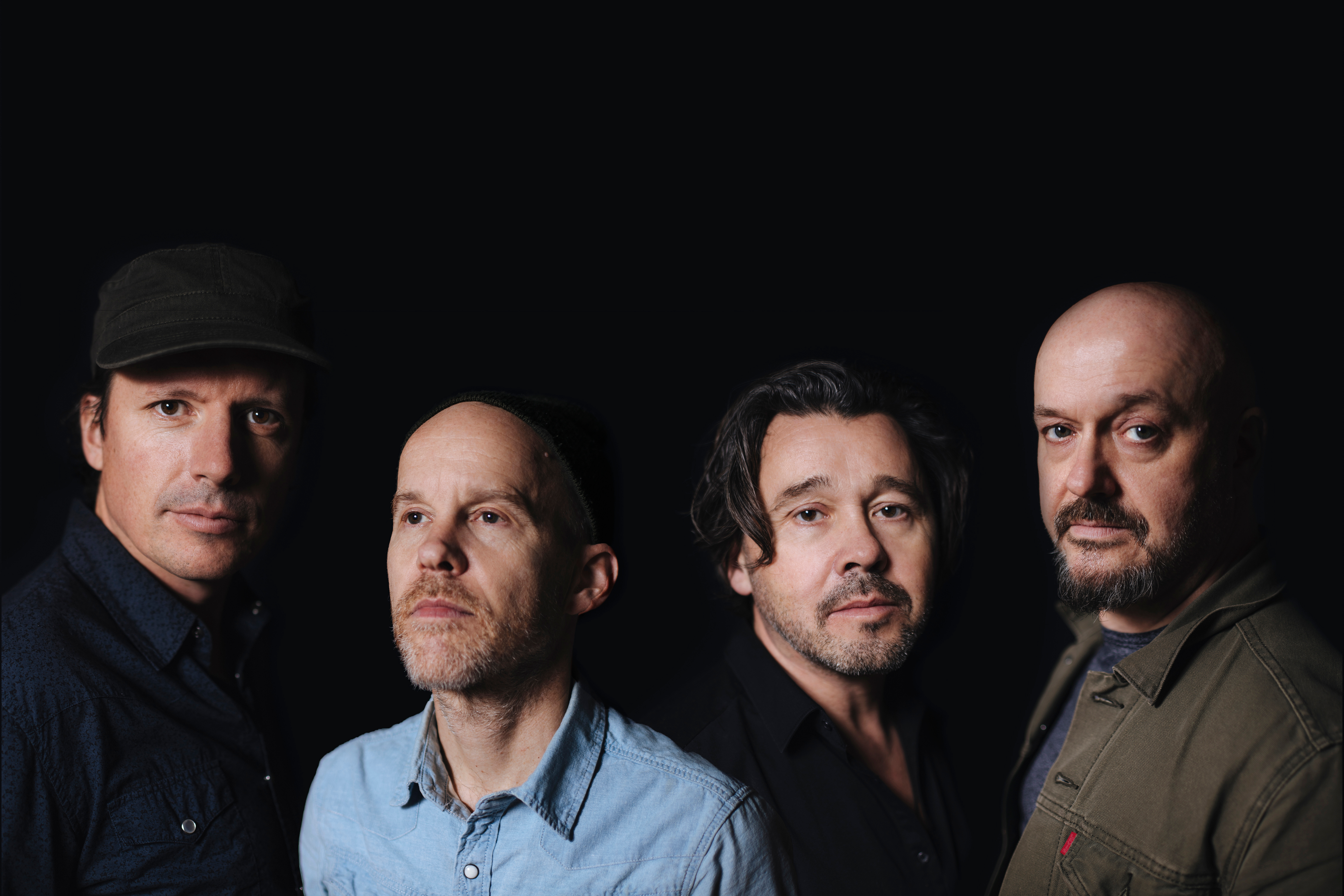
So, you could say I’ve been following Dejan Terzić’s work, on and off, for the past twenty years. And yet, only a few days ago I realized he’d released a new album, Grow, with his outstanding quartet Axiom, featuring Chris Speed (saxophone and clarinet), Bojan Z (piano and Fender Rhodes), and Matt Penman (double bass). The album came out on April 10 (on o-tone music label), meaning three full months passed before I even realized it existed.
I discovered it entirely by accident. I clicked on some social media link recommending new releases, saw Terzić’s name, and because I was busy at work, I simply entered “Dejan Terzić new album—check” into my digital reminder. Yesterday I finally played it. I’m sharing all these seemingly trivial details because they offer a glimpse into how a jazz critic’s search for new albums actually works. Yes, much of it is random and far less systematic than people might imagine.
Dejan Terzić was born in what is now Bosnia and Herzegovina, then part of Yugoslavia, but emigrated with his family to Germany at the age of three. He has built a solid jazz career there, and the current incarnation of Axiom has been together since 2015. That isn’t an insignificant detail. When musicians of this caliber stay together for more than a decade, they develop a kind of telepathy that results in remarkably fluid music.
Their music could broadly be described as contemporary jazz—or perhaps post-bop, understood in a very loose sense. The compositions are carefully crafted and thoughtful, yet the improvisational passages feel „loose“ in a good way. Rather than comparing the music itself, I’d compare the feeling it gives me to listening to Miles Davis’s Nefertiti or Sorcerer: music that stretches out and unfolds according to the internal („telepathic“) logic of the musicians playing it. As a listener, that creates a wonderful sense of unpredictability while also making you feel that the music is never in a hurry. It doesn’t rely on forceful themes or aggressive structures—it simply flows. I’ve only listened to it twice so far, but I can already tell it’s entering heavy rotation.
Richard Spaven’s new album, Light of Day, reached me through a much more conventional route. I’m on Edition Records’ mailing list and follow their social media, so I’ve been aware of the singles, album announcements, and everything else for months. The album’s official release (just yesterday) was almost a formality, since I’d already received it in advance. That doesn’t mean I’m writing about it simply because I got an email. I’m writing about it because the music genuinely speaks to me and fits perfectly with what I’m in the mood to hear right now.
The key PR line describes Spaven as “one of the defining rhythmic voices of the past two decades, shaping the space where jazz, hip hop, club culture and drum and bass meet.” In that sense, I appreciate his music precisely because it follows the opposite logic from many of my favorite bands. Here, the music seems to emerge from rhythm and atmosphere first, only then moving toward melody and improvisation. It won’t be one of those albums that changes my life, but I can easily see it becoming a welcome source of variety on a playlist that’s often filled with rather demanding music.
I’ve been so busy with my day job over the past week that I barely listened to any music at all, only getting back into my usual routine yesterday. I made a note of several albums and started listening, but I’ll save those recommendations for the next Randomizer, once I’ve had enough time for the impressions to settle.
Jazz Across Europe
Four years ago, thanks to a fortunate chain of circumstances, I attended Jazz Goes to Town in the Czech city of Hradec Králové for the first time. The festival combines avant-garde and contemporary jazz with showcases of today’s Czech bands, and it turned out to be a great combination. I had the chance to see some of my favorite musicians—my absolute highlight that year was Ingebrigt Håker Flaten’s Exit (Knarr)—while also discovering a jazz scene that had previously been completely unfamiliar to me.
Afterward, I stayed in touch with several Czech musicians, journalists, and jazz professionals, which is why names from that scene occasionally appear in my album recommendations.
This year’s program (6–10 October) particularly caught my attention because of the new trio featuring Rodrigo Amado, Joëlle Léandre, and Gerald Cleaver, who will be giving only their second festival performance together. There’s also Arcanum (Trygve Seim, Arve Henriksen, Anders Jormin, Markku Ounaskari), BRIQUE, featuring one of my favorite pianists, Eve Risser, along with several other exciting bands.
I hope I’ll manage to return this year as well—provided the rhythm of my other commitments allows it.