


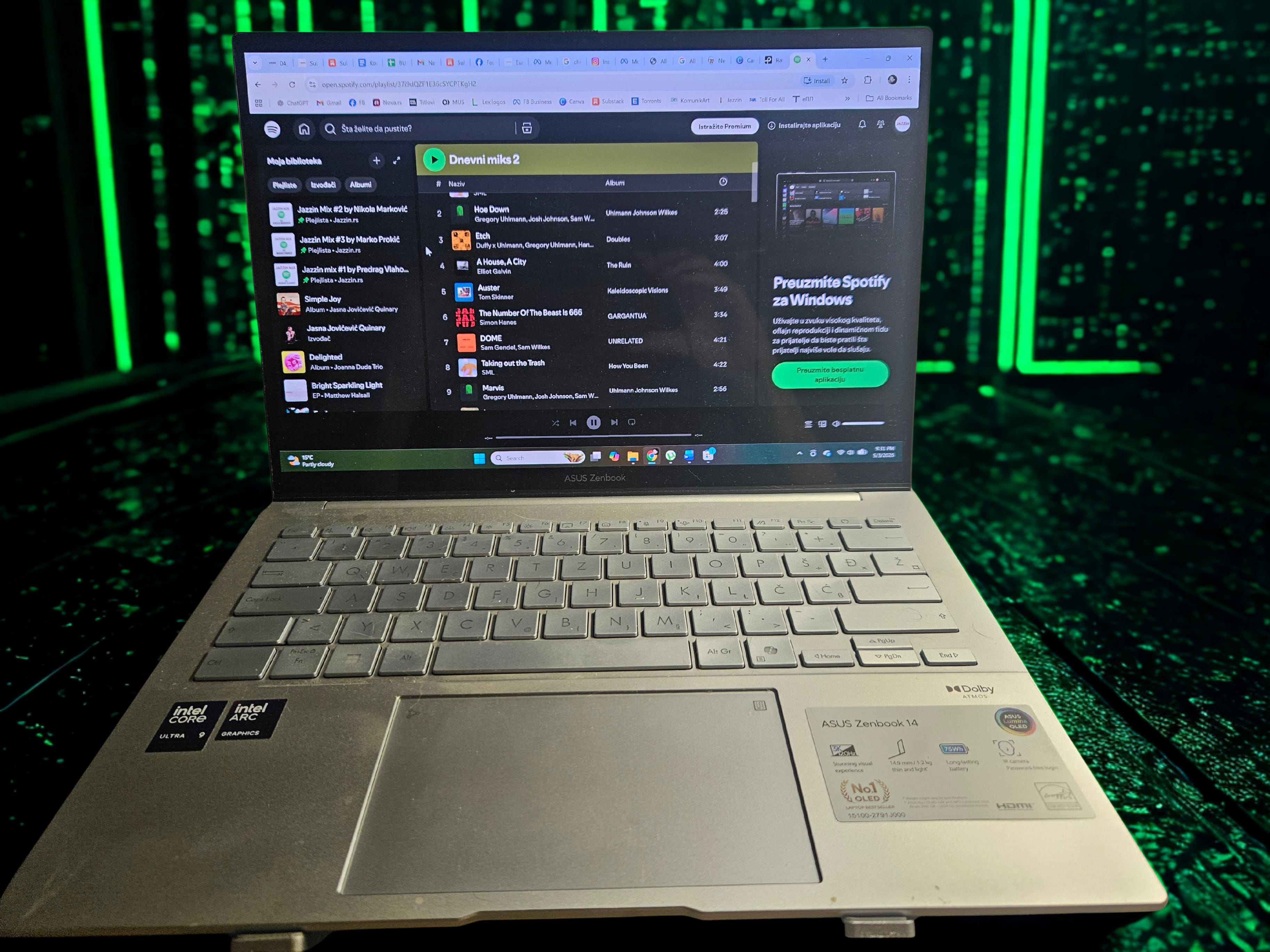
In public discourse around Spotify and other streaming services, for years the focus has been on the shamefully low earnings musicians receive from the streaming of their songs, while this year the spotlight has shifted to Artificial inteligence. Particularly striking is the increasingly visible phenomenon of AI impersonation or “AI slop,” which has escalated on the jazz scene: fake “artists” are appearing on streaming platforms, presenting themselves as real jazz musicians, with AI-generated music and covers that have nothing to do with their music—or with jazz at all.
All of these are serious, pressing issues. But behind them lies a fundamental question about the way algorithms function—namely, whether algorithms can replace human curration. This is neither a new nor a revolutionary topic, but it doesn’t hurt to revisit it once again and consider it from a jazz perspective, if necessary dozens or hundreds of times. Because it matters.
Streaming in Serbia began to take off more seriously around 2015–2016. The first (legal) platform to appear was Deezer, and I immediately started using it. At the time, this was also necessary because of the job I was doing, which required familiarity with all current software for listening to music on hi-fi systems imported by the company I worked for. It was a time of software enthusiasm for listeners, but also the beginning of the collapse of our company’s distribution business. Sales of CDs from nearly all the labels we imported gradually began to decline—except for ECM, which also hesitated the longest before entering the streaming universe.
Spotify arrived a bit later in Serbia, but it quickly gained its followers. I started using it as well, simply because it made it easier to listen to all the new music I was interested in—music that hadn’t reached me directly from labels or musicians I was in contact with. I would save albums that interested me and listen to them both on my home system and on a Bluetooth speaker while traveling. Since I didn’t tinker much with the settings, at some point I noticed that music kept playing even after the album I had chosen ended. It was stylistically similar, but I definitely hadn’t selected it. Nor did it always suit my taste. Soon enough, I realized that His Majesty—the Algorithm—had entered the scene.
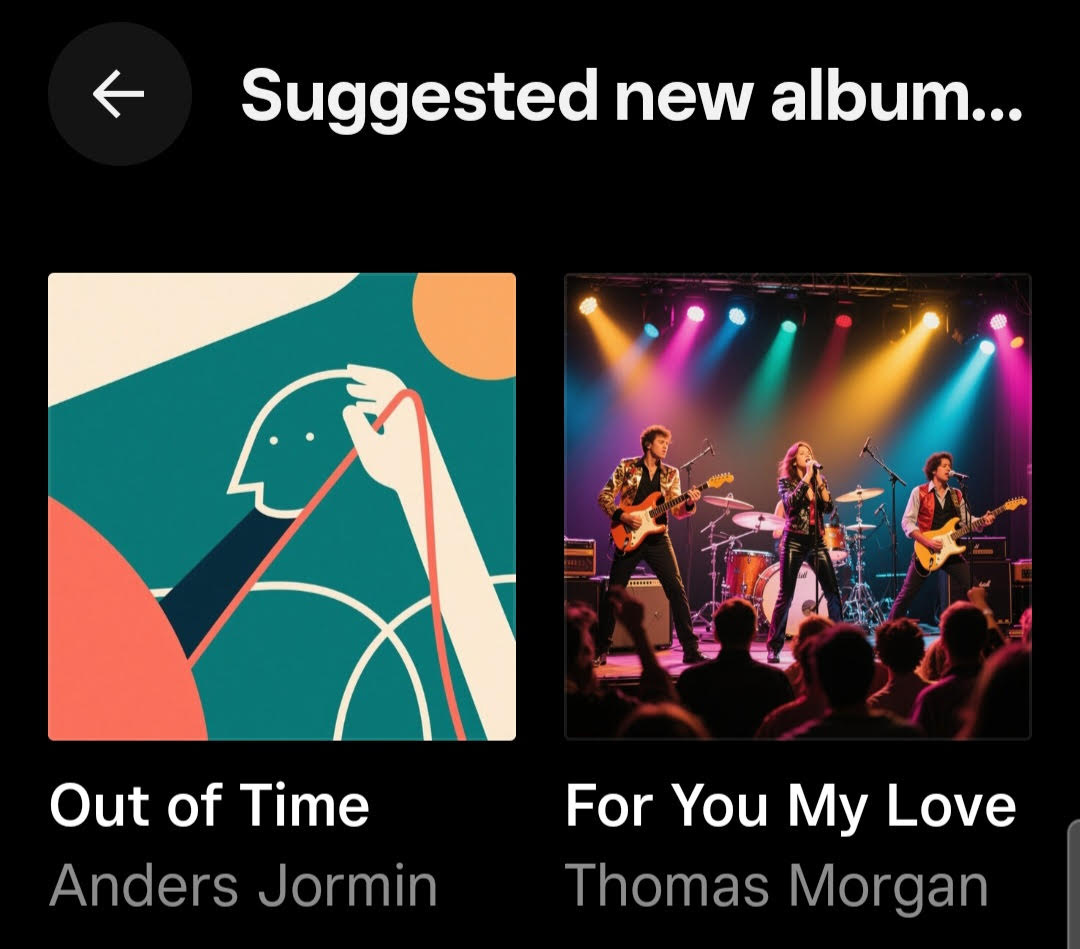
The idea behind Spotify’s algorithm was quite clear: after I finish listening to an album I’m interested in, Spotify will continue playing similar tracks in order to keep me on the platform. And indeed, everything was similar—but for some reason, very little of it was to my taste. If I listened, for example, to Tord Gustavsen, once his album ended I would get another ten piano trios in the playlist—often Scandinavian, or from neighboring European countries.
Certain musicians would keep recurring in similar situations. For example, the Neil Cowley Trio was, for some reason, constantly present in algorithmic recommendations, even though I had never particularly listened to his music. I have nothing against him, but other musicians were simply always in my focus, and the algorithm failed to convince me that I should be listening to him. Or take the Helge Lien Trio—again and again, Spotify would offer them to me. The match was somewhat better here, since I had listened to their music about a decade ago, but it still wouldn’t have been my first choice for expanding my horizons.
Expanding horizons. That is precisely what, upon reflection, I identified as the crucial problem with Spotify’s algorithm—or with the idea of AI-driven algorithms on streaming services in general. The algorithm is not designed to broaden our horizons, but to keep us as safely as possible within the genre and stylistic environment we started from.
All That Jazz in Radio – Human Curation vs. Algorithms
This was the title of a panel held as part of the jazzahead! conference program, featuring Laima Slepkovaitė from LRT (Lithuania), Co de Kloet (Zivasound/NPO/Netherlands), and Roch Siciński from Polish Radio, with moderation and thoughtful commentary by Götz Bühler, Artistic Advisor of jazzahead. After attending both the EBU meeting of radio producers and the panel itself, I felt the urge to put all of this “on paper,” and the fact that I was on the right track was confirmed by the reflections of my radio colleagues.
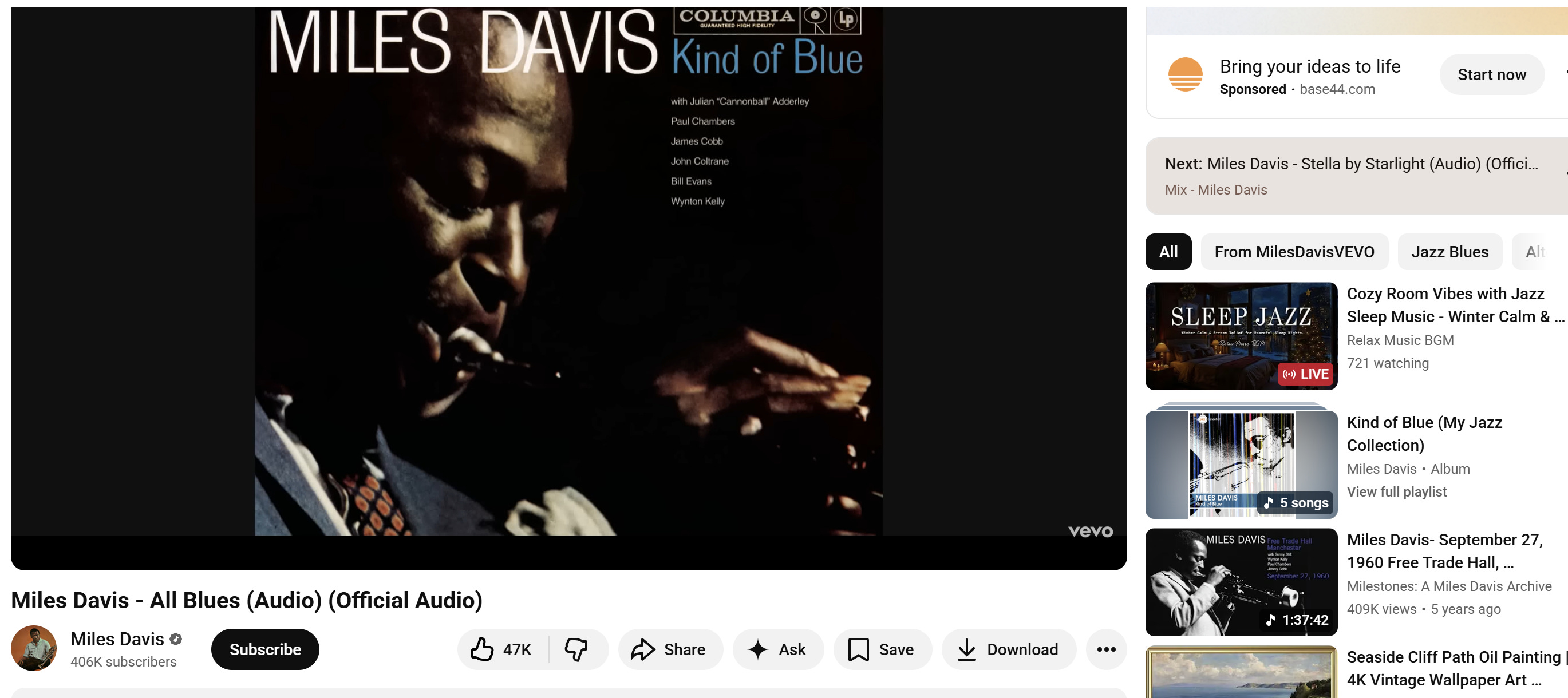
I found Siciński’s remarks particularly telling, as he also touched on the “early days” of the YouTube platform. “In the beginnings, algorithms were very helpful. Maybe you remember:15 years ago, when you turn on the YouTube and start with Miles Davis, after two hours, you were in the roots music of Ghana. And now, when you start with Miles Davis, after two hours, you will be back with Miles Davis. And that’s disappointment for me”, said Siciński.
Co de Kloet pointed out that this situation is not particularly new, yet—as we can see—it continues to produce similar results decades later. “I wanna make a comparison to rock radio, and what happened in Holland in the beginning of the ‘90s. There was a system called PowerGold and instead of DJs selecting music and presenting that to their audience, they had a computer who generated playlists. And the effects were: one, all the programs started to sound alike; and two, all the people who knew something about music were fired. Three, the market share went down from 25% to 2%.”
Laima Slepkovaitė also had little praise (to put it mildly) for the introduction of AI systems into certain areas of radio work at LRT. She emphasized that “AI is a good servant, but a bad colleague,” and described the use of algorithms in music curation as a misstep.
“This is what we are here for. We are still human beings working at radios. We are there to tell our managers who may be very enthusiastic, when they come back from some workshops, meetings and seminars, where they’re introduced to those products. They come to us with those ideas and we are there to say that this won’t work, that it’s dangerous, harmful. We are there to suggest the ways to use those expensive products for the benefit of our audience, and not to do harm”.
I particularly identified with the words of Roch Siciński, who made another important point: “Music is fun for us. And discovering is fun. Algorithms can help us to get something very quick and get something very similar to what we like, and in that perspective, it is useful. But to be clear, we are very curious about music, so I think that we want to know not something similar, but something which can challenge us. And the radio journalist can challenge the listener, propose something completely different”.
Of course, it is also important to point out certain aspects where the algorithm itself does not function according to pure genre logic. Advocacy group Music Equality has shared their findings from research from the European Commission showing that Spotify is systematically devaluing the music exports of 11 countries in southeast Europe (SEE) by shutting them out from algorithmic discovery. “The EC report, published in March, found that even when fed with local music recommendations, the algorithm consistently fails to amplify local cultures, all but ignoring centuries of history and important contributions to music such as Bulgarian jazz and Serbian folk, which UNESCO recognizes on its intangible heritage register”, as it is mentioned in THIS ARTICLE.
To avoid being completely biased toward the “human side,” I should say that there have been situations where I felt the algorithm did a good job. Looking back at those instances now, it seems to me that this was mostly when dealing with a type of music I didn’t know well enough, a scene that wasn’t particularly close to me—so I would get a decent overall overview. But as soon as I entered a field of music that fundamentally interested me, the algorithm would start to stumble. In other words, it was doing an “excellent job” in a software sense, but as Siciński aptly put it—we are very curious about music and we want to be challenged.
My work in radio does not involve creating playlists, but rather selecting entire concerts or albums. Still, there have been dozens of occasions where I created playlists lasting an hour or two for various purposes. I would never end up with a playlist consisting of ten pianist bandleaders, or ten straight free jazz tracks. A playlist must have its own dramaturgy: an opening set of tracks that establishes the tone, in line with the purpose it was created for; then a piece that contrasts in tempo; transitions between faster and slower pieces; the occasional surprise that the listener might not expect; and so on and so on. We all understand the point.
Are You a Jazz Audiophile?

In one of my previous columns, I mentioned that I used to work for a company that served as the Serbian importer and distributor for releases from ECM Records, ACT Music, Enja, Harmonia Mundi, CAM Jazz, and many other labels. That was my specific domain, while the colleague I shared…
Importance of Jazz Stories
OK. At this point, we can raise a counterargument. Yes, perhaps the algorithm doesn’t work well for us hardcore music aficionados, but it is good enough for 95% of people who simply want some music “in the background.” Or for those who do listen attentively but don’t have the time—or the desire—to spend hours exploring everything new that has appeared in the genres they love. That’s what radio hosts and programmers, critics—or algorithms—are for.
The panel speakers also emphasized the human side of the story in this sense: radio hosts themselves are individuals, with their own presentation styles, diction, narration, and stories. On the other hand, there are the “stories as such,” or as Siciński put it: “I think that emotions and that story which we all can share through the radio are the most important. You can imagine situation when algorithm on Spotify suggests you to listen, for example, I Remember Clifford, but you don’t know the story. You don’t know who was the Clifford Brown or you don’t know why the tune Alabama is called Alabama. Or Lee Morgan’s music without his tragic stories is not the same, and so on and so on. I think that’s not replaceable”.
This is an aspect of jazz—and of listening to music in general—about which I have always had mixed feelings. I often held the view that “pure music” must be good and able to withstand the test of listening regardless of the context and the “story” behind it. That the music of an “ordinary” person with an “ordinary” life is just as valuable as that of someone who lived a turbulent or tragic life, and that the latter’s music is not a priori better or more interesting. But on the other hand, we do not live under a glass dome or in an abstract world, and everything we know about music and what surrounds it enriches and deepens our experience of it.
Very often, such stories serve as excellent organic PR for jazz as a whole; thanks to the compelling narratives from jazz history, this music can reach a wider audience that might potentially be interested in it. There is no need to shy away from that. These stories must be told by living people.
Or perhaps not?
Every new technology starts out clumsy, only to gradually become better and better. Just think of what Google Translate was like a few years ago—an absolute joke—and how tools like Chat GPT or programs such as DeepL translate today. It is very possible that certain business-minded individuals are carefully reading everything being written about AI algorithms and systematically registering what serious and thoughtful people are saying about the system’s shortcomings. If there is a problem, there is also a solution. Perhaps some brilliant programmer will come up with a more advanced AI system that anticipates not only music similar to what we listen to, but also our listening needs in a broader sense. Or perhaps a generated AI voice will start inserting these “stories” between tracks, if the industry determines that this is necessary for market development—or at least for eliminating the “competition” represented by living people.
I want to believe that human imagination and intelligence, sophistication, heart, emotional depth—and ultimately unpredictability—are things that will forever remain beyond the reach of artificial intelligence logic. In that sense, I am still a (moderate) optimist.
I love that you are posing these questions Nicola. I am listening and asking myself the same questions!