


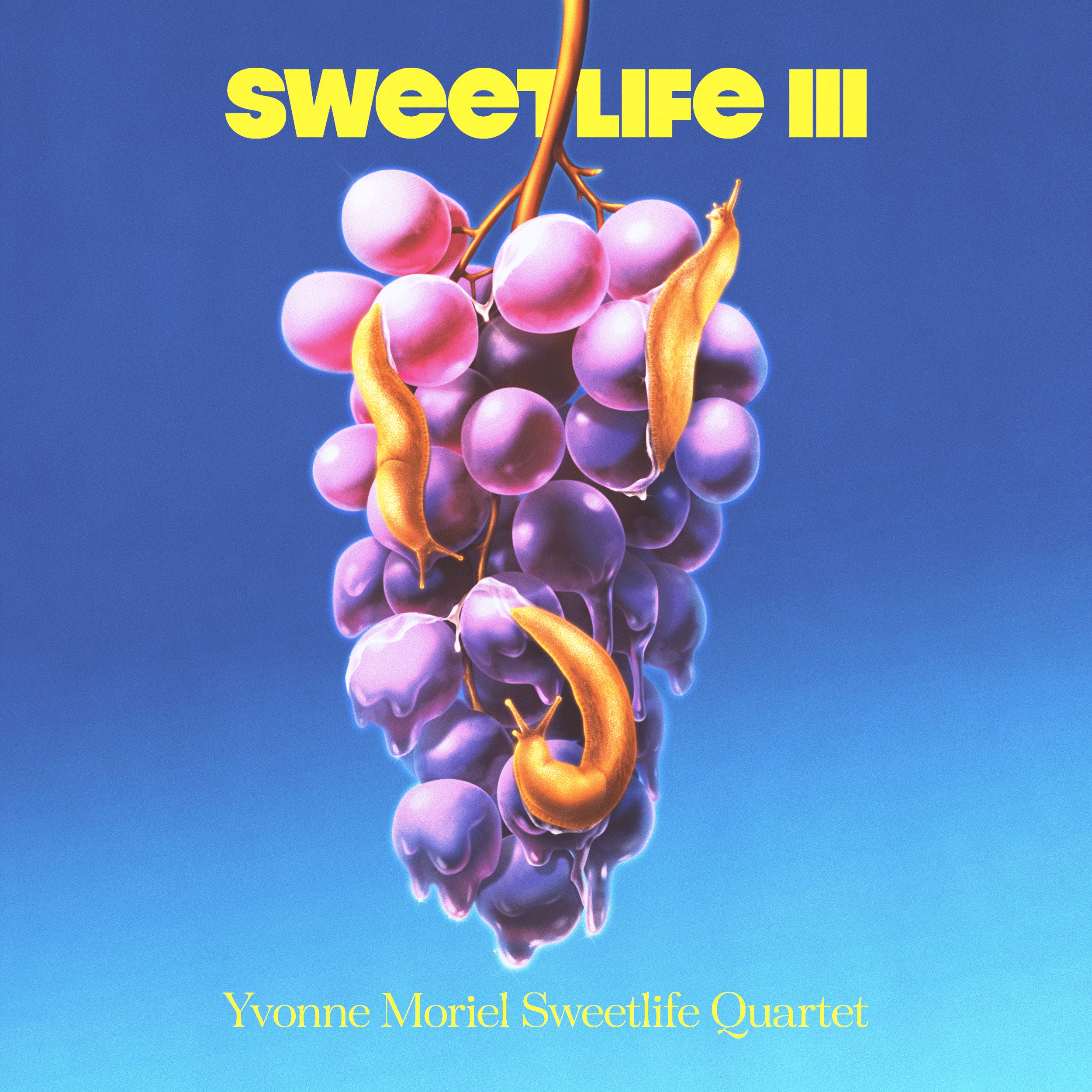
Sometimes I come across new music quite easily—by following the work of my favorite labels, recommendations from people I trust, and so on. Musicians also often reach out to me directly to present new albums. And then there are moments when I get a bit stuck, or feel like I’m constantly circling within the same bubble, sensing that it’s time to look for something new or to change my approach.
In the past, I followed the NASOM lists published by the Austrian Music Export agency much more regularly. These lists function as a kind of official recommendation of musicians who live and work in Austria, aimed at foreign agents, promoters, and journalists. Musicians featured on these lists (sorted by genre) are also more likely to receive financial support from their country for concerts and tours abroad. Toward the end of last year, I browsed the five bands or musicians currently highlighted in the jazz recommendations for the 2025/2026 season and came across the name of saxophone/flute player Yvonne Moriel.
After enjoying her music on first listen, I noticed several additional strong references—that she had already performed at my one of my favorite jazz festivals - Jazzfestival Saalfelden, and that she received the award for Best Newcomer on the Austrian jazz scene in 2024. In the meantime, she has also been selected to perform this year at the jazzahead! festival in Bremen, a key meeting point for networking and collaboration within the European jazz industry.
The jazzahead! website states: “Her quartet sweetlife blends diverse influences – jazz merges with dub effects and electronics, free improvisations intersect with complex rhythmic patterns and are combined with beats from modern jazz and hip-hop.” If we had to rely on a quick pitch, such a definition would certainly be accurate and appealing. Looking a bit deeper, however, I would primarily place Yvonne Moriel’s work on this album within the context of contemporary 21st-century jazz, where intersections with the aforementioned genres are very subtly woven into her distinctive jazz expression.
Take, for example, the piece Suite p.I – Blue, in which Moriel combines a striking melody in the spirit of Ornette Coleman’s Lonely Woman with a modern rhythmic structure, where Stephanie Weninger on Moog and keys plays a particularly important role. By working in the lower registers, Weninger assumes the role of a bass instrument, while adding new colors and approaches compared to the double bass or bass guitar. This creates an exciting tension between the horn section, rooted in some of the finest moments of jazz tradition, and a contemporary rhythm section—without any sense of a calculated, on-the-nose “jazz meets hip-hop” fusion. The listener feels gently nudged out of their safe listening zone, yet the music retains an organic flow. It is intriguing and accessible at the same time.
In the interplay between the horns—Moriel and trumpeter Lorenz Widauer—and the rhythm section, dominated by Weninger alongside drummer Raphael Vorraber, lies the seductive quality of the band Sweetlife. A similar core strength of the band can be heard in the subsequent Suite p.II – greenish, or in the composition Dome; here, Moriel also demonstrates, as an instrumentalist, a keen instinct for timing—knowing when to launch a free solo and deconstruct the theme, and just as quickly return to the flow within the band’s established discourse.
Moriel also shapes the album’s overall dynamics with great care, placing so-called introductory and transitional tracks (such as Entrez, night, and 45/78) at precisely the right moments to provide listening relief and variety. When a more explicit dub/hip-hop rhythm appears in Suite p.III – lilac, it is more likely to be perceived as a counterpoint rather than the album’s central thread; at the same time, it sounds meaningful and fully contextual, given the role the rhythm section has played up to that point.
One of my favorite tracks on this album is Girl; it contains no postmodernist inflections whatsoever, yet it is one of those songs that draws you in through its simple beauty and memorable melody. Although one cannot speak of related styles, a comparison with Norwegian trumpeter Mathias Eick came to mind, in the sense that a similar talent is at work—allowing an entire composition to rest on a clearly articulated thematic core.
I came to appreciate Yvonne Moriel precisely because of her restraint and her ability to create music that is both accessible and exciting without radical gestures or dramatic deconstructions; music that moves within familiar idioms, yet leaves the impression that we are listening to something new and fresh.