


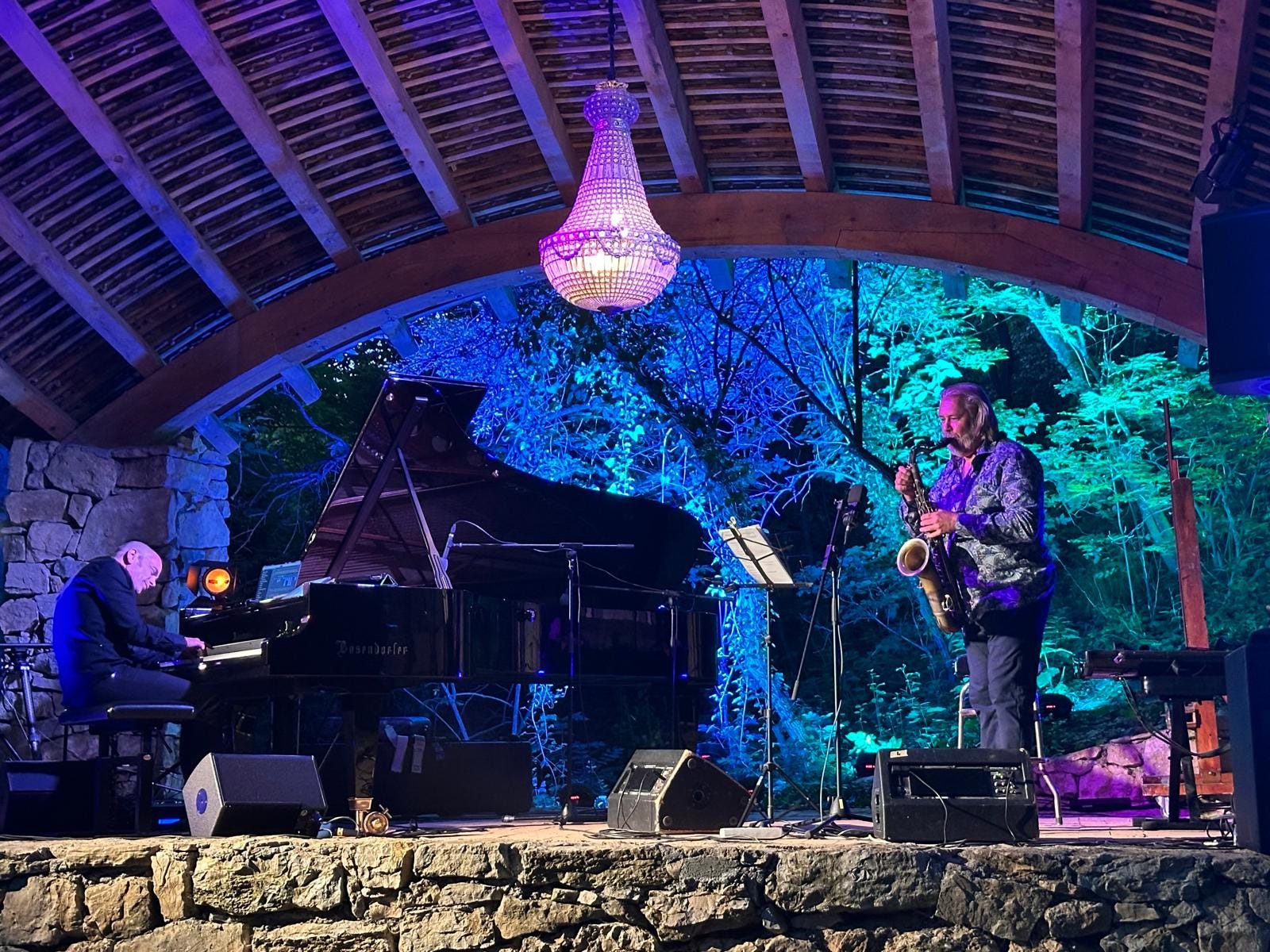
Tord Gustavsen is probably the musician I’ve seen most often from the “ECM family.” That, of course, has to do with the quality of his music, but also with the fact that both my partner Monika and I love it—she’s the one I usually travel with to concerts and festivals. If we see that Tord is playing somewhere nearby, the choice is easy. Over the past three years, we haven’t even had to travel far: he performed three times in neighboring Romania and once in Pančevo, the town where we live. Each time in a different formation: as a classic trio, in a duo with drummer Jarle Vespestad, solo, and finally as a duo with saxophonist Trygve Seim.
The venue Fikl Art Stage in the village of Socolari was particularly interesting—we visited it for the first time last year. It is an estate run by the Romanian painter Gheorghe Fikl. Once a mining site, later an agricultural area, Socolari has come back to life over the past twenty years thanks to creatives who bought old stone village houses and turned them into studios, ateliers, and galleries. Fikl himself went a step further, merging several properties into a complex that now includes multiple gallery spaces and two concert stages, right at the edge of the village where the dark mountain forest begins. Among other things, Fikl has a passion for organizing jazz concerts, so last year the pianist Jacky Terrasson performed here, as did the Tord Gustavsen Trio.
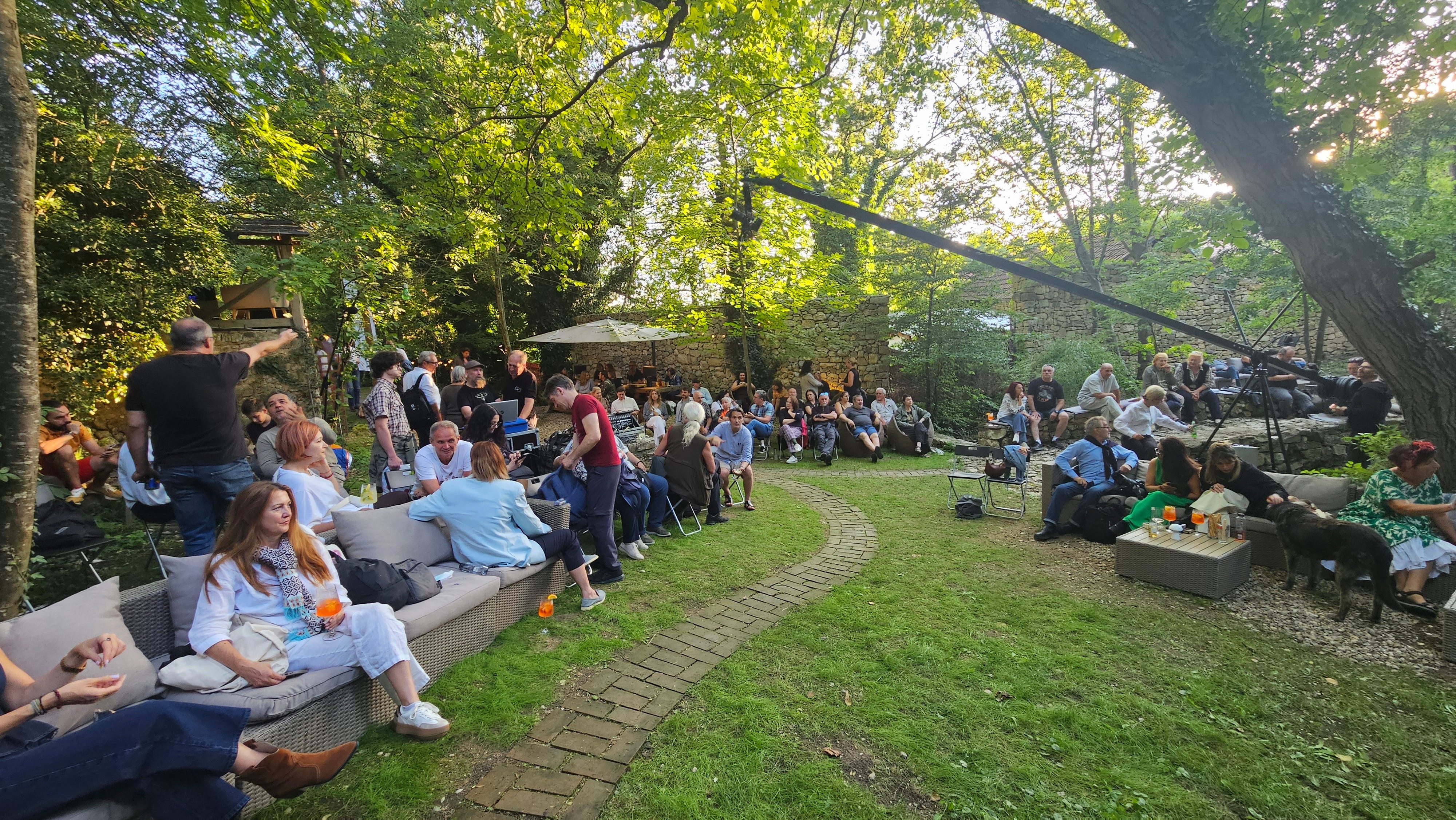
The atmosphere on the estate itself is idyllic: chairs, sofas, and tables are casually arranged near the concert space; local dogs wander around; a small forest stream runs through the middle of the grounds. The stage is made of stone and wood. On Monday evening it was even chilly despite the July date—I later joked that it was so we could better feel the Norwegian sensibility and the atmosphere of the music performed by Gustavsen and Seim.
Both musicians are perfect representatives of what we call the ECM sound, and their concert vividly embodied that famous ECM slogan: “The most beautiful sound next to silence.” Tord Gustavsen has developed a completely authentic personal style within this sensibility—at the crossroads of Norwegian traditional music, classical music (with a particular emphasis on Bach), and minimalism, and the music we perceive as atmospheric Scandinavian jazz beyond bop patterns.
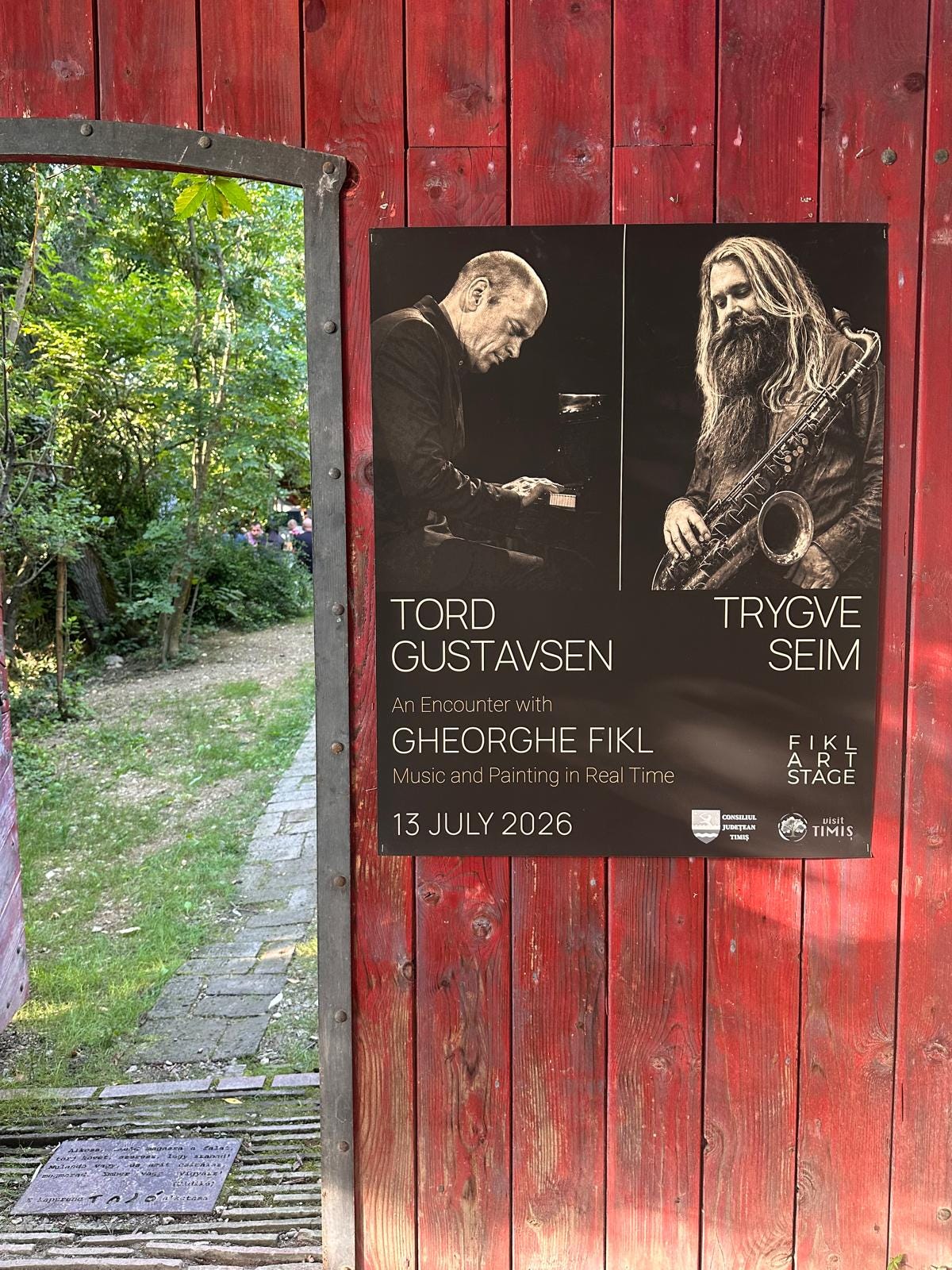
Modest and humble, he creates music that on a higher level radiates an energy akin to gospel, though shaped by a different culture and musical tradition. On this occasion he was joined by Trygve Seim, a seasoned ECM artist whom one could most simply describe as a follower of Jan Garbarek’s style—and in that sense, a perfect match for Tord’s music.
That is, for the music Gustavsen performs and arranges. The repertoire for this new duo is primarily based on Bach’s music, often devoted to Jesus Christ, which Gustavsen has previously performed in a trio format. All this does not mean that the Norwegian pianist has turned to classical music, but rather that he has aligned the repertoire of one of the greatest composers of all time with his own arranging and performance style.
If you approach this music with an open mind and heart, you won’t even notice much difference between Scandinavian traditionals, new original compositions, and Bach—they all merge into an original jazz expression. Quiet, delicate, humble before a higher force, and deeply respectful of the audience, whom it invites to experience that rarely attainable sense of elevation: the feeling that, for at least an hour, we have entered another dimension beyond everyday trivialities, worries, and obligations. Not a dimension of escapism, but one of deep immersion into the essence of our being, with music as the medium.
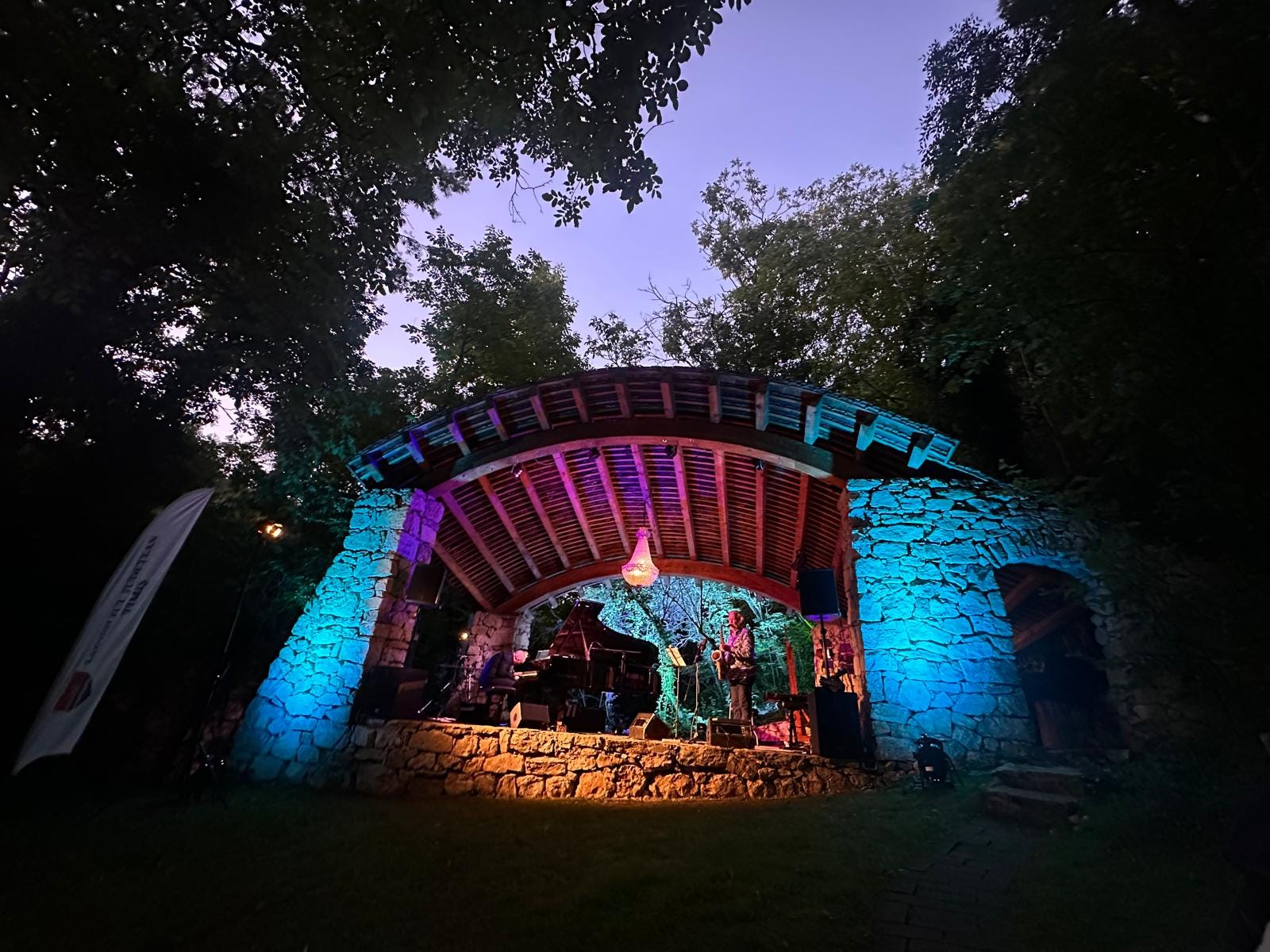
The moment the two musicians begin to play, this feeling becomes almost literal. Tord and Trygve do not need to “conquer” the space or “capture” the audience’s attention, because everyone is already fully present. Once they start playing, there is no coughing, no rustling in seats, no whispering. Instead, we hear: the gentle murmur of the stream just behind the stage; the occasional rustle of leaves; perhaps a bird or a distant dog barking. Nature itself. And of course, the piano and the saxophone.
We feel a Nordic freshness, and our senses are fully attuned to absorb every sound of the instruments. Tord Gustavsen is a master of communicating with silence, aware that every note exists in relation to it, to the flow of time, to the air. Silence prepares us to perceive each note as essential. There are no empty melodies or solos that merely fill space between climaxes; every touch of the keys matters. So does every inhale or exhale of Seim before he plays a note, a phrase, or a solo on the saxophone. The way he approaches the instrument; the way he shapes his tone. Highly melodic and lyrical, yet never excessive—just like Tord.
This gradual unfolding in musical narration corresponds to what contemporary pop culture calls a “slow burn.” To truly experience the climax, it is not enough for Gustavsen and Seim to suddenly play loudly; we need to become familiar with their playing, both individually and together. To observe their interaction, how they respond to one another, how they build solos and compositions. And then, once we have absorbed it all—once we understand how they approach both the music and each other—we are ready. One of them raises the volume, the other joins in. As Tord deconstructs melodies and chords, Trygve releases the brakes and cuts through the air, his sharp sound carving into our emotional fabric—full of pathos, emotion, and drama that can bring you to the verge of tears.
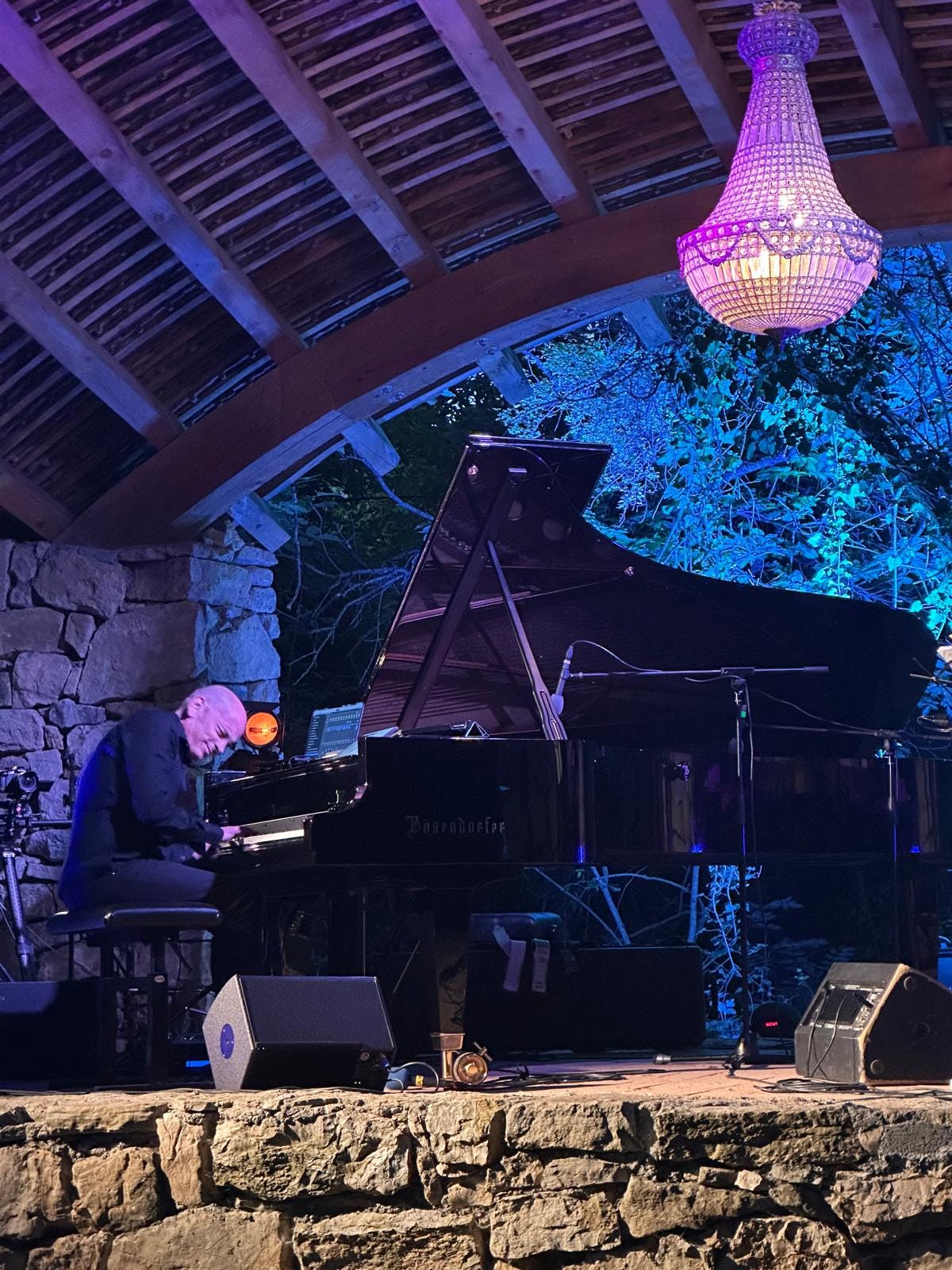
When they finally reach the first pause, Tord Gustavsen addresses the audience very quietly—he speaks just as he plays. Yet not without humor and charm: he introduces Seim as “the guru of tantric saxophone,” and perhaps expresses a slight “concern” about how Bach himself might react to these interpretations.
For this occasion, the performance was divided into two sets. In the second, Gheorghe Fikl joined the duo on stage with a large canvas. We were told we would witness painting in real time, accompanied by Gustavsen and Seim. Naturally, this concept shifted some of the focus away from the music itself (I often found myself closing my eyes during the first set), toward anticipation—what would he paint, and how would Fikl fit into this precise, seemingly hermetic musical language of the two Norwegians?
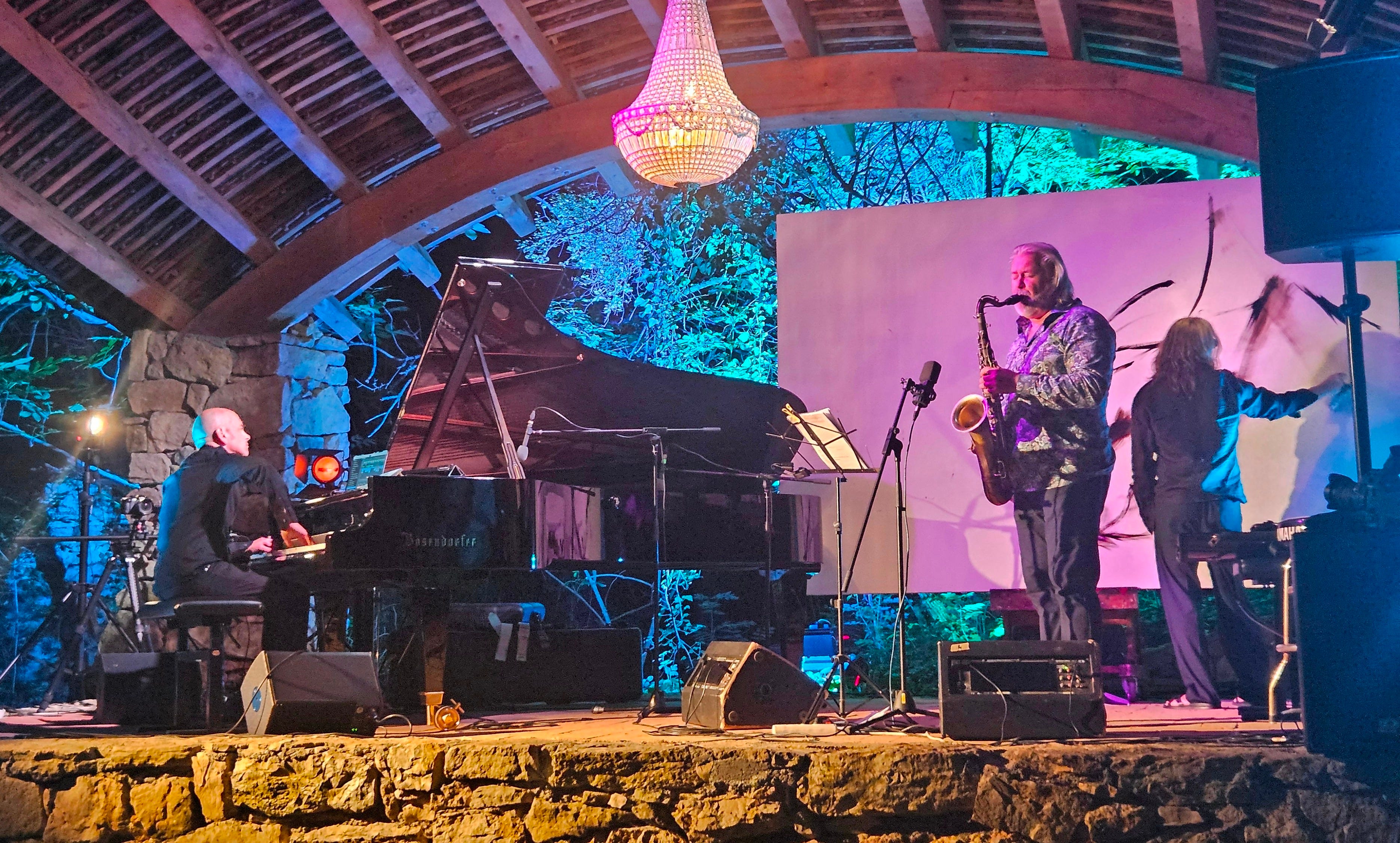
At first I was slightly skeptical, with the feeling that some of the aura and magic of the event had been lost. However, Fikl clearly understood how to approach this interactive performance—with a strong awareness of the sound produced by large painting brushes, and a sense of dramaturgy. The Romanian painter applied his strokes in fragments, approaching the canvas and stage, then retreating out of view, leaving space for the process to unfold gradually and without excessive focus on his work. As if he, too, were “setting a theme” and “playing a solo.” Through thick layers of dark paint, the figure of a dog began to emerge—becoming clearer with each return to the stage.
The performance extended deep into the cool Romanian night and concluded with an encore by the two musicians alone, performing “a Ukrainian lullaby,” as Gustavsen announced. Fittingly and elegantly, they brought this musical and artistic evening to a close.
The most beautiful sound next to silence, indeed.
Good read. As usual.