


Before diving into the music of the duo Tania Giannouli and Nik Bärtsch, it’s worth understanding the context in which this album came about – especially considering that the piano duo is a relatively uncommon format in jazz.
If you have two saxophonists, nothing could be easier than for them to take their instruments wherever they want and play together. But if two pianists want to play together, their perfectly reasonable wish will largely depend on some very complicated logistical circumstances. The piano is an expensive and bulky instrument that musicians don’t carry around with them. If a venue doesn’t have a piano, it has to rent one, transport it, tune it and return it, and none of that comes cheap. Often, a venue will have just one piano available, while two are considered pure extravagance and an unaffordable luxury.
Because of all this, the piano duo format in jazz is often something of a showcase, bringing together two star performers who are there to “entertain” the audience with their virtuosity and flair for concert spectacle, and thus sell enough tickets to justify such a demanding production. Much rarer are situations in which two pianists with a clear (and related) concept, who operate outside the mainstream, come together and are willing to devote themselves to music for two pianos with great dedication and a subtle sense of how to create a shared language. And to find adequate institutional and other support for something like that.
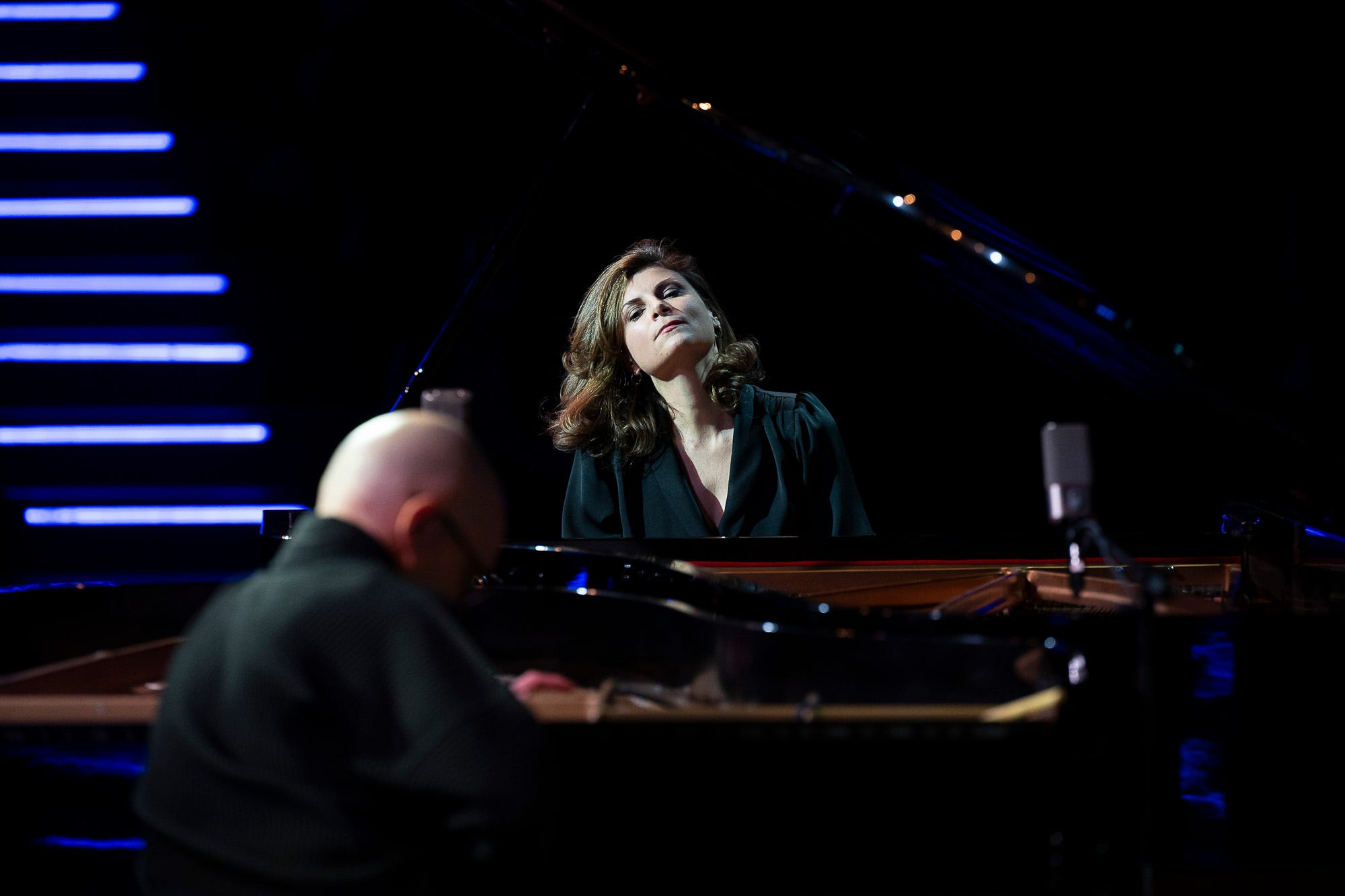
In such an environment, the duo formed by Tania Giannouli and Nik Bärtsch, which has been active for three years now, is a real curiosity, and we should be grateful for as long as it manages to last. At the same time, this specific context in which piano duos operate naturally adds interesting layers to the way we perceive their music. The piano is, in its very essence, a deeply intimate, lyrical instrument. Two pianos are a “spectacle”, and a meeting of two jazz pianists is an event of special significance, even when their music stays within the realms of lyricism and minimalist improvisation.
More important than anything, however, is the fact that Tania Giannouli and Nik Bärtsch have very distinctive aesthetic worldviews, compositional approaches and playing styles through which they have managed to establish themselves as unique figures on the European jazz scene.
While Bärtsch has been captivating audiences for a couple of decades with his unique zen-funk minimalism, in formats ranging from solo piano to expanded versions of his bands Ronin and Mobile, Giannouli combines folkloric richness and classical elegance with very nuanced and delicate piano preparations in her music – most often in solo, duo and trio formats.
But they also have much in common: both pianists draw on non-Western cultural influences, whether Eastern philosophies, microtonal techniques or Eastern European or “Byzantine” melodic ornaments, and both have a very refined sense of how to bring out the percussive qualities of grand pianos in their own music.
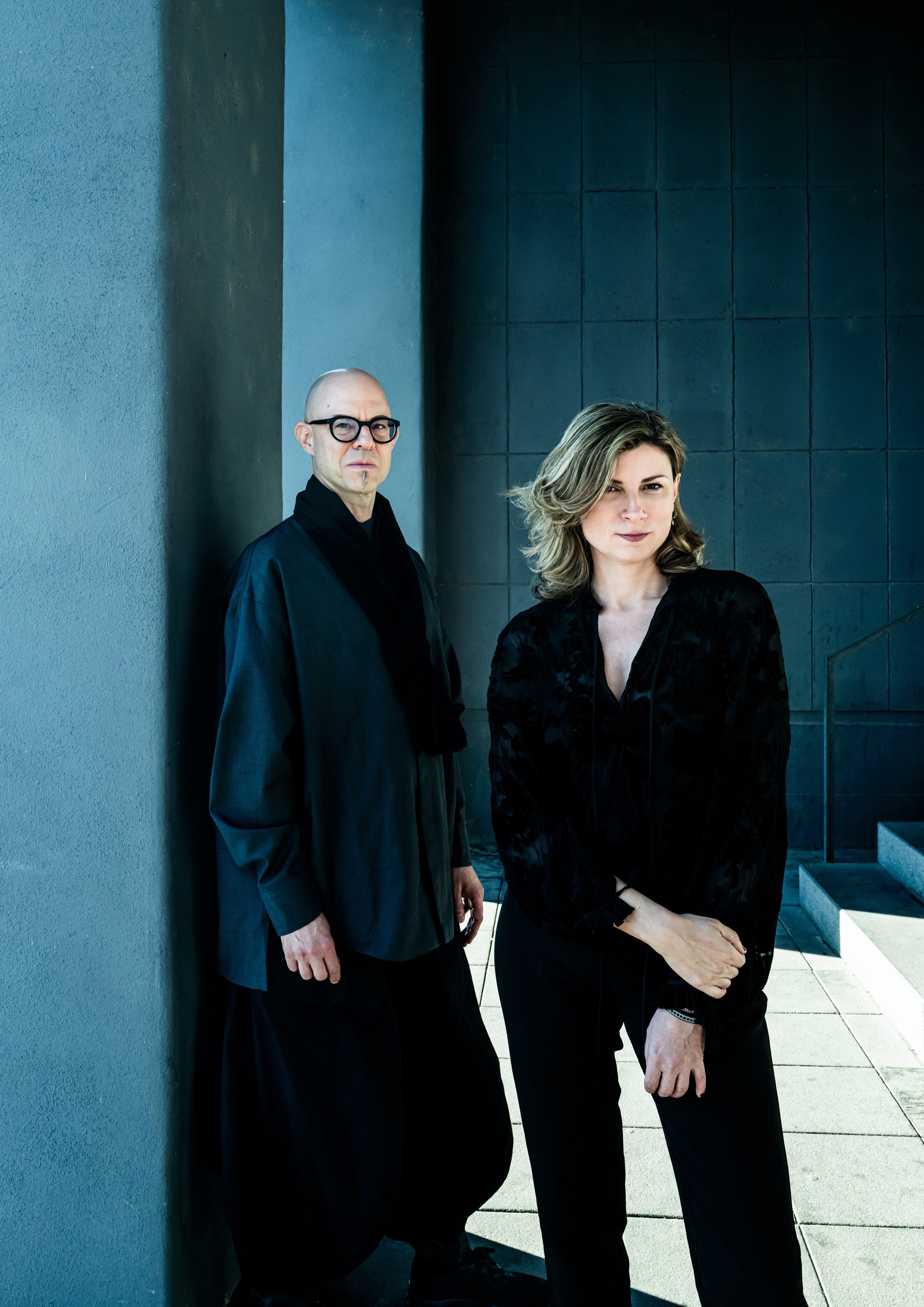
Their music on the album METAKOSMOS therefore sounds completely organic and natural from the first to the last note, as if they had been destined from the beginning of their respective careers to meet and create music together for two pianos. The repertoire they perform is loosely based, for the most part, on material Giannouli released on her earlier recordings, but in these new versions the pieces take on a new form and become the result of their joint work.
Since I particularly loved her 2023 album “Solo”, which featured several very memorable pieces, I easily recognised, and with great pleasure, the compositions “Intone” (renamed “Intonal” in the new version) and “Spiral”, which became “Spiral Spirit” on METAKOSMOS. These pieces, with their melodic appeal, function as a kind of “singles”, but at the same time they draw you in through a constant sense of flow, rhythmic consistency, and the blending of melodic and solo fragments, Eastern ornamentation and scales with psychedelic repetitive phrases. Giannouli and Bärtsch are each capable of creating the impression that we are listening to more than one instrument even when playing alone; in the duo format, I sometimes feel as if I am listening to four pianos in perfect sonic harmony.
On some other tracks, I wasn’t able to identify the “source composition” quite so clearly, so I asked Tania for help, and she kindly obliged. But these technical details are ultimately not as important as the music itself and its ability to be intimate and rich at the same time.
It sounds intimate because it starts with simple melodies, often in “dark” keys. Or with a simple repetitive phrase. We won’t hear grandiose chords, pompous themes, or compositional ideas that impress through sheer complexity; a piece always starts from something that is formally “small” and restrained, but we can feel that it carries an emotional charge, delicacy, finesse, subtle nuances of tone colour, a single note that will emphasise a phrase and a particular artistic point.
Once a certain intimate framework has been established, the richness comes through the layering of the music. Just as the initial melodies and themes are developed through an occasional interesting detail or musical ornament, the compositions themselves also “grow” through numerous dynamic subtleties, with certain themes or phrases entering and leaving the overall sound. It is particularly interesting that Giannouli and Bärtsch approach the very format of the “jazz solo” in an unconventional way, with improvisation unfolding in a highly interactive manner that rejects the conventional principle of individual excellence.
Tania Giannouli and Nik Bärtsch have, formally speaking, recorded their “debut album”. In every other sense, this is one of the culminations of their work so far, and a fully realised work of the highest artistic quality.