


Up until 2013, I didn’t really pay much attention to the work of Norwegian vocalist Sidsel Endresen. I might have heard a track here or there that didn’t quite land with me, or an older album that made me think, “this just isn’t for me.” I didn’t dig any deeper.
That changed when I went to the Jazzaldia festival in San Sebastian. I was there mainly to see John Zorn’s Masada Marathon—a six-hour spectacle featuring 12 bands performing works from Zorn’s Masada repertoire. Everything else on the program was welcome, but not essential. Still, I was browsing the lineup and came across a group called Uncommon Deities, which for this occasion consisted of Jan Bang, Erik Honoré, and Sidsel Endresen. I remembered these musicians as part of some interesting projects, so I decided to pencil the performance into my schedule.
It took place in the atrium of the San Telmo Museum, late at night. It was pouring rain. None of that stopped me from entering a very intriguing space, where there were no more than 20–30 people in the audience. The music I heard absolutely captivated me; I had never encountered such an original approach to blending electronics and free improvisation. Sidsel Endresen was phenomenal.
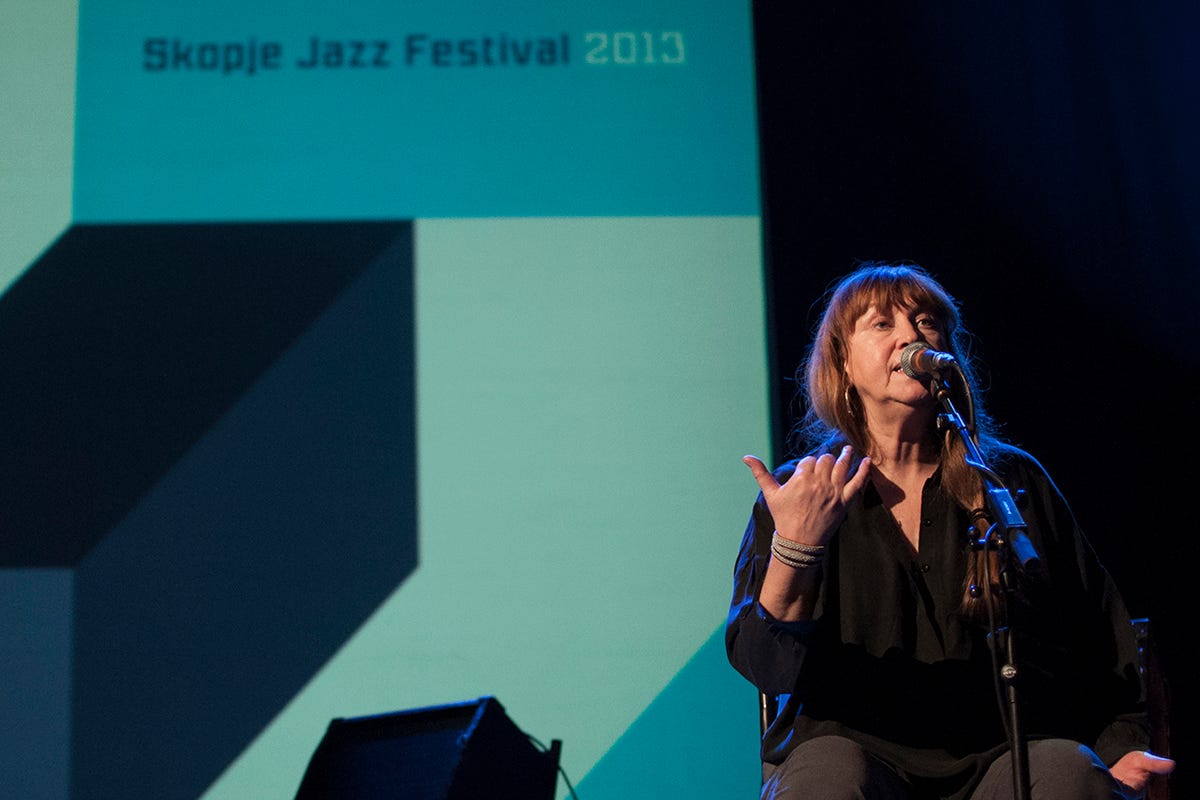
That same autumn, I went to the Skopje Jazz Festival. This time, in front of a much larger audience, Sidsel Endresen performed with guitarist Stian Westerhus. What a spectacle that was! Endresen sounded fierce, as did Stian with his roaring, grinding guitar textures. Just the two of them on a big stage, side by side and without any scenery, effortlessly held the audience’s attention and shook the room.
Both concerts left a strong impression on me. Over the following years, I gradually started adding Sidsel’s albums to my player. My partner Monika also grew fond of some of her records, and we began listening to her often together in the car on long drives.
Beginnings
The broader jazz audience first became familiar with Sidsel Endresen when she began recording under her own name for ECM Records in the early 1990s. Before that, she was best known for her work with the jazz-pop-fusion group Jon Eberson Group, which today sounds rather “naive,” especially when viewed from the perspective of her more recent output.
In any case, she released two ECM albums—So I Write and Exile. Both were undoubtedly significant steps forward in her career at the time. The first featured Nils Petter Molvær, Django Bates, and Jon Christensen, while the second added cellist David Darling and Bugge Wesseltoft to that lineup.
I’ve listened to both albums many times, but in the end I always felt that it still wasn’t quite “Sidsel Endresen.” These are certainly highly competent records with excellent musicians, but what we would later recognize and love as her distinctive vocal techniques and performance language is here only in its early formation. We got “two solid ECM vocal albums,” but the truly groundbreaking Sidsel Endresen would emerge a few years later.
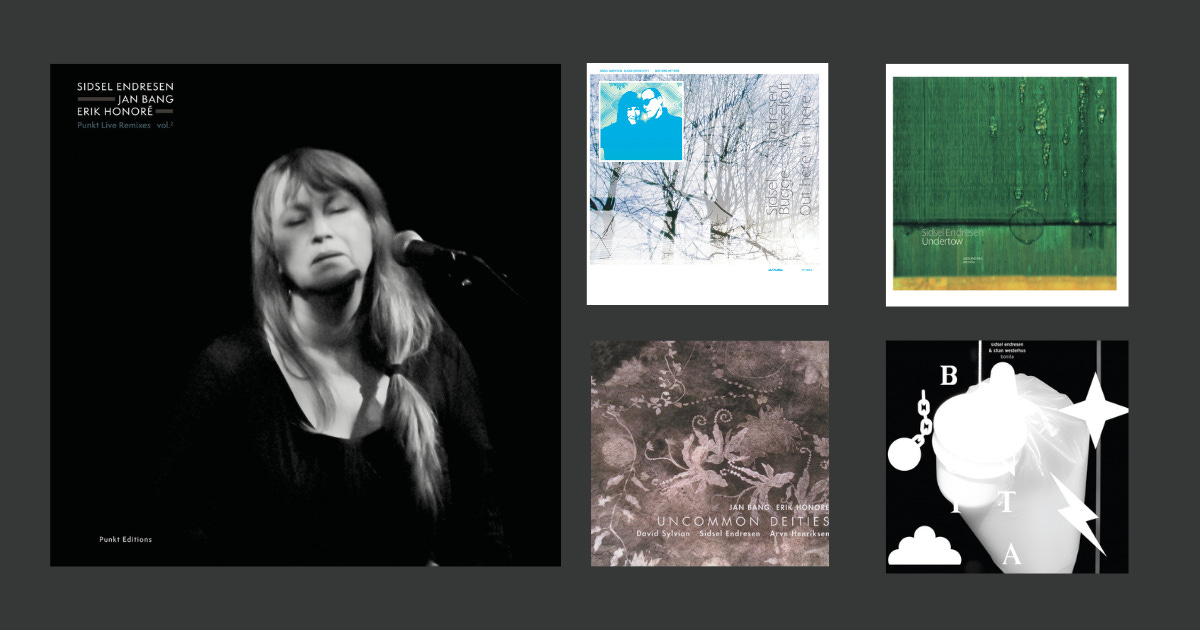
Sidsel Endresen – Undertow (2000, Jazzland)
This is the first album Endresen recorded for Jazzland under her own name, and it represents a “bridge” between ECM aesthetics and her emerging personal voice. She is joined by longtime collaborators Bugge Wesseltoft and Nils Petter Molvær, while the rest of the lineup includes Patrick Shaw Iversen (flute & loops), Roger Ludvigsen (guitars, bass & percussion), and Audun Kleive (drums, percussion & loops).
A key step forward on this record is the somewhat minimalist approach to composition and arrangement, as well as a reimagined rhythm section concept. Instead of a loosely “scattered jazz” rhythmic feel, the music now sounds tighter, more grounded, more stable.
Endresen does not yet push her voice into highly complex avant-garde improvisational extremes, but she plays with tone and texture in a very subtle, controlled way. These variations are delicate, technically refined, and never feel showy or self-justifying.
Here, Endresen becomes the dominant creative force in her own music, and it is already clear we are listening to an artist we seek out for her presence alone—excited for everything only she can bring.
Sidsel Endresen, Bugge Wesseltoft – Out Here. In There (2002, Jazzland)
An absolute masterpiece. This is the third album Sidsel and Bugge recorded together and the natural culmination of their collaboration.
Bugge Wesseltoft emerged in the 1990s as one of the key jazz innovators in what was then called nu jazz—a fusion of jazz and dance-oriented electronic music. Endresen, meanwhile, was increasingly pushing her vocal experimentation into more avant-garde directions. In this formation, both artists fully contribute their identities while creating a shared language of remarkable originality.
After the opening Truth and the melodic title track—highlights of jazz-pop craftsmanship—the music begins to drift into something more otherworldly. This is especially true of the triptych Survival Techniques, composed by Jon Balke, with lyrics by Sidsel Endresen.
“Accentuate the obvious / Camouflage the rest / Complexity is always so confusing…
Accentuate the popular / If that is what looks best / Then cover up the rest”
Sidsel delivers these lines in a surprisingly melodic way, before slipping into abstract improvisation and transforming from a “gentle pop singer” into a “dangerous avant-gardist.” The lyrics function as an ironic entry point into improvisation, which then becomes a fully embodied artistic statement. Brilliant.
Another key track is Heartbeat, where Endresen’s vocal delivery becomes fragmented—like a CD skipping, creating the sense that something is “not working properly.” But at a certain point, you realize everything is under control; she masterfully shapes her voice as both instrument and narrative device, weaving it together with Wesseltoft’s carefully constructed electronic piano textures.
The album balances “beautiful” music—which it truly is—with radical vocal experimentation and Wesseltoft’s synth-driven electronic atmosphere, resulting in a work of extraordinary originality and top-tier performance.
Uncommon Deities (2012, Samadhisound)
Different sources list different credits for this album. In some places it is attributed to the full group, in others to Jan Bang, and sometimes to David Sylvian. The lineup includes Jan Bang, Erik Honoré, David Sylvian, Sidsel Endresen, and Arve Henriksen.
The album is essentially a reinvention of David Sylvian’s audio installation from the Punkt Festival in Norway, and the complex story of its creation is documented HERE.
On this record, poetic narration, abstract ambient textures, improvisation, and hints of what we recognize as “Scandinavian jazz” are all interwoven, alongside the unmistakable vocal presence of both David Sylvian and Sidsel Endresen.
At this point, you might say: well, this isn’t really her album. And technically, that may be true. But once you hear her voice and the way she enters the sonic space—surrounded by musicians who share her sensibility—it becomes much clearer.
Just as you instantly recognize Marc Ribot’s guitar on a record and feel the music is immediately elevated, the same happens with Sidsel Endresen’s voice. You know it’s her and no one else, and the music is propelled into another dimension.
There is also a striking parallel with David Sylvian, who moved from Japan, through a carefully considered solo art-pop career, into more abstract avant-garde forms. In many ways, their artistic trajectories mirror each other beautifully, and it is fitting that these two voices eventually crossed paths.
Sidsel Endresen, Stian Westerhus – Bonita (2014, Rune Grammofon)
Throughout the 2000s, Endresen remained highly active in various small formations, fully entering her experimental phase. Among the excellent records from this period is Merriwinkle, where she is joined by Christian Wallumrød and Helge Sten. With Westerhus, she recorded two albums; I am highlighting Bonita here for entirely subjective reasons.
There is something deeply satisfying about the way the album and its opening title track begin. There is no introduction, no warm-up. Sidsel and Stian simply launch in—hard, warped, and intense.
Everything Sidsel had been in the 1990s is here reflected like in a distorted mirror, or an “upside-down” world—a Wonderland, Lynch’s Black Lodge, or some other imaginary, otherworldly space governed by different rules. Yet it still strikes something familiar deep in the subconscious, in the strange ways we visualize dreams.
I’m not sure it makes sense to break this duo record down in strictly analytical musical terms, so I’ll leave it at this impressionistic reflection. I am simply glad and grateful I had the chance to see them live.
Sidsel Endresen | Jan Bang | Erik Honoré – Punkt Live Remixes Vol. 2 (2024, Punkt Editions)
Once again, three familiar collaborators. Bang and Honoré were essential partners for Endresen throughout the 2000s, just as Bugge Wesseltoft and Nils Petter Molvær were in the 1990s and early 2000s. These Norwegian sound experimenters are true cutting-edge musicians, as is Endresen herself, so it is no surprise that their collaborations often result in genuine masterpieces.
Punkt Live Remixes Vol. 2 is a compilation of their work within the Punkt Festival and its live remix concept, spanning a wide period of time.
For better understanding, here is the official description: The Punkt Live Remix concept, central to the Punkt Festival, involves artists performing live remixes of a concert immediately after it has ended. This creates a unique and spontaneous reinterpretation of the original performance, allowing for a dynamic and collaborative exploration of the source material where audiences witness the transformation from the initial performance to its re-imagined version.
The listening experience strongly echoes what I felt at Uncommon Deities—an exciting fusion of abstract electronics and Endresen’s voice, balancing “beauty and danger.” In this configuration, however, they move slightly away from Sylvian’s aesthetic universe into their own territory, and this album truly delivers “the best of” what they create together.