


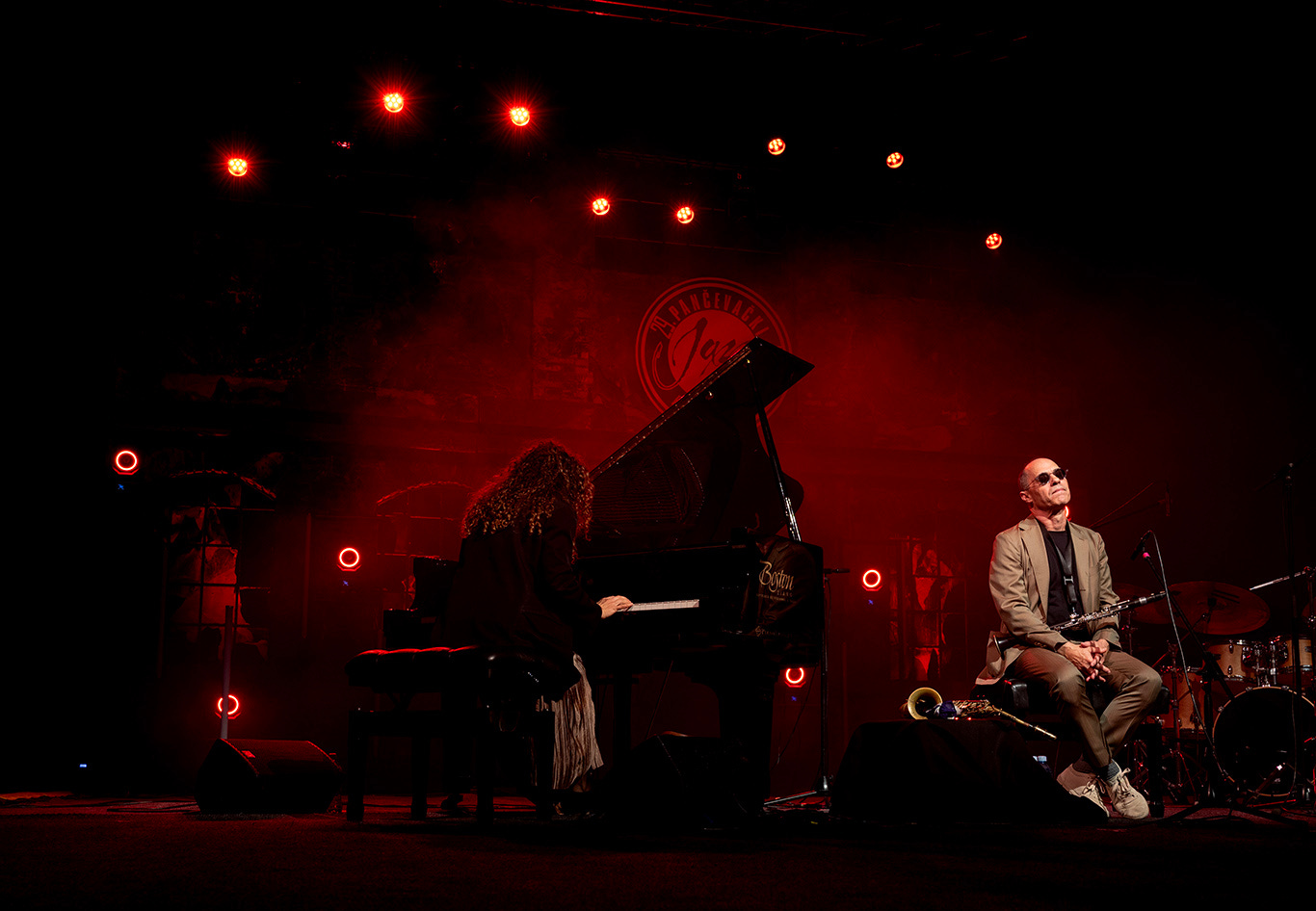
A few weeks ago, I wrote that I was looking forward to the Pančevo Jazz Festival, which takes place in my hometown. My excitement was primarily due to the arrival of Bill Frisell, as well as the Shortcuts trio featuring Sylvie Courvoisier, Ned Rothenberg, and Nasheet Waits.
I was also quite curious about Isaiah Collier’s concert, considering the hype surrounding him and his programme related to the 100th anniversary of Coltrane’s birth. A couple of years ago, I saw him perform at the Belgrade Jazz Festival and had mixed feelings and impressions about that concert, so I hoped his performance in Pančevo would prove me wrong and convince me that Collier really is the next big thing.
In the end, I had to give up on Frisell’s concert because of work commitments, while I didn’t manage to properly appreciate Collier’s interpretation of John Coltrane’s legacy. Let’s say the problem was with me, rather than with this super-talented young artist who delighted the Pančevo audience.
But what was entirely up to my expectations was the concert by Courvoisier / Rothenberg / Waits. We could call this combination of piano, saxophone/clarinet, and drums “unusual” if we think through the prism of mainstream jazz and the conventions of the piano trio. But considering that this is an avant-garde formation, a lineup that departs from the standard choice of instruments is perfectly logical – even desirable. All three had crossed paths before in certain configurations, but this particular lineup is relatively fresh. It brings a good balance between the feeling that we’re listening to something “new” and the fact that it’s performed by seasoned masters with decades of experience, who guarantee “reliable quality” even when it’s clear that we’re witnessing improvisation.
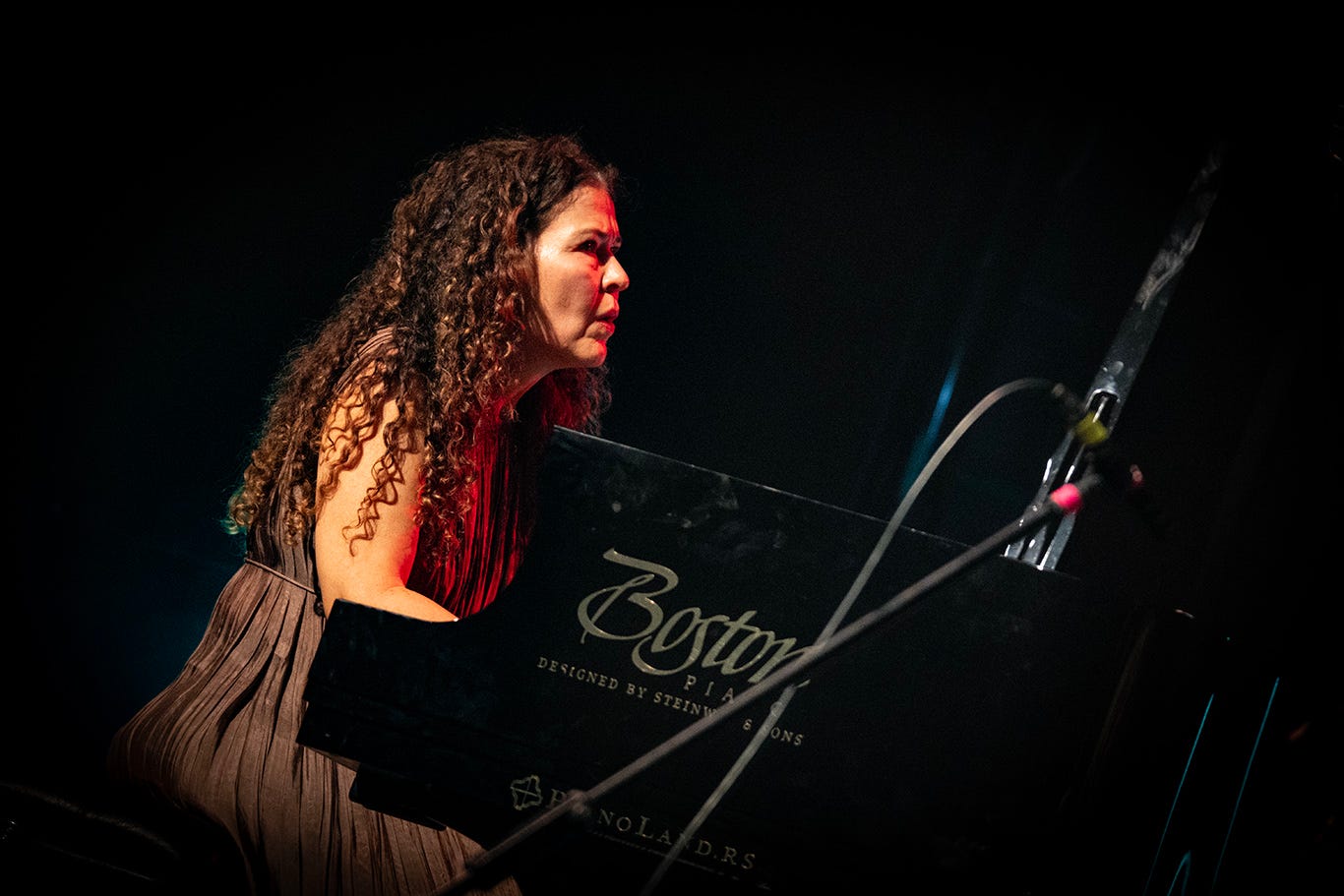
At the very beginning of the first piece, I joked with a fellow jazz journalist that the audience might start leaving after the first tune, to which he replied that this “first tune” would last until the end of the concert. Of course, he was right, and what we witnessed was an uninterrupted sequence of improvisation lasting some 50–60 minutes. Certainly fragmented and divided into certain loosely structured sections: solo piano – piano and saxophone duo – solo clarinet – solo saxophone – all three together – drum solo – and so on.
Over the past 20 or more years, I’ve seen a large number of improvised music concerts, and it’s only seemingly easy to maintain a high level of tension, intensity of playing, and curiosity among listeners. It’s not exactly enough to simply “improvise” and make it interesting just because the format is “unconventional” or because three excellent players have come together. There needs to be an exceptional understanding between the musicians; and even then, something has to “click” for that particular combination of musical ideas on that particular evening to become something special and different. And if we’re dealing with excellent instrumentalists whose playing we know well, is it enough for them to play in their own style, in a manneristic way, for us to be happy?
What we’ll call a “successful” or less successful concert from different perspectives ultimately turns out to be the result of several factors that we cannot mathematically measure and evaluate. As far as I’m concerned, an important factor was certainly my fan’s relationship with the work of Sylvie Courvoisier, and especially her playing style, rather than any particular album or band. This time, I was fascinated by her classical virtuosity and richness, and her ability to be virtuosic and abstract in her playing at the same time, mostly sticking to the keyboard and only occasionally exploring preparations inside the instrument.
On the other hand, Rothenberg was particularly impressive in the moments when he played solo. The colleague I mentioned earlier compared him to Evan Parker, while on a few occasions he also reminded me of a Roscoe Mitchell concert I saw many years ago. So, a powerful and authoritative dive into abstraction, but without unleashing volleys of notes, and with a particular emphasis on, or distortion of, long tones or reduced phrases. I had the impression that I could watch an entire solo concert of his with great pleasure, but even when his sound flowed into the band, he remained exciting. Although with a certain shift of focus from introspection towards a hint of ecstasy.
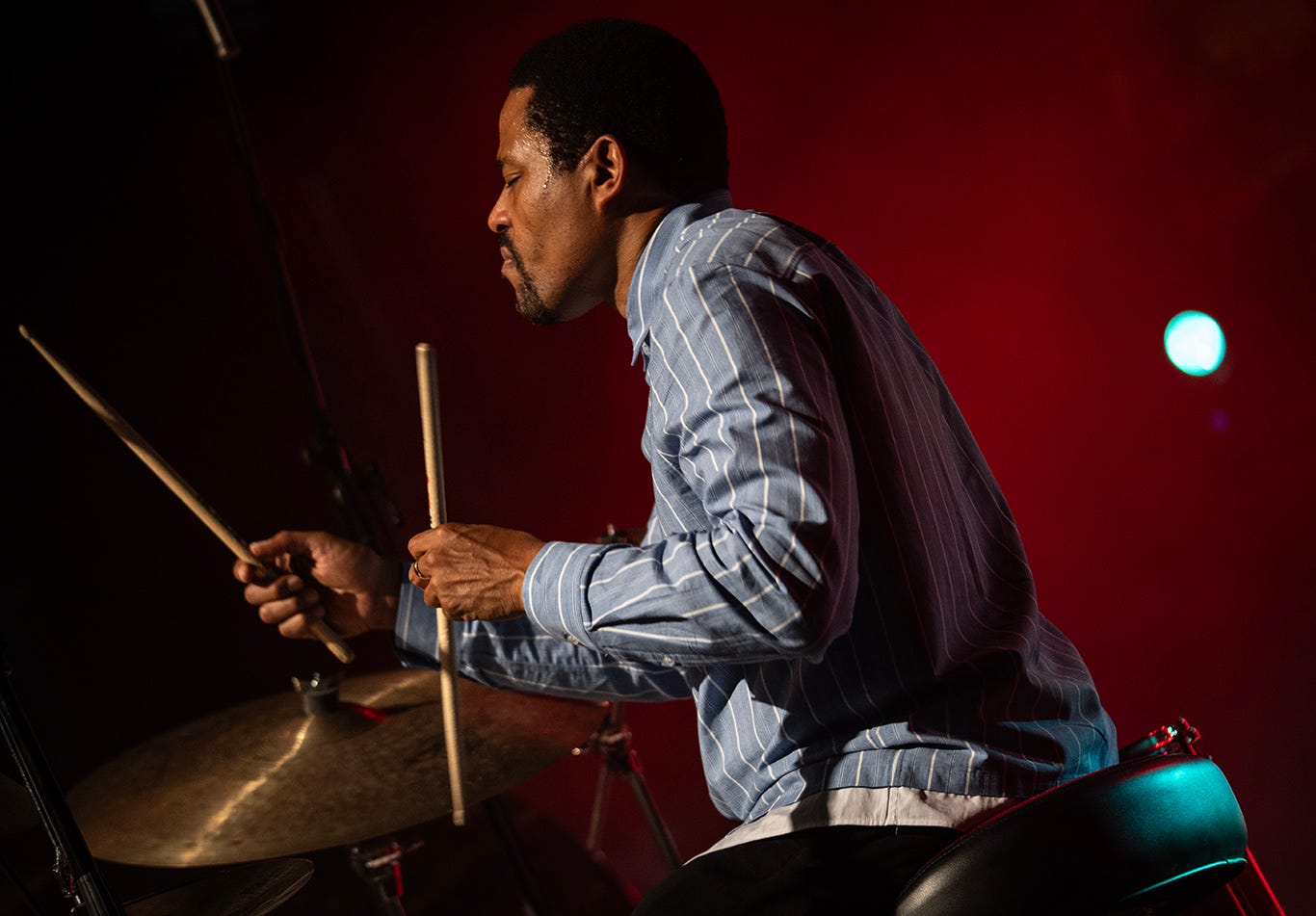
In this configuration, Waits was like connective tissue and a good team player coming from the “modern creative/post-bop” universe, bringing a healthy dose of cohesion even when he wasn’t playing a classical rhythmic pulse but was participating in the improvisational discourse.
Ten or fifteen years ago, a concert like this would have been “too much” for the Pančevo audience, because the previous artistic director had favoured American mainstream stars (Roy Hargrove, Christian McBride, Kenny Garrett, and similar musicians), with a focus on a virtuosic approach to jazz. Since 2014, the festival has shifted its focus towards a somewhat more diverse selection of performers and jazz styles, which occasionally raised eyebrows in the first few years. But over time even the “general audience” members have become more receptive to musicians who don’t come from mainstream circles. Also, Pančevo is close enough to Belgrade (only 20 km away), so concerts can attract at least 100 people from the capital (and other towns within a 100 km radius), which also contributes to a good reception for bands like Shortcuts.
My point would be that good curation – that is, changes in a festival’s stylistic orientation and making audiences more receptive to abstract and unconventional music – may initially seem like a “shock”, but over the years it produces excellent and reliable results. Of course, mainstream festivals are needed too, and tradition is important, but my heart will always be with musicians like Courvoisier, Rothenberg, and Waits.