


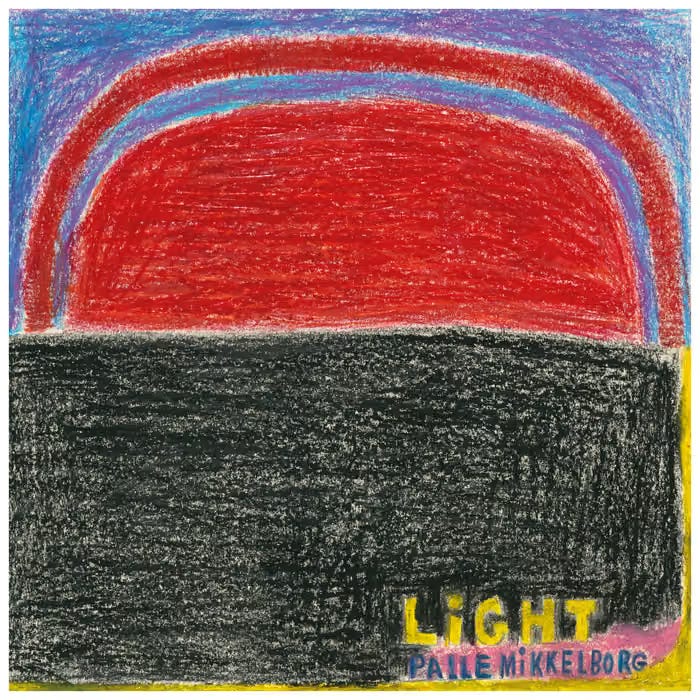
The end of last year and the beginning of this one have been a busy period for Jakob Bro’s label Loveland Music. Alongside several of his own releases in various formations, an interesting album also came out by bassist Thomas Morgan, and in January this year, by the legendary Danish trumpeter Palle Mikkelborg. And not just any release, but a solo album, with a few discreet guest appearances by musicians he knows well and holds dear.
Mikkelborg is a major name in his own right. Still, I begin this review with the label, which is carving out a very interesting direction. Those familiar with Jakob Bro’s work know that he spent years releasing albums for ECM Records. Before Gefion, the album that marked the start of his ECM odyssey in 2015, he had already released several albums on Loveland. He then set aside his own label for a time, only to return to it recently with remarkable enthusiasm and a clear concept.
The latest batch of releases partly builds on the ECM aesthetic, but develops it in a more experimental performance and production direction, already taking on the contours of something we might call a “Loveland sound.” Or at least, that’s my subjective impression. In any case, the concept behind the album recorded by Mikkelborg emerged from his conversations with Jakob, with whom he has collaborated for a long time.
“When Palle decided to stop touring and performing live, I suggested that we sit down together and listen through the many MiniDiscs and DAT tapes he had tucked away, hoping we might find a new direction for making music together. We went through everything — recordings of orchestras and choirs, soundscapes, and so on — material he had worked on throughout his career,” says Jakob Bro in the album description on Bandcamp. “I can still remember the first time we said it out loud. Suddenly, it made perfect sense in my mind: a solo album. An album devoted entirely to Palle — his sound, his vision, his voice. It felt like something the world truly needed.”
From the very beginning, and the opening track “At Tænde Lys,” what caught my attention was the way Mikkelborg approaches the solo format on trumpet or flugelhorn. Over the course of three minutes, we hear only his short passages — sequences of long, open tones, followed by intervals of silence. If you have good headphones or listen more closely, you’ll notice that the silence is not entirely complete — Mikkelborg plays with plenty of reverb, and each phrase trails off into a lingering resonance, until the instrument returns in full presence. At its core, however, this is an interplay with “air” that carries a specific atmosphere — seriousness, dignity, but also warmth and deep emotion.
Although our first instinct might be to label this format as “experimental,” or more mildly “atmospheric,” it contains something deeper and more fundamental — something closer to human emotional experience than to an intellectual one. If we step away from thinking in terms of “jazz” or “improvisation” conventions, we can imagine a solo trumpet or flugelhorn playing, for instance, a hymn at an important event. Or an emotional melody at a memorial service. Mikkelborg’s lines sound exactly like that: elevated and emotionally potent. The pauses, in which we “catch our breath,” allow us to absorb our emotional experience, to process what we have heard, and to be ready for what comes next. It is almost as if we are listening to nonverbal poetry. Between two lines, we reflect on the previous one, feeling anticipation for the unknown that awaits us.
At times, Mikkelborg overdubs additional instruments or soundscapes; at others, he is joined by fellow musicians. In another of the album’s highlights, the track “Wind”, we hear wind chimes (by Jakob Bro) accompanying the trumpet and establishing an exciting sonic counterpoint through minimalist means. Elsewhere, that support becomes more expansive — as when a piano enters in “Port”, bringing a new emotional layer to the music. One of my personal listening favorites is “Spring”, at the very center of the album, where Mikkelborg plays only the piano — just as convincingly as his primary instrument. In the end, we no longer think in terms of “what a musician can record alone”, but surrender to a rich sonic palette without preconception — to the music as such.
It is not easy to say so much with such limited musical means. Only the greatest masters can do that — and Palle Mikkelborg is one of them.