


Every once in a while, a jazz film comes along that stirs up unease among musicians and fans alike. The first that comes to mind is Whiplash (2014), which launched director Damien Chazelle and lead actor Miles Teller into the Hollywood orbit, and delivered a bravura performance by veteran actor J. K. Simmons. In several reviews I read at the time, the core argument was that the world of jazz and jazz education was not portrayed faithfully. But in the subtext (or the text) of all those articles, something else could be sensed: jazz was not glorified or celebrated. It was presented as the bad guy, the villain.
If, on the other hand, we are dealing with a biographical film, comments on social media or in reviews often “measure” whether this or that aspect of someone’s life is factually accurate (and again, whether his “artistic genius” is successfully portrayed).
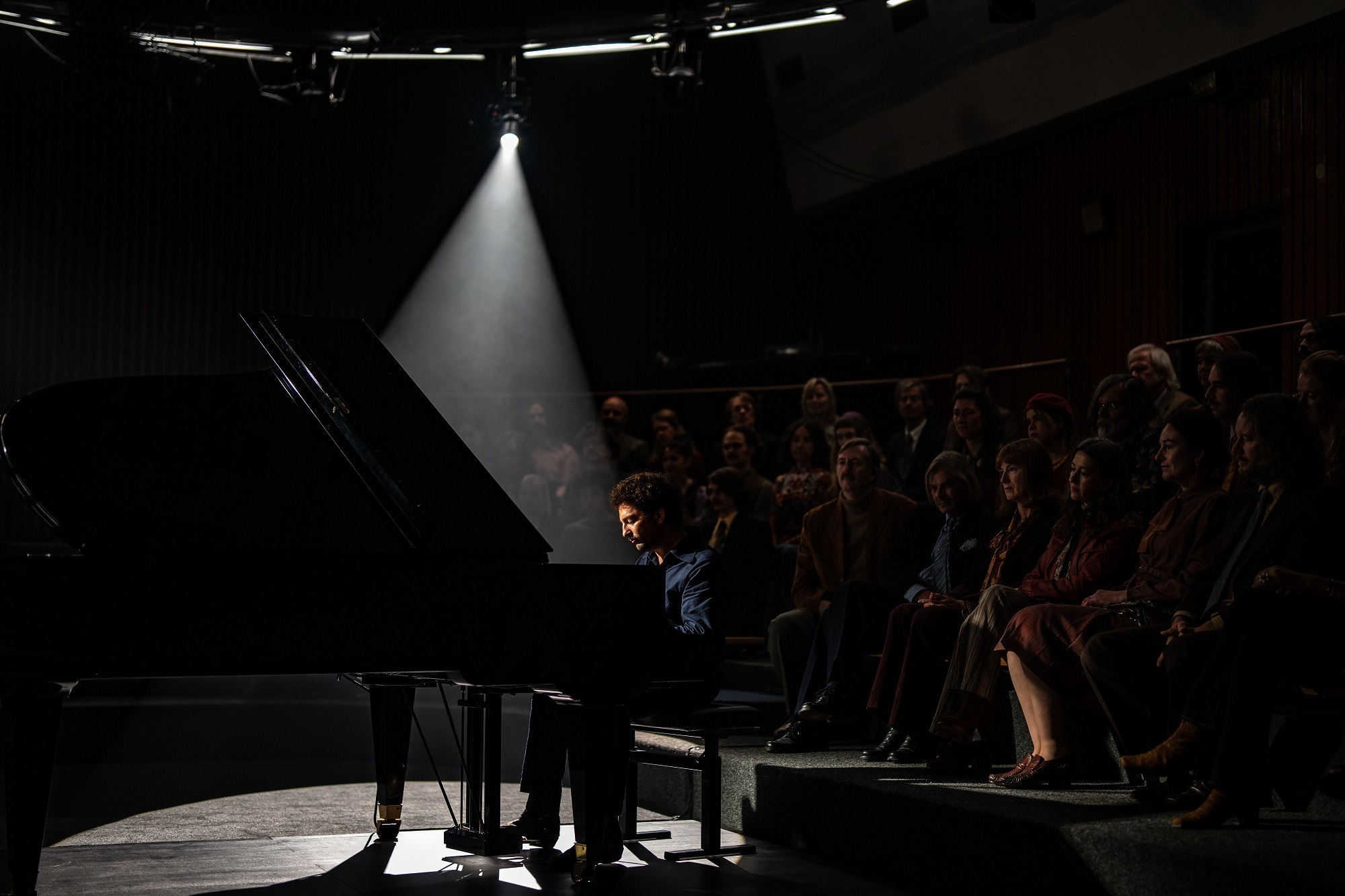
The film Köln 75 was practically a sure bet to fall into the good old loop of negative reviews from jazz-oriented audience, given that neither Keith Jarrett nor ECM wanted to participate in the project at any point. If the film is not good enough for Jarrett, why would it be good enough for admirers of his life and work, or of the legendary album The Köln Concert, which celebrated its 50th anniversary last year? Moreover, Jarrett’s and ECM’s veto resulted in the absence of Jarrett’s music in the film, even when we see him playing. In the key Berlin Jazz Days scenes that introduce him, what we hear instead is a polished Jarrett pastiche by Stefan Rusconi; and in the final frames, we do not even hear The Köln Concert, which ultimately proves to be a skillful directorial decision.

It is worth mentioning here that Jarrett has generally been negatively inclined toward the most popular album of his career, so probably the very idea of a film marking its 50th anniversary was repulsive to him, regardless of how it might have been written or realized. In that sense, I believe that his rejection came by default and was not necessarily a comment on this or that segment of the script itself.
The suspicion of Jarrett’s admirers might also be provoked by the fact that the film places young promoter Vera Brandes at its center, who, at not yet 18, successfully organized the concert despite all adversities—above all the notorious mix-up in which an damaged out-of-tune piano was delivered to the stage instead of The Bösendorfer Model 290 Imperial. Let us recall—after hours of work by two tuners, and after Vera Brandes persuaded Jarrett, the concert took place and the rest is history.

This is not meant to be a conventional film review, although the film is undeniably entertaining and the lead actress Mala Emde shines as a teenager who, in an almost punk-rock spirit, storms into the world of jazz management and overcomes every obstacle on her way to a triumphant concert, destined to enter the history of contemporary music. Instead, I want to ask: what, and in what way, does this film tell us about Jarrett — and about jazz in general?
It is interesting to note that director Ido Fluk, by his own admission, did not approach the making of the film from the position of a lover of Keith Jarrett’s music, but rather recognized the potential to tell an exciting cinematic story. It is therefore expected that he addresses the “general viewer,” who does not necessarily have to be a Jarrett fan or even a jazz lover.
Particularly noticeable in this sense are the didactic intermezzos in which, through the character of a music journalist Michael Watts (in a clumsily charming interpretation by Michael Chernus), the film briskly explains the history of jazz with an emphasis on the philosophy of improvisation, that is, the distinctions between improvising in a big band, a combo setting, free jazz, and finally in completely free improvisation that is at the same time melodic—which will become Jarrett’s trademark. These “lessons” are charmingly and skillfully woven into the film’s dynamic tone, which does not shy away from comic relief, while clearly pointing to the essence of the music performed by Jarrett.
Even more interesting (from a jazz perspective) is the lengthy digression in the middle of the movie, when we follow the night drive of Manfred Eicher and Keith Jarrett in Eicher’s Renault 4, joined (only in cinematic fiction) by the jazz journalist as a dramatic trigger for Jarrett’s reflections on music and life.
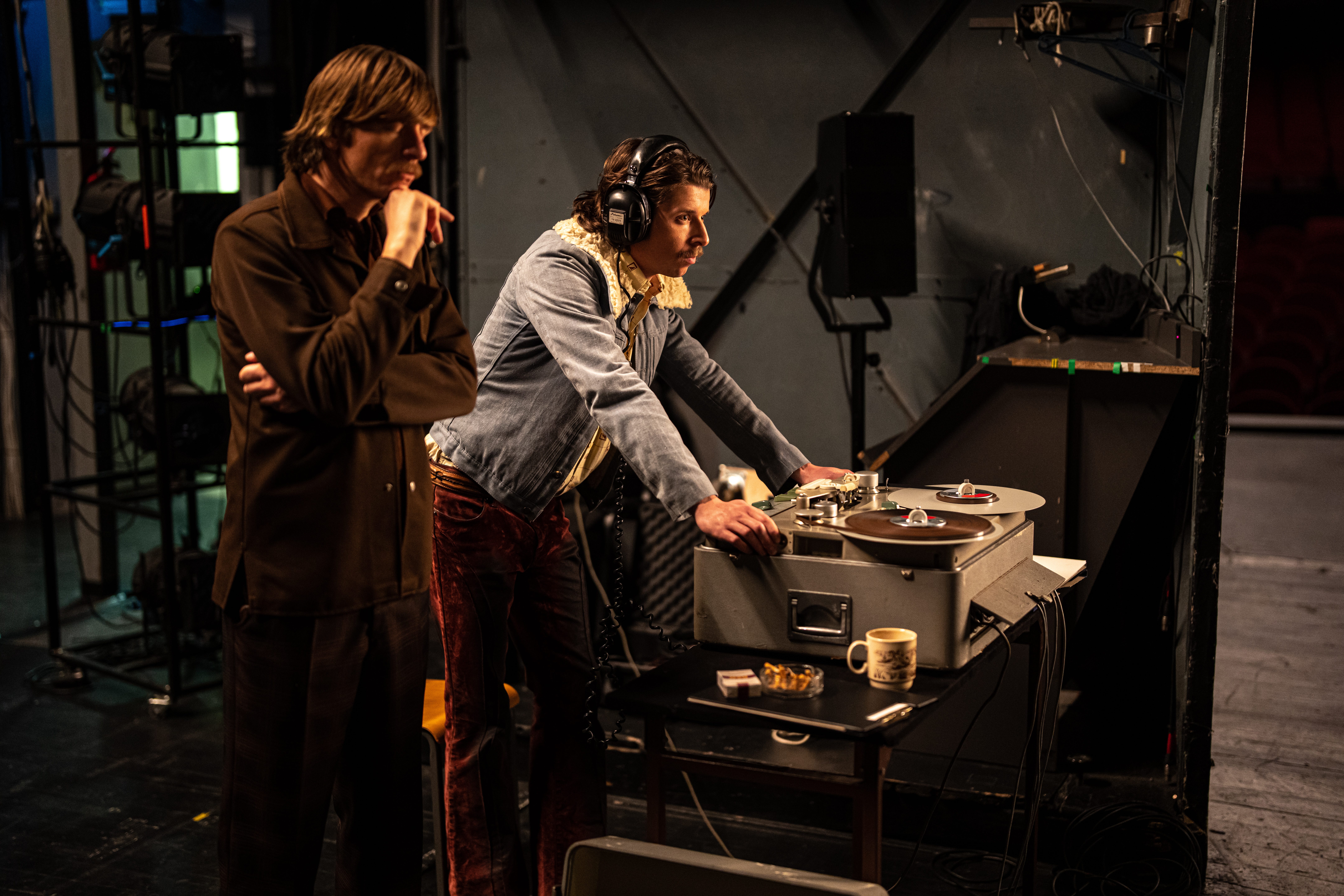
At one point in their conversation in the car, Eicher initiates the conclusion (simply put) that in the USA the music scene is too market-oriented, whereas in Europe musicians such as Jarrett have more space to express their musical voice without the pressure of creative compromise. This aligns with our general understanding of European cultural policies, namely the fact that jazz in Europe is funded differently than in the USA. There are festivals and clubs co-financed by state ministries and EU funds for culture and the arts; there are open calls for artists, and so on. Ministries of culture in developed European Union countries allocate serious budgets to co-finance artistic creation. That was the case 50 years ago, and it is still the case today.
However, Manfred Eicher reveals to the film journalist (and to the viewers) that at that moment the artistic path was not exactly paved with flowers. During the drive, the group makes a stop at Zurich airport, where Eicher and Jarrett manage to cash in a plane ticket and save 375 deutsche marks, which corresponds to historical fact. The legendary founder of ECM explains that this is not about greed, but about the bare struggle to make Jarrett’s tour economically sustainable. Europe may be benevolent toward his music beyond genre boundaries, but the financial framework hangs by a thread. All of this is, to some extent, in tension with what we saw and heard in that same sequence.

Here I would add a point that is not made explicitly in the film itself, but can be read through the cinematic relationship between Jarrett and Eicher. Europe as such has historically been benevolent toward jazz and jazz musicians. However, that fact is not the product of some entirely abstract socio-political condition. “Europe” as a cultural entity is ultimately made up of people, and one of the greatest and most important among them—for the European jazz scene—is precisely Manfred Eicher. We may speculate whether a jazz professional like him could have emerged in the USA; perhaps the success of his publishing venture was only possible in Europe.
Be that as it may, one cannot overlook the enthusiasm he invested as an individual not only in Jarrett’s career (as seen in his caring, almost paternal relationship toward the cinematic Jarrett), but also in what we would over the years recognize as “European jazz” and its specific aesthetic, from 1969 to the present day. With the founding of ECM, European jazz gained a powerful momentum, a publishing and promotional platform, and this record label is— I believe—far more the product of an individual’s fantastic vision than of the system in which that individual matured.

Finally, if we return to the film itself and to Vera Brandes, we see how her promoter career began. After one casual suggestion from Ronnie Scott following a concert at a venue, with no prior knowledge, through phone calls from her father’s dental office. She was 16 and did not intern at this or that concert agency learning the ropes step by step; instead, she threw herself into it with all her heart and enthusiasm, overcoming obstacles as they appeared. In a way—through improvisation, entirely in the spirit of the genre we listen to and love.
Where is Keith Jarrett in all this, and is he “fairly portrayed”? I would say he is. Jarrett is played by John Magaro in a restrained, understated key, with a certain vibe and the charm of Pedro Pascal when he plays reluctant heroes. His well-known grumpiness (about coughing and photo shoots at concerts) is dialogically justified by Eicher’s character, while Jarrett is shown as a tired and somewhat irritable individual, but above all sincerely emotional and misunderstood. It is clear to the viewer that Jarrett is devoted to music to the core of his being, and that the only thing that matters to him is what he will perform on stage, or in the studio. Art stands above all earthly concerns. Everything else is merely an external distraction—handled by the rational and serious Eicher, while the headaches related to technical challenges remain with numerous promoters and festival organizers around the world.
The film programmatically celebrates Vera Brandes and all those jazz workers “behind the scenes” who make great art possible. I would add that it celebrates European jazz and European culture, which has brought much good to this genre to this day.
It’s interesting that Manfred’s name is never actually mentioned in the film. There’s a character whom we (jazz fans and ECM devotees) clearly recognize as Manfred Eicher, but beyond that, to “regular” viewers he might just seem like someone working with Jarrett, perhaps a manager or something similar. I wouldn’t speculate as to why the director chose that approach.
But besides that, in my opinion, Eicher is portrayed in a very subtle and respectful way.
Thanks an interesting, nicely written and informative review. I've not seen the film yet and am looking forward to it being released here. I do know Manfred, so looking forward to seeing how he is portrayed.....