


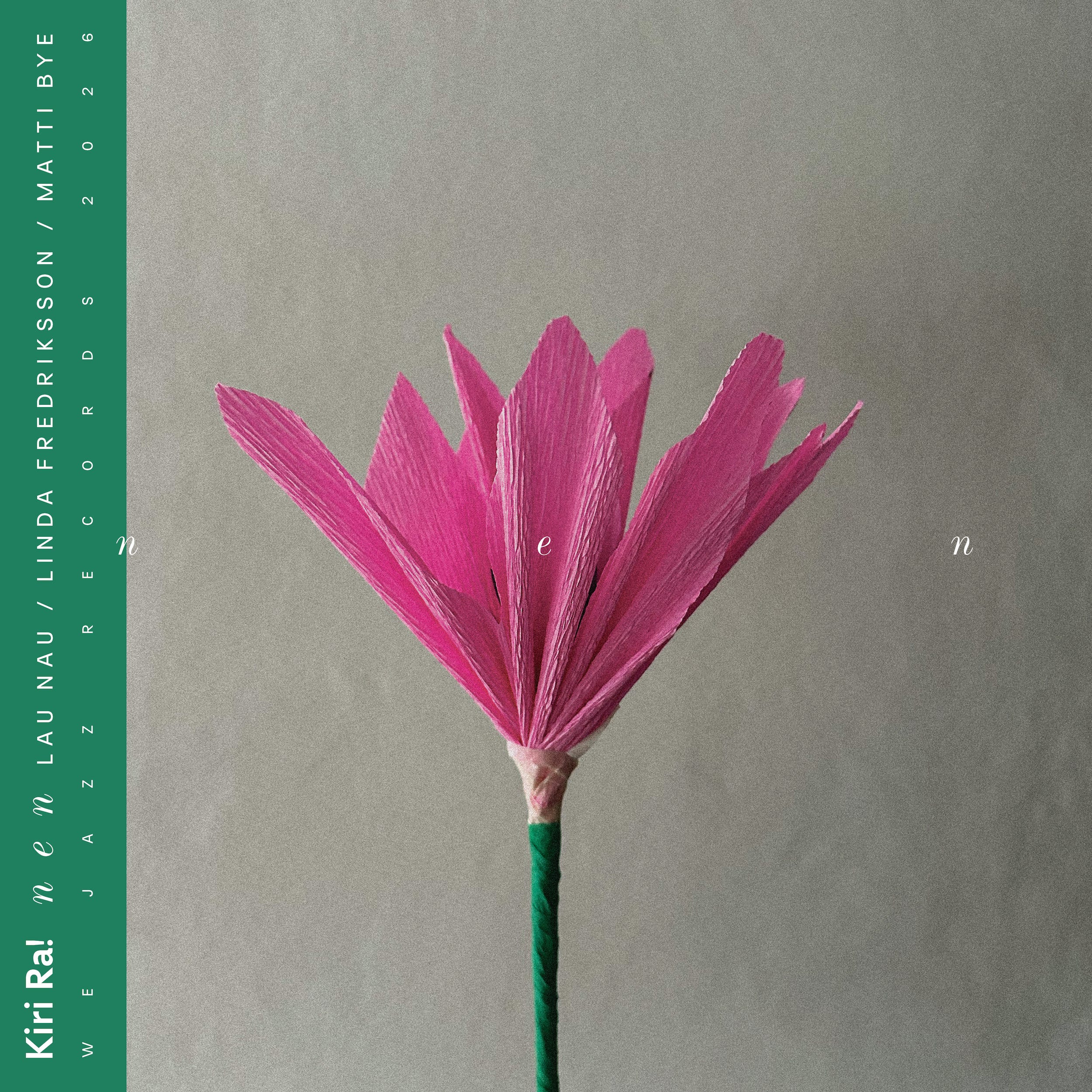
As a long-time fan of Linda Fredriksson—both through their work with Superposition and through their own lineup that recorded one of my favorite albums in recent years, Juniper—I was truly excited by the announcement of a new album by the group Kiri Ra!.
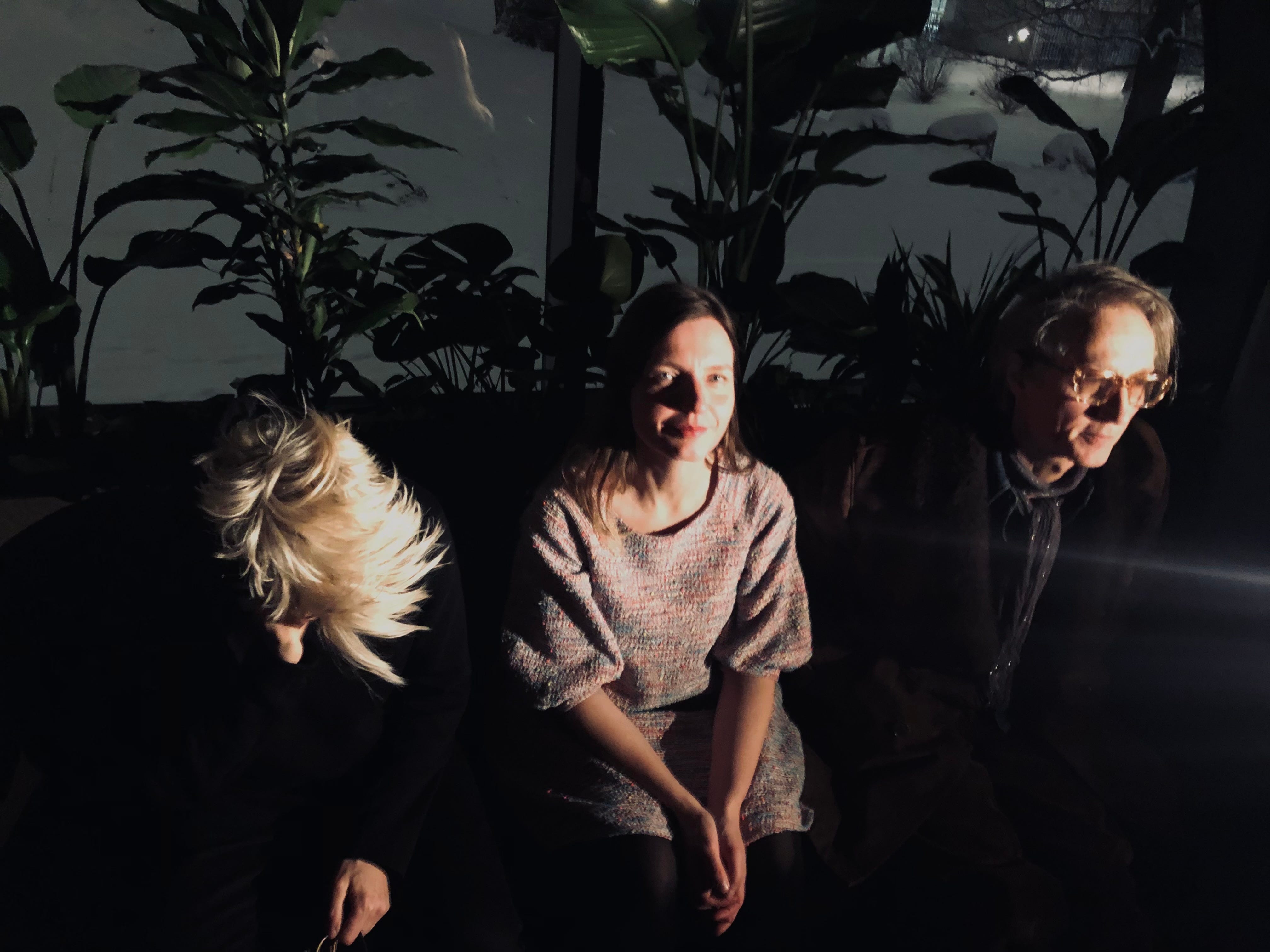
In this formation of equal members, Fredriksson play alongside multi-instrumentalist and sound artist Lau Nau, as well as pianist Matti Bye, who in this setting also performs on a range of instruments. The group was formed back in 2016, when they were commissioned by the Swedish Film Institute to create music for experimental amateur documentary films from its archive. Five years later, they recorded their eponymous debut album, and this year comes nen, the release I am writing about on Eurojazzist.
I came across all of this background information only afterward, approaching the album with little prior knowledge and an open mind. As it turns out, this aligns quite well with a kind of “statement” the band presents in its promotional materials:
"This music does not try to be anything. No pre-determined references, we get into our recording sessions without any verbal communication. It’s more like a state of mind where we are not trying anything, we just see what happens. We create a moment that is unexpected and doesn’t have any locked direction. We are not trying to be anything, We are existing together. This music was made with a lot of time. We drank coffee and tea. Played. Enjoyed pulla and cookies. Played a bit more. We talked. We were slow. It took 10 years to combine the right pieces for the album. We were not in a hurry. Keywords: air, space, love, time, rest, electronic, synthetic, organic, warmth, wood."
I have to say, this is one of the best album texts written by musicians themselves that I’ve come across—without any “references” or elaborate artistic concepts. I was particularly drawn to that emphasis on slowness, on allowing the music to simply “exist” as time flows without a beginning or an end.
I felt all of this already in the opening track “niin-så,” which evoked a series of visual associations for me—not necessarily musical in the narrow sense. A friend of mine wrote on Instagram that he experienced this album as “morning music,” which I found very fitting and, to a large extent, corresponds to my own impression.
The album opens with the sound of a flute, which visually and emotionally transports us into some unidentified natural setting. It could be Vietnam or Thailand—or any isolated place in nature, anywhere in the world. A small wooden cabin in a grove. We hear the sounds of nature and sense the smell of greenery, perhaps even a gentle morning breeze. At the same time, however, the trio does not sound at all like background music, nor like a new age record fulfilling the functional role of “relaxing sound.” Kiri Ra! implicitly invite us to slow down and enter the right state of mind—one that allows us to fully experience every sound, every micro-interaction between the musicians; the subtle building and release of dynamics; the shaping of solos through a kind of musical conversation among friends.
Often, quite naturally, the flute or saxophone will draw our attention. But take, for example, the title track “nen,” which captivates with its discreet percussive and sound-art qualities, where we also hear Lau Nau’s voice. To grasp everything that is happening within the piece, we truly have to be attentive and present. And the moment we commit ourselves properly to the music, a delicate and finely woven texture of the trio reveals itself—layered and intriguing, nothing like the superficial first impression that we might be listening to just another “ambient” track. If we snack on cookies while listening, we might miss an interesting detail—but an entire exciting world can open up between two sips of coffee. Again, that association with morning!
The three musicians play a wide range of instruments, and here’s the list: modular synth, vocals, cello, piano, balafon, glockenspiel, toys, saxophone, flutes, Wurlitzer, mandolin, synth, live electronics, vibraphone. They do so in a way that never oversaturates the music with sound. Each track carries its own sonic environment, built around a particular set of instruments, flowing more like a calm river than erupting like a volcano.
In their music, the “return to nature”—which manifests itself mentally through synesthetic associations—is ultimately a return to our humanity: to love, friendship, conversation, empathy. To listening to the other. To listening to our own thoughts and feelings.
‘Juniper’ was such an amazing album, massive inspiration to me, will be saving this one to listen to with a morning coffee for full effect.
Glad you posted this. It made me listen. I had been curious about this.