


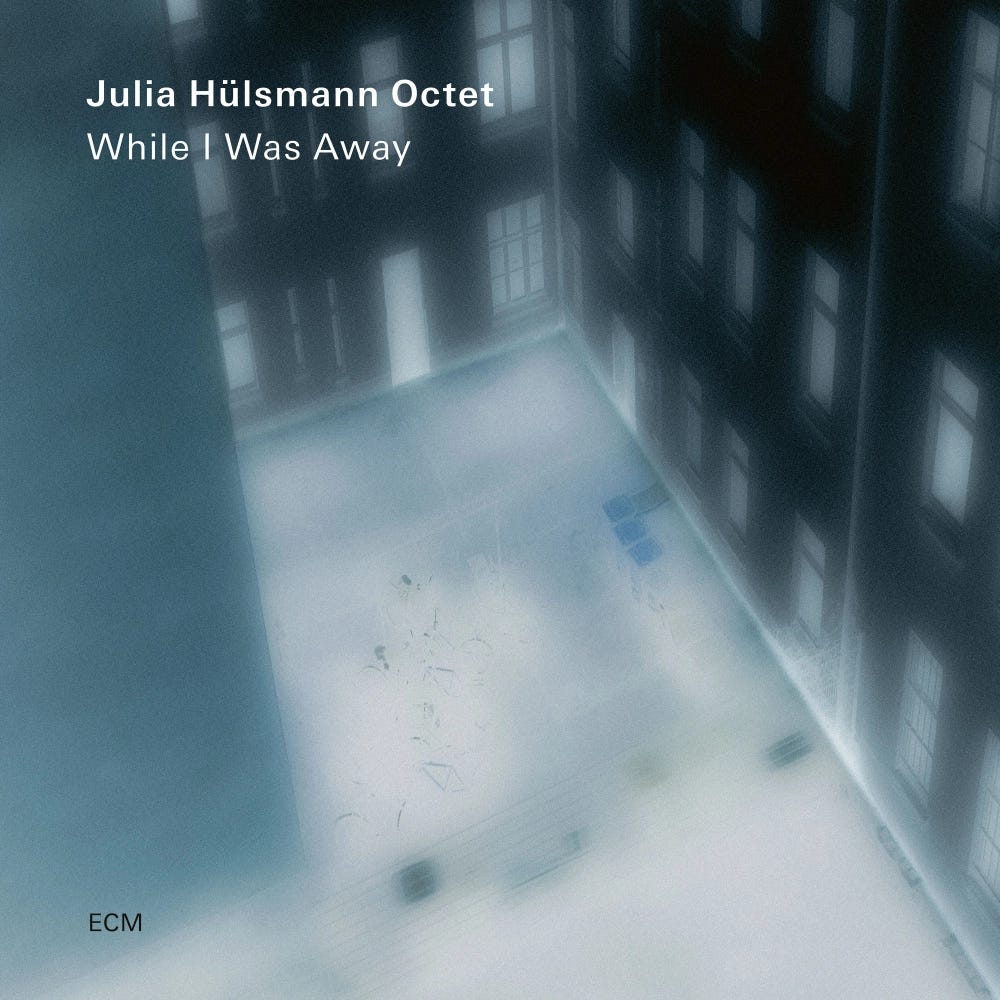
German pianist Julia Hülsmann has recorded with vocalists on several occasions throughout her career. Such releases alternated with instrumental albums in small ensembles, on which she demonstrated versatility within contemporary jazz, creating music that sounds familiar yet never derivative.
Over the past fifteen years or so, I have gladly listened to her albums whenever they appeared, but the 2015 release A Clear Midnight – Kurt Weill and America, featuring vocalist Theo Bleckmann, drew my particular attention. Beyond the fact that I had long been intrigued by the oeuvre of Kurt Weill and its possible reinterpretations in a contemporary key (such as Lost in the Stars: The Music of Kurt Weill from 1985, produced by Hal Willner), I truly appreciated the arrangements on this release. It was clear that stylistically this was not “another usual Julia Hülsmann album,” yet at the same time the cabaret element was not overstated. It was as if she had found the right balance between a delicate jazz sensibility and a theatrical approach, while Bleckmann’s angelic voice was a story in itself.
One of the consequences of listening to that album was my growing interest in Bleckmann’s own body of work; at the same time, I was very curious to hear Hülsmann’s next album featuring vocalists again. In 2018, she appeared at the Belgrade Jazz Festival precisely with the octet and the concept that would only eight years later be documented on the album reviewed here; YouTube also records couple of performances by this unique lineup from that period. I do not know why the album had to wait so long, but that is ultimately less important than the impression that this is truly an outstanding release.
The instrumental core of the ensemble alongside Hülsmann consists of drummer Eva Klesse, double bassist Eva Kruse, cellist Susanne Paul, and violinist Héloïse Lefebvre, while the vocal parts are shared between Michael Schiefel, Aline Frazão, and Live Maria Roggen, alternating between lead and backing roles as required by each composition. The very formation already suggests a unique vocal jazz album; yet it should be said that the Octet goes far beyond the conventions of this subgenre, delving into subtle nuances and intersections of jazz, pop music, and chamber classical idioms. The singing is in English and Portuguese, and alongside original compositions the repertoire includes couple of intriguing covers, as well as settings of poems by celebrated authors such as Emily Dickinson, Margaret Atwood, and E. E. Cummings.
There are several aspects of this synthesis that I find particularly compelling: the way the aesthetic of the classic jazz trio fluidly intertwines with the strings; vocals that transcend genres and do not push jazz virtuosity to the forefront, yet enrich with exciting interpretations those pieces dominated by a pop sensibility. Hülsmann’s talent for composing an original piece that sounds like a jazz reworking of a pop song (TicToc), or as though it had emerged from Kurt Weill’s songbook (You Come Back, which in less than four minutes brilliantly condenses theatrical dramaturgy, pop seductiveness, and avant-garde improvisation), is striking.
Above all, the joy radiating from the collective playing and singing of these musicians is truly captivating. Their sense of delight while performing these pieces is almost palpable; as I listened, I could easily imagine the smiles on their faces during a live performance, rather than the strict and disciplined focus of a studio setting. This spirit comes to the fore in the playful Coisário De Imagens, with Aline Frazão’s fluid, luminous vocal and witty string vignettes; in the cover of Ani DiFranco’s Up, Up, Up, Up, Up, Up, which retains the original melodic impulse while enriching it through a lush arrangement—an expansion rather than a jazz deconstruction; and in the aforementioned TicToc where vocals and piano evoke an immediate association with the sound of a clock.
I wish there were more vocal jazz albums like this—ones that do not assume a clearly defined starting position within genre crossovers, but instead allow the music to flow naturally, wherever it may lead. Julia Hülsmann excels in that field, yet I would never say that she has merely “refined her style” through polishing and long-term elaboration of related musical ideas. Her music feels to me like a kind of magic: something born alchemically, whose precise genesis we cannot trace, yet which gently seduces us and draws us into its world of joyful imagination, warmth, and love for art and life.