



Eurojazzist Randomizer is a loose-format column — a space for listening notes, side thoughts, new music, and jazz across Europe.
This jazz week has been particularly dynamic. Over the weekend, free-jazz saxophonist John Dikeman played two concerts in Belgrade, with one more coming up—I’ll be writing about the whole series in a separate piece. A few days earlier, on Thursday, I was one of the speakers at a presentation of Jazz Sketches by Vojislav Pantić—a jazz critic, programmer of the Belgrade Jazz Festival, and, broadly speaking, the most important jazz figure in Serbia over the past thirty years.
I had already read the manuscript in its working version with the task of writing the afterword, which prompted me to reflect more deeply on the subject matter. The book is a collection of previously published writings on Serbian jazz—reviews, interviews, concert reports, and the like—which many jazz enthusiasts will already have encountered in the daily newspaper Politika or elsewhere. For that reason, it was necessary to find a particular “angle” for my text, to notice something we may not already know about the material itself or about Voja’s style of writing.
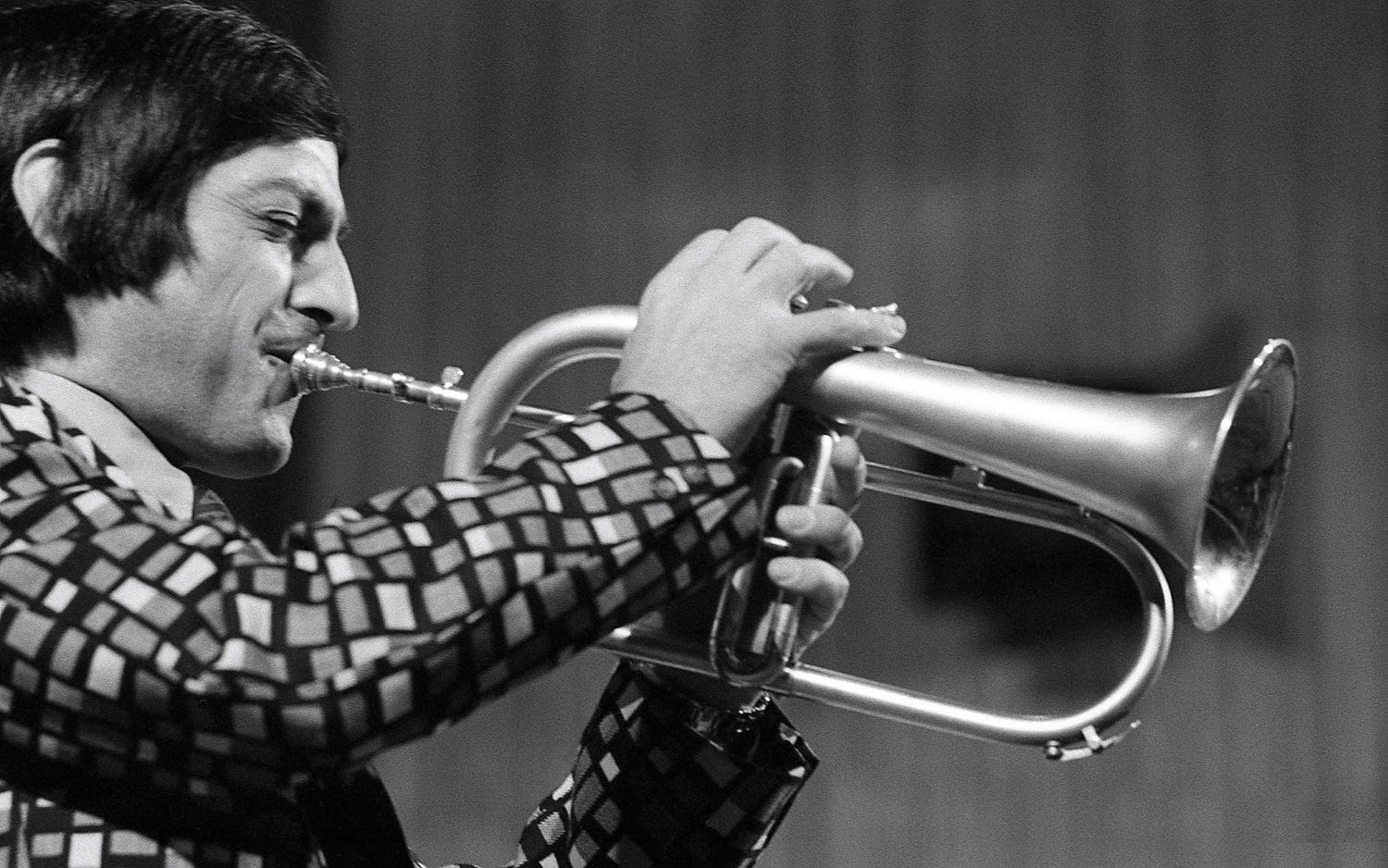
Among other things, I focused on one aspect that struck me as both interesting and important. Occasionally, Vojislav Pantić opens a text with a kind of confession: that he once disliked a certain musician, or that he held some form of prejudice toward him or her. Perhaps it stemmed from an album or a concert that simply didn’t resonate with him, or something else entirely. What follows such an introduction is a moment of revelation—or simply the correction of a previous mistake—when he encounters that same musician or band in a different context: at another concert, or two or three albums later. This is not the usual observation that a musician has “improved” and now sounds better than five years ago. Rather, Voja never shied away from explicitly admitting that he had once been wrong, and that he was now revising his opinion.
There are several reasons why I chose to address this particular aspect of the book, but above all I find the deeply human dimension of it important. What we write about jazz is not truth carved in stone; it is not the unassailable word of an authority that the reader is expected to accept and obey without question. Just as our musical tastes are not fixed forever—and different things speak to us as the years go by—the same applies to writing or thinking about music. At one moment we think one thing, and later we think another. Or we realize that something we wrote earlier was insufficiently considered, that we did not fully understand something, or simply that we wrote something foolish. All of that is perfectly normal and human. But it is even better when we speak and write about it openly.
Beyond basic human honesty, such admissions are also valuable because they strengthen the credibility of a journalist or critic. If someone is prepared to swallow their pride in public and write something like that, readers are far more likely to believe that they write sincerely about music in general—and that the album they listened to or the concert they attended is not merely a pretext for demonstrating linguistic virtuosity or intellectual superiority over the reader. By acknowledging mistakes, or by revisiting and reconsidering what we have written, we establish a deeper connection with the reader. We show them that they are not in a subordinate position to the author, but that our experiences of music are equally valid—perhaps simply different.
At the same time, we suggest that their own experience of music need not remain fixed or determined by prior assumptions or earlier opinions. Everyone is invited to evolve, to reflect on what they experienced at a concert or while listening to music at home. We remind ourselves that jazz is a space of freedom—not only for the musicians who play it, but also for all of us who take pleasure in it. Freedom of thought, of perception, of feeling, and of everything else that jazz music awakens in us.
New Listens
On some chart or blog I came across the album Simple Fall, recorded jointly by the cellist Vincent Courtois and the pianist Colin Vallon. The latter is one of my favorite musicians on the ECM Records label, so I am always pleased to hear him in a slightly different context. On his ECM albums there are usually a few more adventurous pieces that serve as a counterweight to the central melodic numbers. Simple Fall offers even more of those freer excursions, while Courtois himself is a musician I have often enjoyed listening to—mostly in the ensembles of other bandleaders.
The album is released by BMC Records, the Hungarian label that has been particularly active in recent years and whose selection of musicians I find consistently intriguing. Alongside the best of Hungarian jazz, they also highlight artists from the French scene and from other parts of Europe. From their latest batch I found the album Live at Atelier du Plateau by the group Ensemble Ensemble especially interesting. The ensemble consists of Mari Kvien Brunvoll (voice, electronics), George Dumitriu (violin, viola), Eve Risser (piano, prepared piano, alto flute), Kim Myhr (guitar), and Toma Gouband (drums, percussion). I would not quite call it “jazz” so much as a free journey through various styles of contemporary improvised music—but that distinction is not particularly important. There is also a new duo Love at Last Sight by Evi Filippou (vibraphone, percussion, voice) and Robert Lucaciu (double bass), featuring Hayden Chisholm as a guest on one track. Chisholm also wrote one of the more entertaining sets of liner notes I have read recently.
In the category of so-called “safe choices,” I listened this week to Bill Frisell and his new album In My Dreams. There is little new to say about his music, but I always enjoy it when he records with string players, who add a particularly beautiful sense of layering to his sound. Pure, simple beauty.
Another noteworthy release this week arrived via the Eurojazzist mailbox: the Metropole Orkest, which is issuing a new album titled Arakatak to mark its 80th anniversary. Conducted by one of the orchestra’s regular guest conductors, composer and arranger Miho Hazama, the album also features compositions by Vince Mendoza, Donny McCaslin, Tineke Postma, Mark Guiliana, Shai Maestro, and Louis Cole. Although big bands are not regularly on my playlist, this time I decided to break my listening routine—and I did not regret it.
Jazz Across Europe
A moment ago I mentioned BMC Records, which stands for the Budapest Music Centre. Within this institution there is also the Opus Jazz Club, known for its consistently excellent regular program as well as occasional thematic events. For many years now, Jazzdor Strasbourg-Berlin has been among the most interesting European festivals, held in the two cities with a focus on French and German musicians and their collaborations. For the third year in a row there is also a Hungarian branch called Jazzdor Strasbourg-Budapest.
This year’s edition will take place from March 25 to 28. One project that particularly caught my attention is Garden of Silences, featuring the outstanding French violinist Clément Janinet and the legendary Norwegian trumpeter Arve Henriksen, performing in a quartet completed by Ambre Villermoz on accordion and Robert Lucaciu on double bass. Full programme is listed here.