


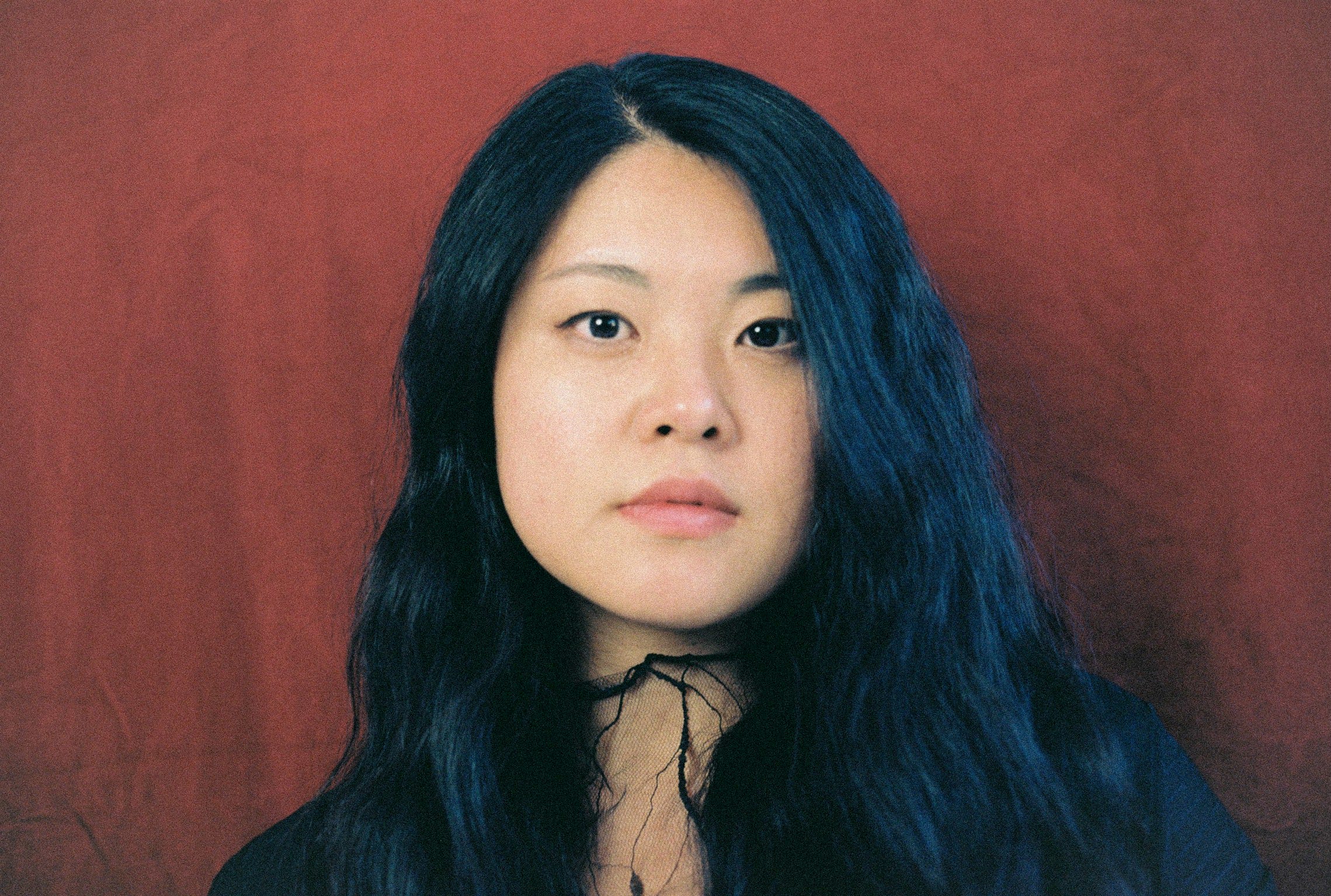
Sun-Mi Hong is a drummer, composer, and bandleader who is increasingly establishing a strong presence on the European jazz scene. After moving from Korea to Amsterdam, she formed several of her own ensembles, among which her quartet—releasing albums for Edition Records—has stood out in recent years. However, equally interesting is the BIDA Orchestra project, which moves from the realm of “modern creative” jazz into the field of more open improvisation.
The album “REFLEX: Invisible Ropes” was released two years ago on Bimhuis Records, the label arm of the well-known Amsterdam concert venue Bimhuis. Within the conceptual REFLEX series, a number of other interesting albums have also been released, which you can listen to HERE.
But the specific reason for this conversation is the performance of Sun-Mi Hong’s BIDA Orchestra at the Ljubljana Jazz Festival, taking place from July 1 to 4 in the capital of Slovenia. During my few days at the festival, this will be one of the most important concerts for me to attend.
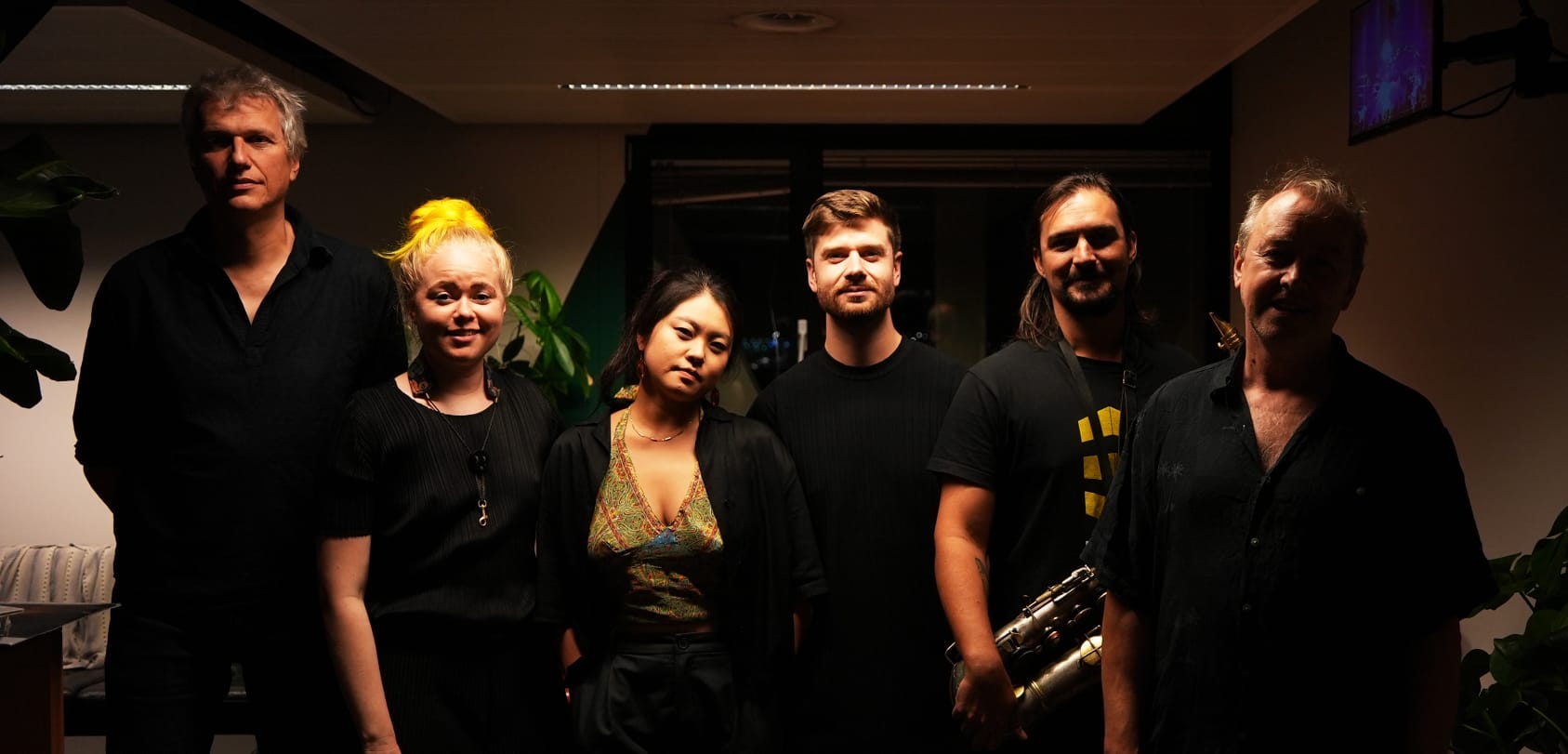
BIDA Orchestra was created within a BIMHUIS production framework, in which artists are invited “to reflect on the world.” If we momentarily set aside the band itself and the music that emerged: what did you consider to be your key reflection, statement, or viewpoint?
A lot of projects are connected to specific topics as a way to create meaning and context. I am a thinker, and as musicians we constantly need to reflect on ourselves and the world around us because the two are always connected. For this project, I chose to focus on dreams. (consciousness and unconsciousness)
In a world full of constant noise and cracks, my album “Reflex: Invisible Ropes” explores a lost space where consciousness and the unconscious meet. The reflection is personal, but at the same time it relates to something universal about how we experience and navigate the world.
In that context, what does the album title Invisible Ropes refer to?
Holding on to invisible ropes, believing that everything will be fine, while at the same time struggling with ourselves. It is about survival, hope, and the inner battles we carry.
Compared to the band that releases albums on Edition Records, BIDA Orchestra has a more open structure. Alistair Payne is a constant, but now there are also players such as John Dikeman and Mette Rasmussen, as well as Jozef Dumoulin and John Edwards. Did you first have a vision of the music that required a certain type of musician, or did you start from the people themselves and what they bring musically?
I wrote this repertoire based on the sound and musicality of these specific musicians. So yes, the musicians came first, and then the music followed.
Rawness and depth were the key reasons for bringing these players together. Everyone in this project is an incredible improviser with a strong musical identity. Because of that, I keep the compositions minimal, just basic lines and harmonies. I leave the expression, tone, and emotion completely up to them. I trust their instincts to fill in the rest.
You are also working with Mette Rasmussen on another joint project, NOCTILUME.
It is a completely different group with a different musical direction. The music is different, and I have a different artistic goal in mind. Each project asks for something unique, and I approach them on their own terms. Writing perspective: BIDA orchestra was inspired a lot from listening to Sun Ra Arkestra and Noctilume’s music was inspired by Canadian post-rock band called Godspeed You! Black Emperor.
Your albums seem to have a certain narrative, almost literary flow. „Fourth Page: Meaning of a Nest“ includes two multi-part compositions, “Meaning of a Nest” and “A Never-Wilting Petal.” Before that, there were Third Page, Second Page… Did you have the concept — the story you wanted to tell through music — in mind from the very beginning?
„First Page“ was created when I graduated from my master’s program at the Conservatorium van Amsterdam. It felt like a gift to myself and a way to reflect on who I was at that moment. I always liked leaving space for the audience’s own interpretation. At the same time, I chose the title „First Page“ because it felt as if my life had started a new chapter when I moved to the Netherlands. From there, the albums gradually developed into more chapters.
What has working with Dave Stapleton and the Edition Records team brought you?
For me, it is definitely about artistic understanding, freedom, support, and belief in my work. Working with Dave Stapleton and the Edition Records team has given me the confidence to continue developing my own voice without feeling pressured to fit into a particular mold.
Stories from your albums are clearly very personal. On the other hand, music as such is abstract and non-verbal. How do you see and experience the relationship between your own emotional and intellectual sphere on one side, and what the audience hears through the band’s music on the other?
Some people are comfortable sharing their emotions and personal lives through music. Others prefer to hide behind the music or become something else entirely. Both approaches are valuable and understandable. As human beings, we do not have to measure ourselves by popularity, mainstream success, or any objective goal. What I go through is my own journey, me versus myself, not me versus others.
At the same time, I am the small thing in this world. So if people feel something deeply in their hearts through the music, I am happy.
Having titles is fun because they give me something to explain when I need to. But sometimes I also like leaving things unexplained and allowing listeners to find their own meaning.
Your music, whether in your quintet, BIDA Orchestra, or other projects, draws inspiration from both American and European jazz perspectives. In that sense, did you consciously want to move away from Korean musical heritage, or was it never part of your main field of interest to begin with?
Unfortunately, I have no training in Korean traditional music, even though I believe it is one of the most beautiful and spiritual musical traditions in the world.
American jazz and European jazz have been my strongest influences, and I do not feel any pressure to add elements of Korean traditional music simply because of where I come from. That would not feel honest to me.
At the same time, if people hear something Korean in my music, I will not argue with that. The truth is that I am rooted somewhere, and more and more I am accepting that my music is deeply connected to Korean culture, even if not in an obvious or traditional way.
On the other hand, what is it that you like about Amsterdam? Why did you decide to come here in the first place, and have your initial expectations been fulfilled?
My life became much better after moving here. Or maybe I finally saw that there was a small light, a possibility of a different future. Just stepping into the unknown was exciting, and I am grateful that the unknown happened to be the Netherlands.
Experiencing cultural differences and living in a country that values music and the arts so highly was fascinating. It changed me completely.