


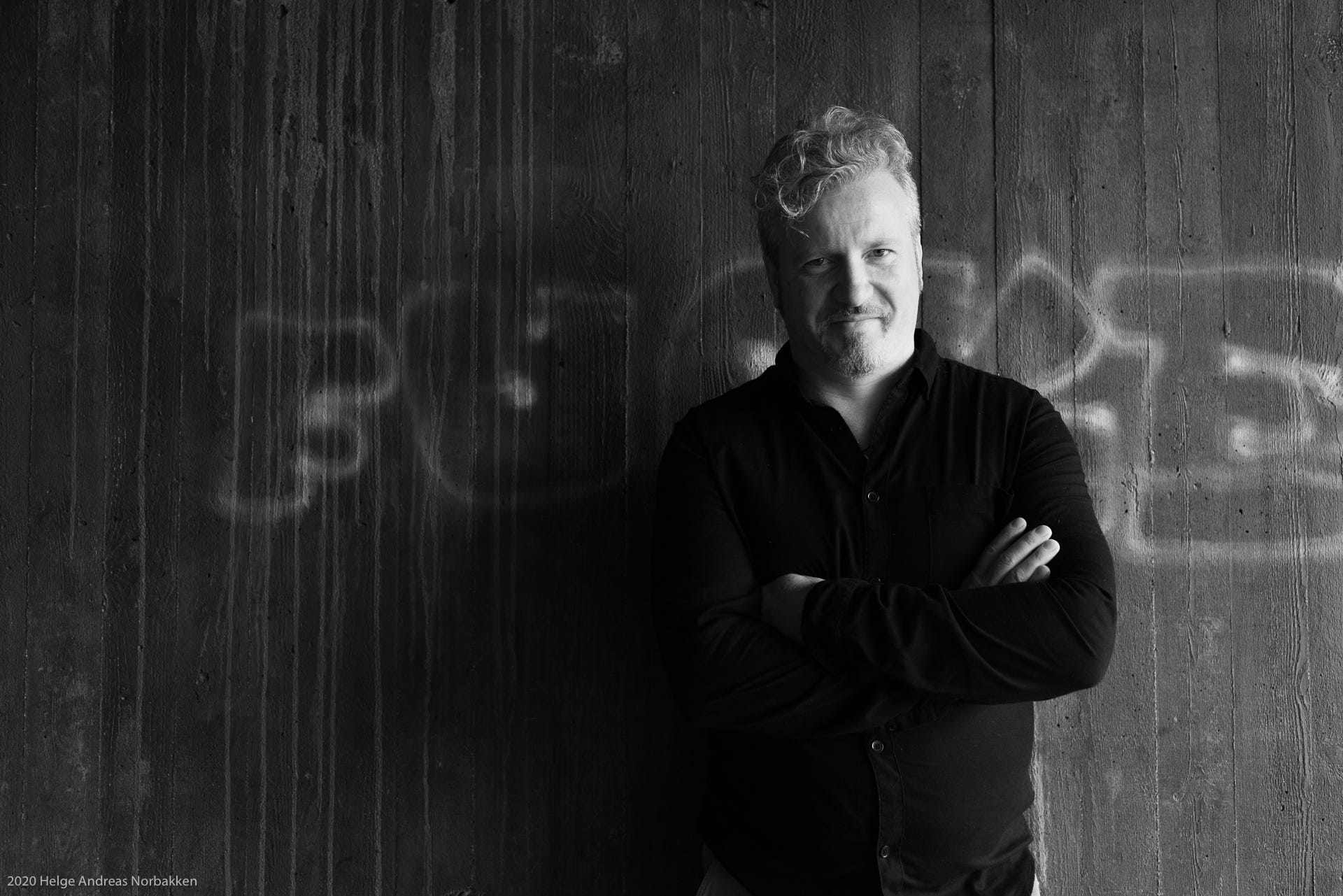
Although I had been familiar with the work of accordionist Jovan Pavlović for quite some time, our first direct exchange came last year, when he performed in Serbia on several occasions: first in a solo setting with special guest Bojan Z on piano, and later, toward the end of the year, with the Big Band RTS. We agreed to do a long-form interview tracing his personal and musical journey—from Serbia to Norway, where he now lives and works—with a particular focus on his major concert with the national jazz orchestra.
Earlier this year, when the Trondheim Jazz Orchestra released Spiti/Home, I noticed that Pavlović appears on the album as well. As a whole, the record departs from what we have come to expect from TJO in recent years, yet it is equally important to note that this Norwegian ensemble has consistently pushed the boundaries of its expression. Here, their orchestration intersects with the musical traditions of various European regions, from Greece to the far north of the continent, with a leading role taken by vocalist Marianna Sangita Angeletaki Røe.
Since I was pleased with the interview I did for Jazzin.rs, I thought it would be worthwhile to prepare an updated English version for Eurojazzist. I have slightly reorganized the material, omitted certain sections, and added several new questions focusing on Pavlović’s work with the Trondheim Jazz Orchestra, with whom he first performed more than a decade ago.
In Serbia, during the 1980s and 1990s, the accordion was mostly associated with folk music, or with classical music within the educational system. Where did your interest in jazz accordion come from?
Honestly, I don’t know. I was fascinated by the very idea that someone could improvise at all. Until I was 18 and moved to Norway, I didn’t even know what the word improvisation meant. Now I see that many mature musicians still don’t understand how long that process of learning and exploration is, before you can reach a point where you feel free and able to improvise on stage.
I went to Norway to study classical music. If you go to Wikipedia, you’ll see it says I’m a jazz musician, but that’s not true. I’ve never felt like a jazz musician, even though I mainly collaborate with musicians rooted in jazz. I’m a musician who plays rhythmic music and is comfortable with improvisation. In fact, improvisation definitely makes up more than 50% of what a listener hears at my concerts or on my albums.
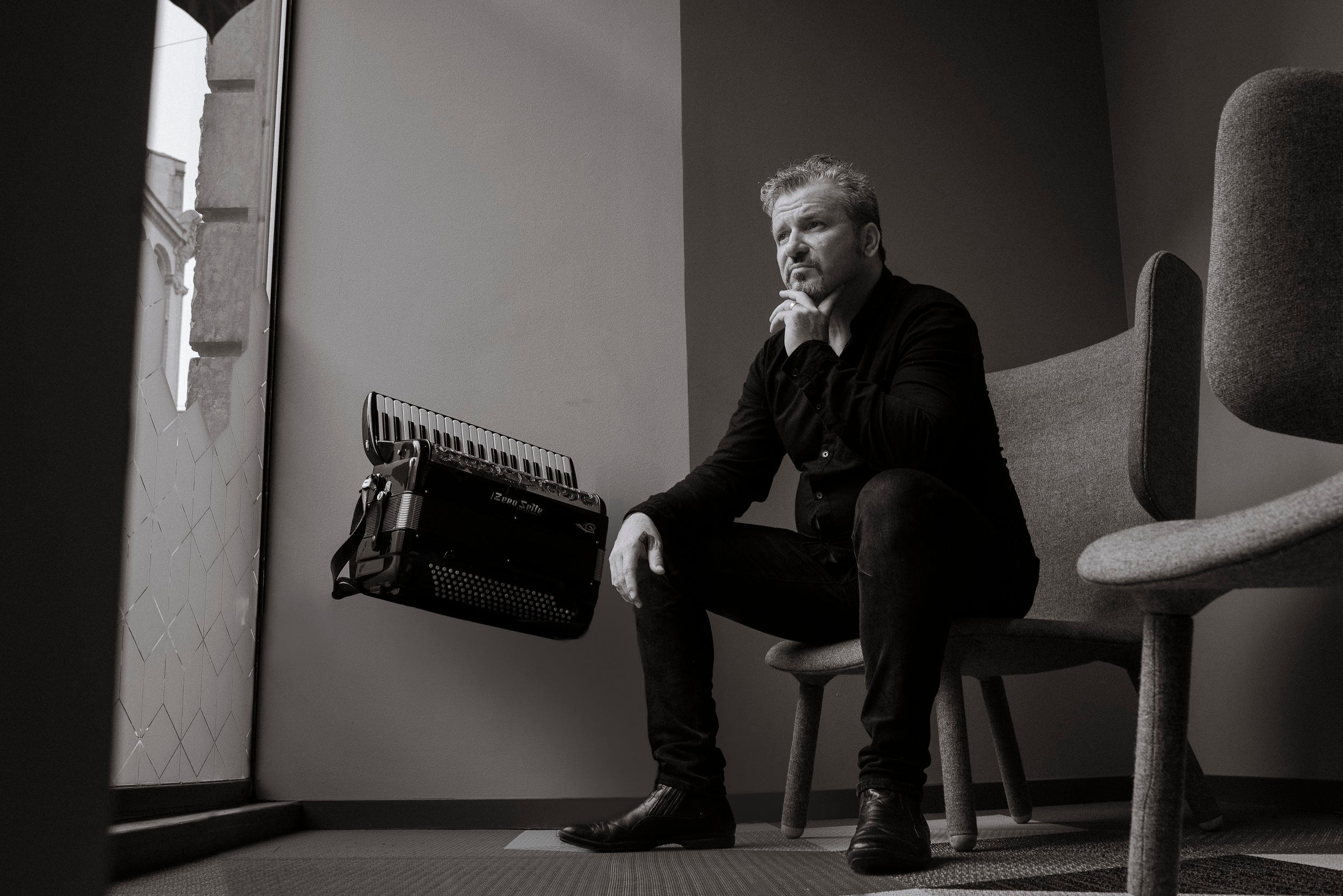
After Serbia in the 1990s under sanctions, how big was the cultural shock of moving to Norway? Were your first steps difficult, and how much did what you found at the conservatory differ from your expectations and prior knowledge?
During the worst period of inflation, war, and embargo, I realized I wouldn’t go to Russia as I had originally planned, and with great support from my parents I went to Norway to study classical accordion. Before that, I had passed the entrance exam, and everything was set for me to become a Scandinavian master of classical accordion. And then something happened that completely changed the course of my musical path. I was assigned an older-generation professor who hadn’t followed developments in classical accordion since 1978. Even though he knew I had been playing a very demanding classical repertoire, he asked me to start playing polkas. That was a big shock for me, but at the same time I didn’t dare complain. It would have come across as, “look at him, he just arrived and he’s already complaining.”
Slowly I started slipping into depression and seeing my future as completely uncertain. In one of those moments, in the conservatory cafeteria, I met Mats Eilertsen, who explained that he was studying jazz at the same conservatory, but that their classes took place across the street. At that moment I had no idea that someone could even study jazz. Completely confused, I agreed to go with him to a jam session they were having in their building.
I was in huge shock when I saw how many young people played jazz so well. Mats, who later became one of my best friends here, encouraged me to start listening to jazz. And once I learned at least one standard, I could play with him. That’s when I learned “Billie’s Bounce” and started to “improvise” a little for the first time.
In the meantime, I met Stian Carstensen, one of the best multi-instrumentalists of today, who plays the accordion incredibly well. Not only that, but he plays Romanian and Bulgarian folk music just as well as jazz. He inspired me a lot, and from then on I seriously began studying both jazz and folk music at the same time.
Which jazz accordionists inspired you?
Everything I know about jazz and all the music I started listening to began in Norway. Yes, that’s relatively late, but from then on I was immersed in music all day, and sometimes all night. I listened to Art Van Damme and Frank Marocco, but I soon realized that if I wanted to develop my own style, I had to detach myself from accordionists.
A common problem with accordionists who want to deal with improvisation/jazz is that they often listen only to other accordionists. That’s where limitations arise, and it’s easy to recognize who hasn’t gone deep into the essence of the music, but has only copied something that’s already been played. I really listened to all kinds of things, but probably the most to Keith Jarrett, whom I still listen to often. Of course, I went through the entire history of jazz, but also the folk music of various cultures. Ethno music or ethno fusion still interests me today, of course when it’s done well and thoughtfully.
In the 1990s, Norway was home to some of the most innovative jazz musicians of the time, quite far removed from what we know as the bop tradition. In 1997, Nils Petter Molvær released “Khmer,” Bugge Wesseltoft released “New Conception of Jazz,” Sidsel Endresen entered her more experimental phase, and so on. How did you perceive these musicians and tendencies on the local jazz scene?
To be honest, at the time they were too avant-garde for me. Of course, now I understand how innovative they were and still are. If you live in Norway and collaborate with Norwegian musicians, it’s natural that over time you absorb parts of their aesthetic. That’s why I think my life here has shaped my musical expression just as much as growing up in Yugoslavia. I really like that sense of musical freedom that musicians in Norway have, partly because there is significant investment in culture, but also because they’re not afraid to try something new, even though they know it’s not 100% certain it will be accepted as a success.
Given that in the late 1990s and early 2000s “world music” as a genre and concept was on the rise, was there an expectation for you to fit into certain patterns associated with “an accordionist from Serbia”?
Ah, well, I did play for a while with trumpeter Marko Marković. I also played with Džambo Aguševi from Macedonia. It was nice—both of them are great players. Brass music is popular here because of Emir Kusturica and Goran Bregović, although much less so today than before. I never followed those patterns; I always tried to add something of my own, no matter what music I was playing. That’s something that’s followed me all these years—I didn’t want to play like others, regardless of whether that was the right decision or not.
What was your personal relationship to what was a trend in global music based on ethno motifs, in the context of your own thinking about jazz?
Everything that becomes a major trend in music at one moment eventually becomes something people grow tired of. The problem, of course, arises when everyone wants to build a musical career by playing something that has already been played, but is very popular at that moment. In the end, that turns out to be a completely wrong move and has a very negative impact on the development of music.
Think of Buena Vista Social Club. They were so popular, they created such a boom that afterward many “musicians” with any kind of ethnic background from Central and South America started, with their newly formed bands, playing covers of their music. A similar thing happens with trumpeters—they play the same or very similar repertoire that audiences here are already quite saturated with.
My goal all along was not to be a copy, and everything else is a process of going into the unknown and seeing what happens.
It wasn’t until 2017 that you released your first album under your own name. A bit later came “Life on Accordion.” Did you simply not have time due to numerous engagements, or did you consciously wait for your personal artistic voice to “mature” over about twenty years of a very active recording and performing career?
With my trio, I released two albums: Refleks and Bonfire. Refleks was with a classical octet from northern Norway, and Bonfire was with Ahmad Al Khatib, one of the most renowned Arab oud players.
Yes, for a long time I didn’t dare release anything under my own name. I think the real turning point came when I created the solo album/project Life on Accordion, with which I toured worldwide over the past two years. I gave lectures on improvisation at universities in Buenos Aires and Chile, played at many jazz festivals across Europe. I started performing at accordion festivals and suddenly re-entered the accordion world after so many years of “absence.”
We come to your work with the Trondheim Jazz Orchestra. The immediate occasion is this year’s album by Trondheim Jazz Orchestra & Marianna Sangita Angeletaki Røe titled Spiti/Home, on which you also play. But that wasn’t your first album with TJO—you had previously played on Marius Neset’s project documented on the 2014 album “Lion”?
This project was unique—although all TJO projects are unique—in that Marius’s music is among the most rhythmically complex music I’ve ever heard. Marius studied in Copenhagen, which is why it sounds so “non-Norwegian.”
What were the expectations of you as an accordionist in this context?
The accordion in this project was just as important as all the other instruments. Marius loves the accordion, and I was very honored when he chose me to play with the orchestra.
When the project gained attention, it became very popular, but I remember the first rehearsal when he brought in the scores—we literally couldn’t put it together. It was so complex, demanding, and difficult that we all looked at each other and realized we had a lot of practicing to do. I practiced for days at a slow tempo just to understand what was going on. After a year, we released the album “Lion,” recorded in Copenhagen, which won a „Norwegian Grammy“.
For me, it was an incredible experience performing this project at Ronnie Scott’s in London, as well as at the North Sea Jazz Festival and at nearly all major festivals across Europe.
In what way did TJO expand your musical horizons?
When you work with top-level musicians and find yourself far outside your comfort zone at the beginning of a collaboration, it changes your mindset. You’re forced to give your best and, as an equal member of such a large orchestra, do everything in your power to make it sound as good as possible, while constantly thinking about how important it is for you, as a soloist, to leave your personal signature, both live and on the album.
On the current album, Marianna Sangita is in focus, but you are also part of the ensemble, which performed at jazzahead! back in 2024 and then toured internationally for two years before the album itself. How did the work on this project unfold?
Marianna has a background in Greek folk music, but also in bands such as Broen and Gurls. Still, in this project the main focus is on melodies with a strong folk element. I love folk music, but I no longer like playing it in a traditional way; instead, I prefer a way that allows me, as a performer, to take the music somewhere else, somewhere unexpected.
What was particularly interesting to you in this context, not only regarding your role but also more broadly in terms of compositions and arrangements?
The process of rehearsing the compositions itself was interesting, probably because we all come from quite different musical backgrounds. We worked a lot together on the arrangements, as a band. We tried out different ideas and searched for a common language for the whole ensemble. That’s not easy at all—it requires a great deal of dedication and openness to collaboration. Throughout, I tried to find a middle ground, where I would constantly add a kind of ethno “flavor,” but just enough for it to be felt. My main idea was that, in the sections where I improvise, I move away from tradition, but in a way that still sounds natural and interesting.
Last year you performed in Belgrade with Bojan Z, as well as with the Big Band RTS – the national jazz orchestra of Serbia. Do you have a desire to connect more with the Serbian jazz scene, or with musicians from this region in the diaspora?
By nature, I’m very curious and interested in many things, but perhaps most of all in what I don’t know. I learned a lot from Bojan, because in his mindset he’s similar to me—always learning and always wanting to try something new. Of course, I’d like to play with anyone who is good at what they do. There are many talented musicians here, but there are also many musicians from our region living abroad whom people in Serbia haven’t even heard of.
It’s already certain that I’ll be recording an album with Romanian multi-instrumentalist and mega cimbalom star Marius Preda. We’ll probably invite some guests, and it’s not impossible that Bojan will be one of them.