


About a month ago, I had a meeting at Radio Belgrade with my dear editors, where we discussed a number of things – from some concerts we might organize next season at Studio 6 to the program itself and my shows. We also came to the idea that I could add one playlist a month to my schedule, running for 50–60 minutes (depending on the flexible radio schedule).
In the past, I only made some New Year’s “best of” playlists for the Radio, but my focus was always either on complete concerts or albums. There were also some other special occasions when I put together playlists (for specific events), but I can’t say it’s my specialty. I’ve always had the impression that this job requires a particular skill, a sense of how to organize tracks in the right way, how to move seamlessly from one mood to another, how to be diverse but at the same time coherent and logical in the sequencing… all in all, the way I see it, a jazz playlist (or a playlist in any other genre, for that matter) can’t just be a series of great tracks arranged in any random order.
My first “official” playlist is coming next Wednesday, and I’ll be putting it together over the next few days, and once it’s published I’ll post about it. There are at least a couple of radio DJs among Eurojazzist readers, and perhaps more. I’d love to hear your thoughts on the art of creating a playlist. Or am I just overthinking it?

Irene Schweizer
I saw pianist Irene Schweizer live for the first and only time at the Ring Ring Festival in Belgrade. It was in 2008, when she performed with saxophonist Omri Ziegele. At the time, they dedicated their repertoire to “classics by Ornette Coleman, Don Cherry, and other jazz greats,” as I wrote in my concert report back then, although I don’t remember too many details now. Except that it was excellent, and that around that time I had only just started thinking more deeply about female performers in jazz – where they were, how many there were, which ones were influential and how many were overlooked… and what must it have been like for Irene Schweizer, who was born in 1941? What were her beginnings like?
If today’s female jazz musicians often speak openly about the machoism and harassment they encounter well into the 21st century, at a time when we can certainly say that there are far more female instrumentalists at festivals and on respected lists of the best performers than there used to be, and that the situation in that respect is “getting better,” what must it have been like for someone entering the world of jazz and improvised music in the 1960s and 1970s?
In early 1978, Irene Schweizer joined the Feminist Improvising Group, which was the first publicly performing women-only group of improvisers. Naturally, we can easily imagine how their male colleagues reacted to this band. Some of those reactions, as well as the broader context, can be found on the very thorough Wikipedia page, which offers plenty of information and quotes.
Schweizer’s role was important and pioneering in terms of the affirmation of women on the jazz scene, but also for the European jazz scene as a whole as we know it today.
I’ve gone off on a tangent, but not without reason – the album released by Intakt Records to mark the 40th anniversary of this great label is, symbolically and appropriately, a live recording of an Irene Schweizer performance from 1986. In addition to her own compositions, she performed jazz standards by Thelonious Monk, Ornette Coleman, and Duke Ellington. Although they are very different pianists, I also felt a parallel with the great Aki Takase, who likewise has an extraordinary feel for the jazz tradition and for combining it with a highly abstract improvisational style. In that sense, the album “Prelude to a Kiss and More (live)” is challenging and entertaining at the same time.
Ayumi Tanaka
Japanese pianist Ayumi Tanaka studied in Norway, and over the following years she remained in Europe, so we could say that she is part of the Scandinavian jazz scene. Her trio with Thomas Stronen and Thomas Morgan released the album “Windflover” yesterday on ECM Records. As I write this, I’m listening to it for the first time, and I can’t say that any obvious, immediate references come to mind. Which is certainly a good thing. Her playing, compositional, and arranging ideas are layered, while Stronen and Morgan approach the rhythm section very freely and playfully, without sticking to fixed rhythmic patterns that would constrain the music. I could say this is an “ECM-like” album in the broadest sense of the term, but it is by no means derivative – Tanaka is exploring her own artistic path.
Skopje Jazz Festival
Skopje Jazz Festival holds a very important place in the history of (live) jazz in the Balkans. Since the 1990s, some legendary names have performed here, including Ornette Coleman, Anthony Braxton, Roscoe Mitchell, and so on. One of my favorite musicians, John Lurie, played here back when he was still performing live. And many others. The festival’s director and longtime programmer Oliver Belopeta has legendary status, and rightly so, since he has always approached festival programming boldly and uncompromisingly. That isn’t always easy in our Balkan countries, where culture and politics intertwine and where the budgets of a country’s major jazz festivals depend on shifting social and political circumstances.
On the other hand, the exceptional status that Skopje Jazz Festival enjoys throughout the region speaks to the value of this kind of programming philosophy and the importance of continually educating the audience.
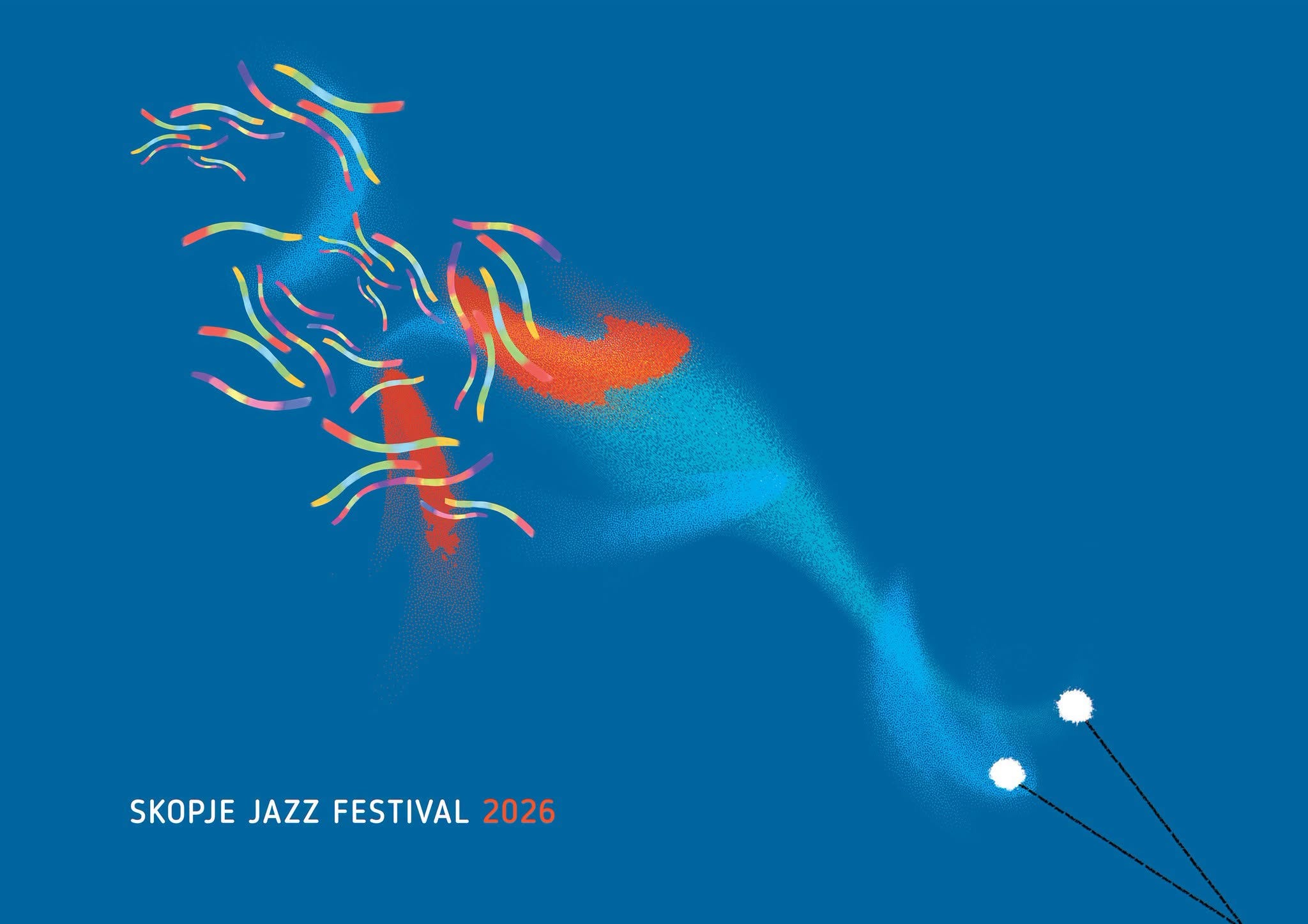
This year’s program was announced a few days ago as well. The festival takes place from October 15 to 18, and the complete lineup goes like this:
Leonhard Skorupa New Quistel Quintet * Zlatko Kaučič Kombo BC * Pasquale Mirra & Hamid Drake * Eivind Aarset & Jan Bang * Trygve Seim Ensemble * Punkt Live Remix Eric Honoré & Jan Bang * Andrea Mirceska Quintet * Nduduzo Makhathini * Alexander Hawkins & Sofia Jernberg * Jure Pukl Analog AI * Vincent Peirani Quintet.
I’m especially excited about the possibility of seeing Punkt Live Remixes nearby in its touring format. But everything else looks great too.
John Lurie is such a weirdo. I had the the legendary Marvin Pontiac album for quite a while before I realized Pontiac was a fictitious character.
You are fortunate, Nikola.