


I’ve been attending the Belgrade Jazz Festival since 2005, when it was revived after a break of almost 15 years. I was 25 at the time and only just entering the world of jazz music, while there weren’t many jazz concerts by international artists in Serbia, so for me this was an event of the highest possible profile. Later, I started travelling more and more – first to Zagreb for the N.O. Jazz Festival, then to Jazzfestival Saalfelden, and gradually to many other festivals in Austria, Romania and elsewhere in Europe.
Over the past twenty years, BJF has remained an important place for jazz encounters and concerts for me, even though that sparkling feeling of anticipation and excitement as the festival approaches has somewhat faded. But that’s all my personal impression, perhaps from a somewhat privileged position. The BJF audience is loyal and dedicated, and the atmosphere is always very good. Even in a year like this one, marked by crises in so many ways, the mere fact that the festival has managed to maintain its continuity and international reputation is something to be happy about and grateful for.
Jazz Intellectual
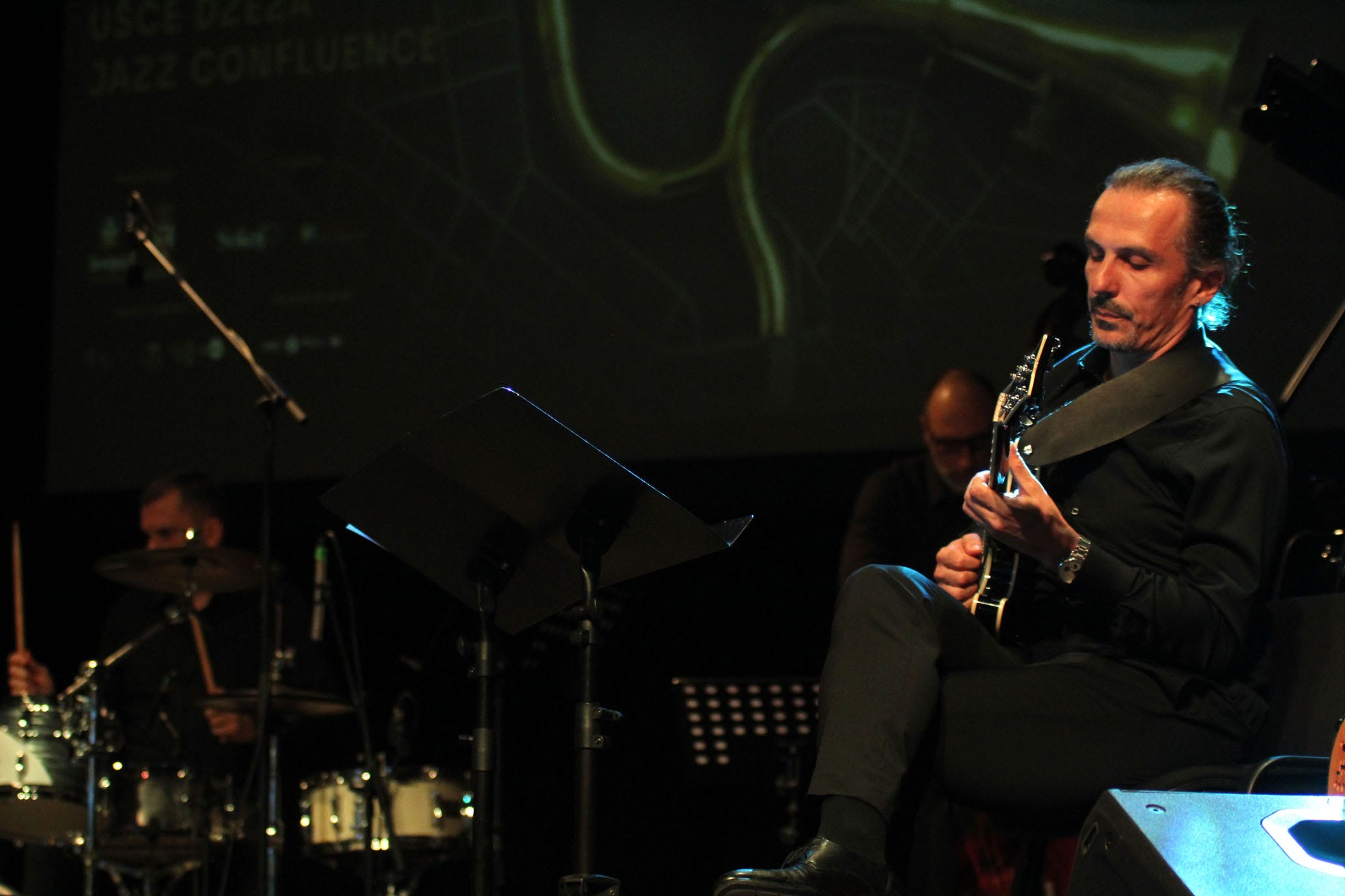
Vladimir Nikolov is known in our regional scene as one of the most important jazz composers and conductors in the context of medium-sized and large ensembles. Besides having a successful international career, he is also important to Serbia as a professor at the Jazz Department of the Faculty of Music. He is also one of the leaders of the Nikolov-Ivanović Undectet, alongside drummer Srđan Ivanović, who currently lives and works in France.
Beyond the music itself, what I find interesting about Vladimir Nikolov is the way he verbalizes his artistic ideas, whether in promotional texts or live on stage. When talking about his composition “Slink Into Epigony”, which is based on motifs from Lyle Mays’ music, he asks where influence ends and epigonism begins; where the boundary and meeting point lie between being inspired by someone’s work and appropriating it. Through his music, he elaborates on these ideas and intertwines his own music with Mays’ influences, thus approaching his own art in a certain meta-narrative context.
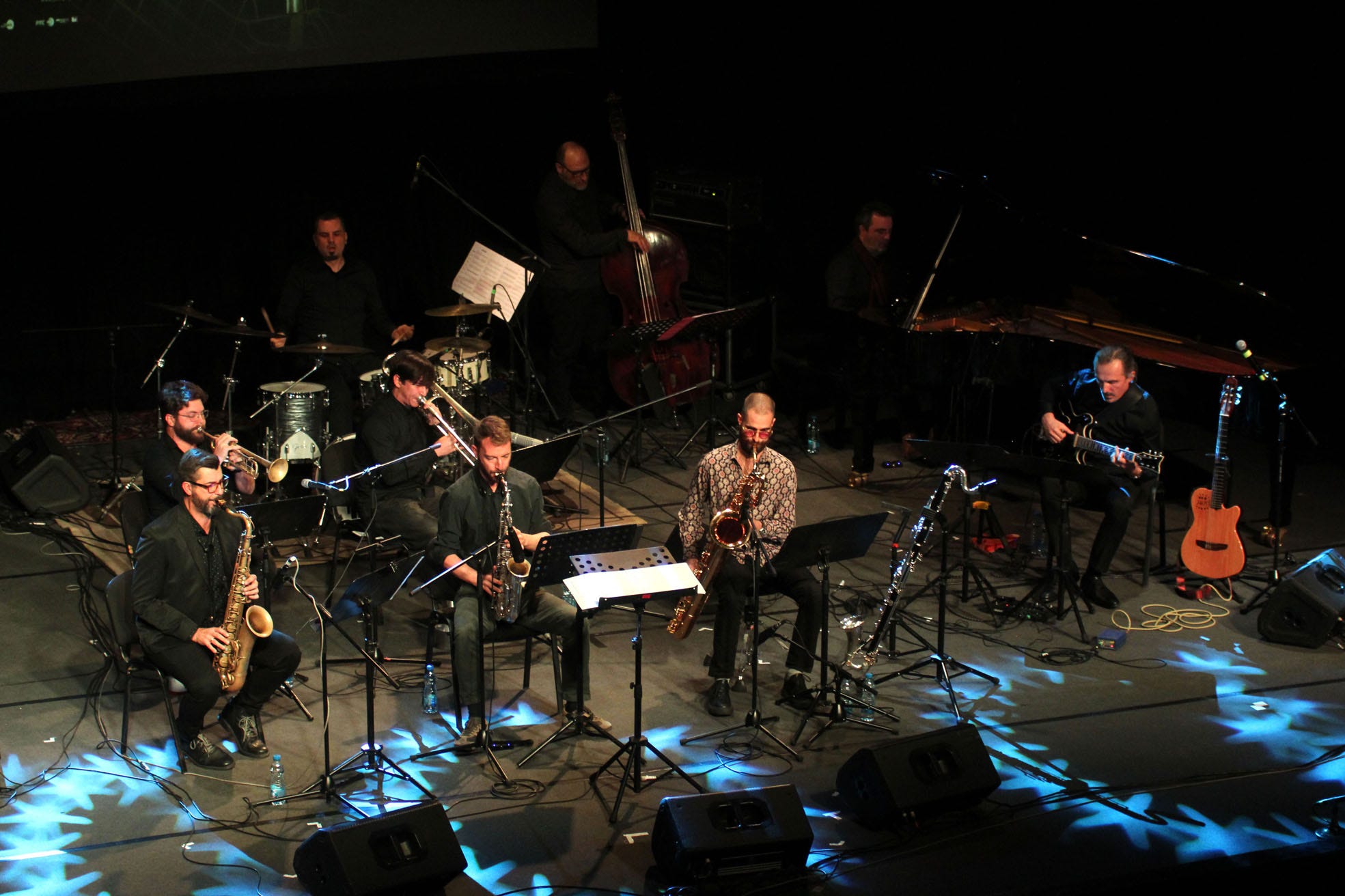
On several other occasions, he explained the ideas behind his compositions very eloquently and thoughtfully, and he struck me not only as a musician, but also as a kind of theatre director who sets the stage, assigns the roles and watches how they are performed. At other times, he seemed like an artist-curator of contemporary visual art, whose work we follow from both perspectives. Even the concert as a whole had a very meaningful and elaborately developed dramaturgy – moving from more traditional jazz forms towards increasingly complex and even freer ones, where we could also hear him as an excellent guitarist. In that sense, his performance was not only a successful presentation of musical ideas in the field of jazz orchestration, but also a complete presentation of the artistic vision of a true intellectual.
Jazz Shamans
It was back in 2004 when I first saw Rob Mazurek and Chicago Underground, then in a trio format. The event took place at the now-defunct Dis-Patch Festival, which was primarily dedicated to experimental electronic music, and the venue was the alternative Centre for Cultural Decontamination in Belgrade. Today, I barely remember that concert, and it probably came too early for me, when I still hadn’t properly understood or experienced Mazurek’s music.
Today, things are quite different, and in the meantime Mazurek has performed once more for the Belgrade audience with São Paulo Underground, leaving an extraordinary impression. And although the main hall of the Belgrade Youth Centre was too large and spread out for a duo performance with Chad Taylor, and attendance wasn’t at its maximum, those who came were probably the real fans – you could hear it in their strong reactions to the performance.
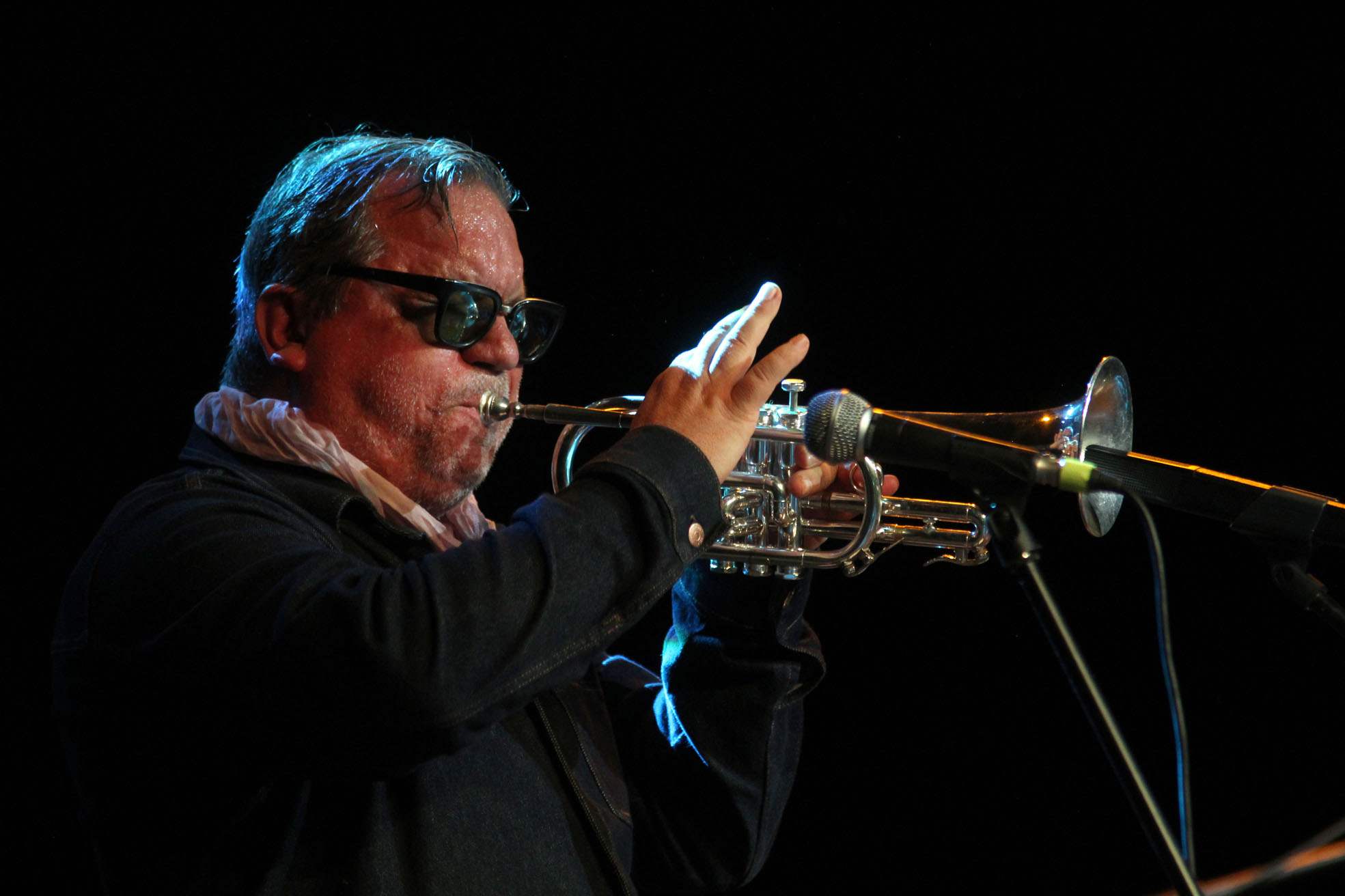
While listening to the Chicago Underground Duo, it occurred to me how their music had, in a way, anticipated today’s trends in contemporary jazz and the sound that a large number of new young bands are turning to. I’m thinking primarily of the use of synths in two ways – on the one hand as bass, and on the other as a melodic instrument with powerful intensity and sound, in a way that evokes the “psychedelic seventies” or neo-retro-futurism in the spirit of the eighties. If we add Mazurek’s approach to the trumpet, which can be heavily processed, and Taylor’s feel for “tribal” rhythms, this point becomes even stronger.
But that’s only one side of the coin, and the Chicago Underground Duo are far too distinctive a band to be part of any jazz trend or fashion themselves; after all, their melodic pieces are interrupted by abstractions, and rhythmic phrases are broken up by free improvisations. Or Mazurek would approach the music as a kind of shamanic ritual, far removed from any “dance” potential of Chicago Underground’s music.
Carnatic Brooklyn
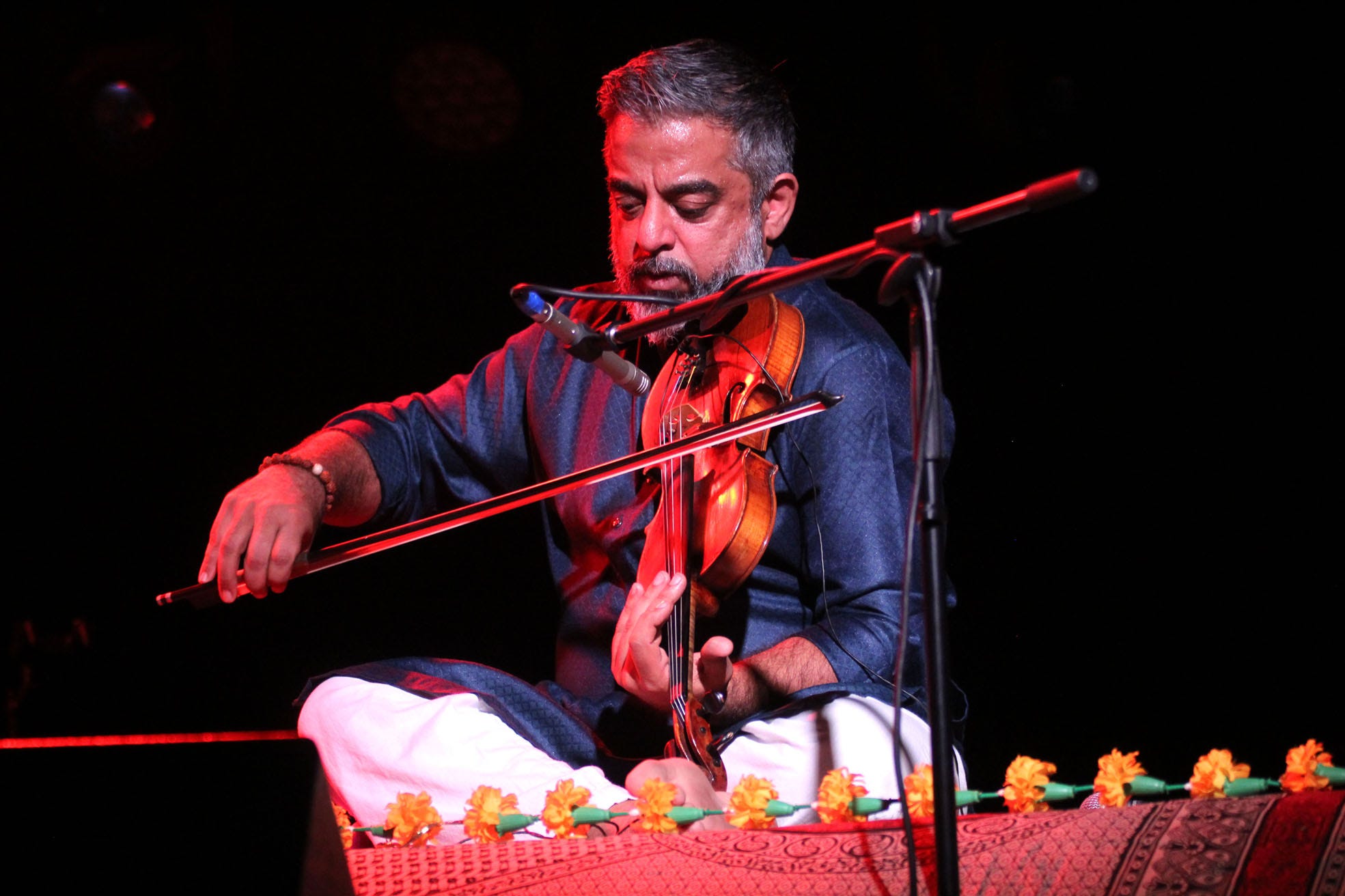
I remember when I first heard Rudresh Mahanthappa many years ago, and how I came to love his version of Indian musical influences in contemporary American jazz. I felt something similar listening to the Arun Ramamurthy Trio at BJF. They base their expression on Carnatic music, which has long had its place on the jazz scene, and in Ramamurthy’s case, what is particularly distinctive is his violin playing with lots of glissandos (”sliding” between notes).
One of his compositions is called “Bangalore to Brooklyn”, and it is precisely in this geographical reference that we can see the very organic blend of the American and the Indian in his music, which doesn’t resort to trivialities or instrumental tricks, but instead emphasizes the layers of personal experience in which two civilizations meet.
Jazz for Punks
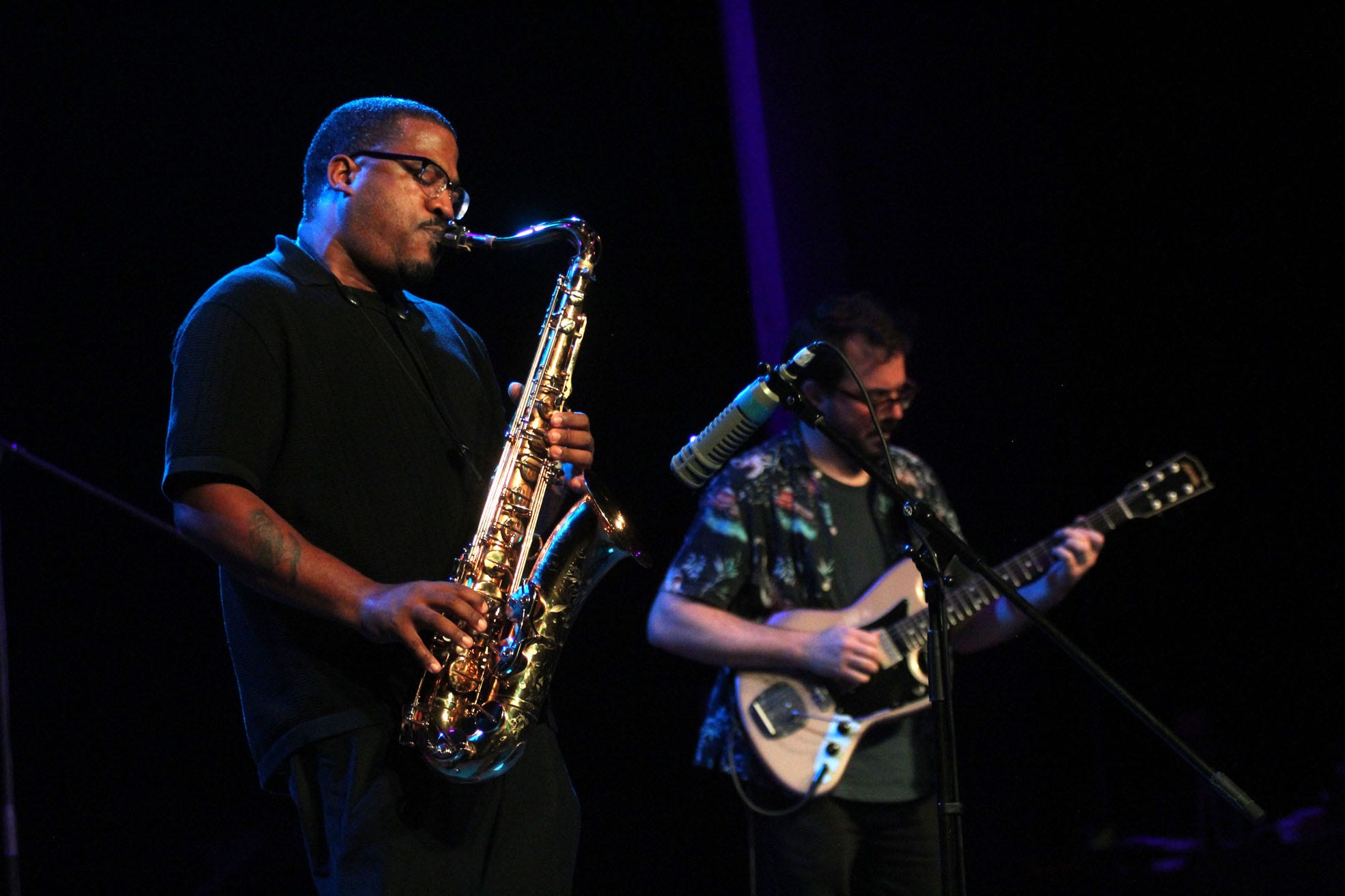
The Messthetics and James Brandon Lewis was one of those concerts where the place was packed and you could feel a positive tension in the air. There were also plenty of people in the audience who approached the concert from a Fugazi angle, bringing a rock vibe into a seated concert hall.
Tension arose on stage as well, right from the beginning of the concert, as JBL was quite unhappy with the sound from his monitors and got into lengthy discussions with the sound engineer between numbers a few times.
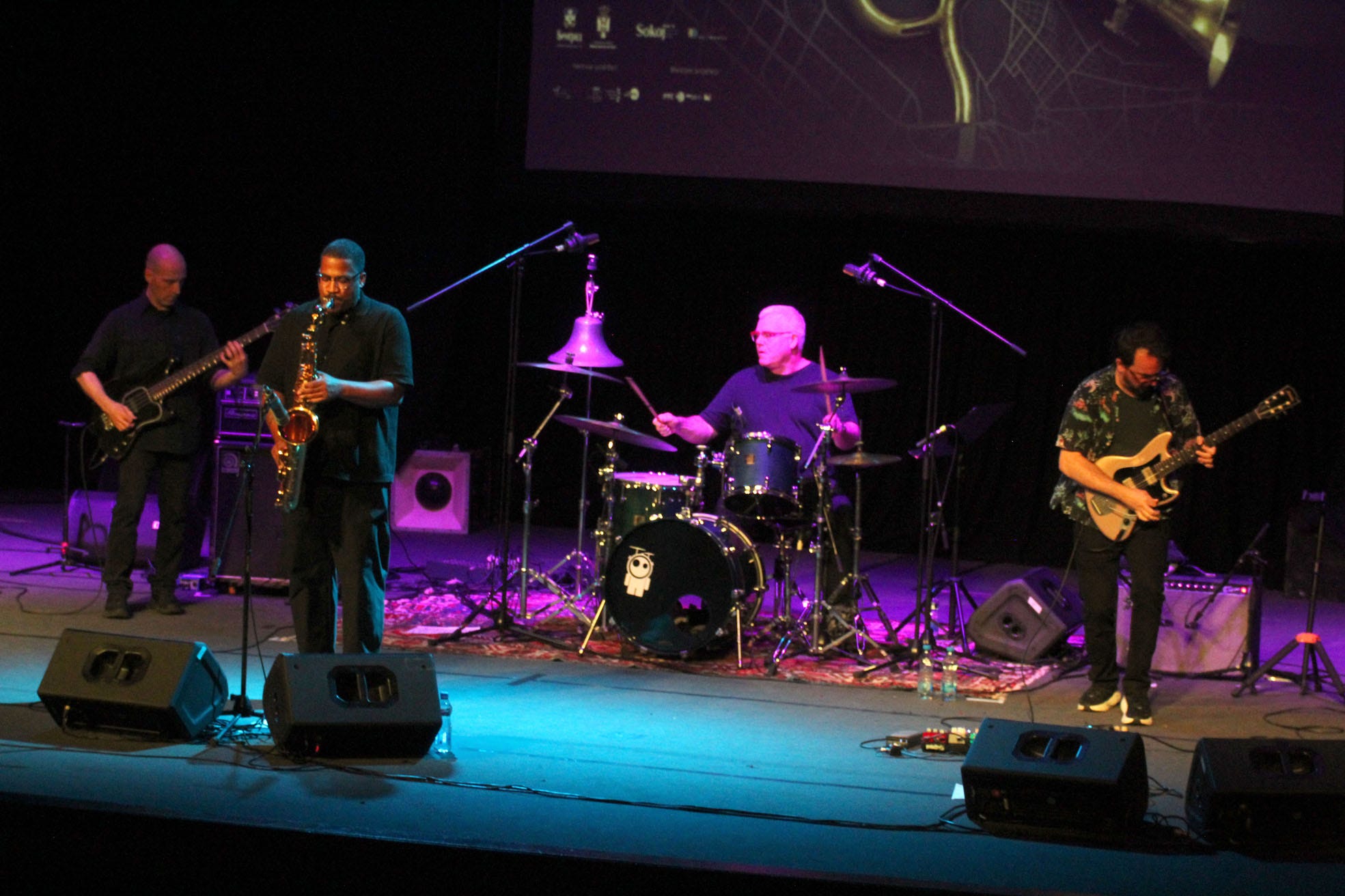
I really love James Brandon Lewis, and I honestly felt sorry that the concert wasn’t going the way he wanted it to. There were some louder passages where the bass and drums would “swallow” the saxophone in the overall sound, and that certainly could have been clearer, but it wasn’t so bad from where I was sitting (on the left side of the balcony).
For my part, a mitigating circumstance was the simple fact that I approached the concert as a huge fan who knows all the songs and has listened to both albums with The Messthetics enough times to be able to sing every solo. So even the first bars of my favourite tunes would bring the joy and excitement of recognition, or the anticipation of certain parts of the songs that I experience as climaxes. In that experience, the finer details of the sound faded into the background.
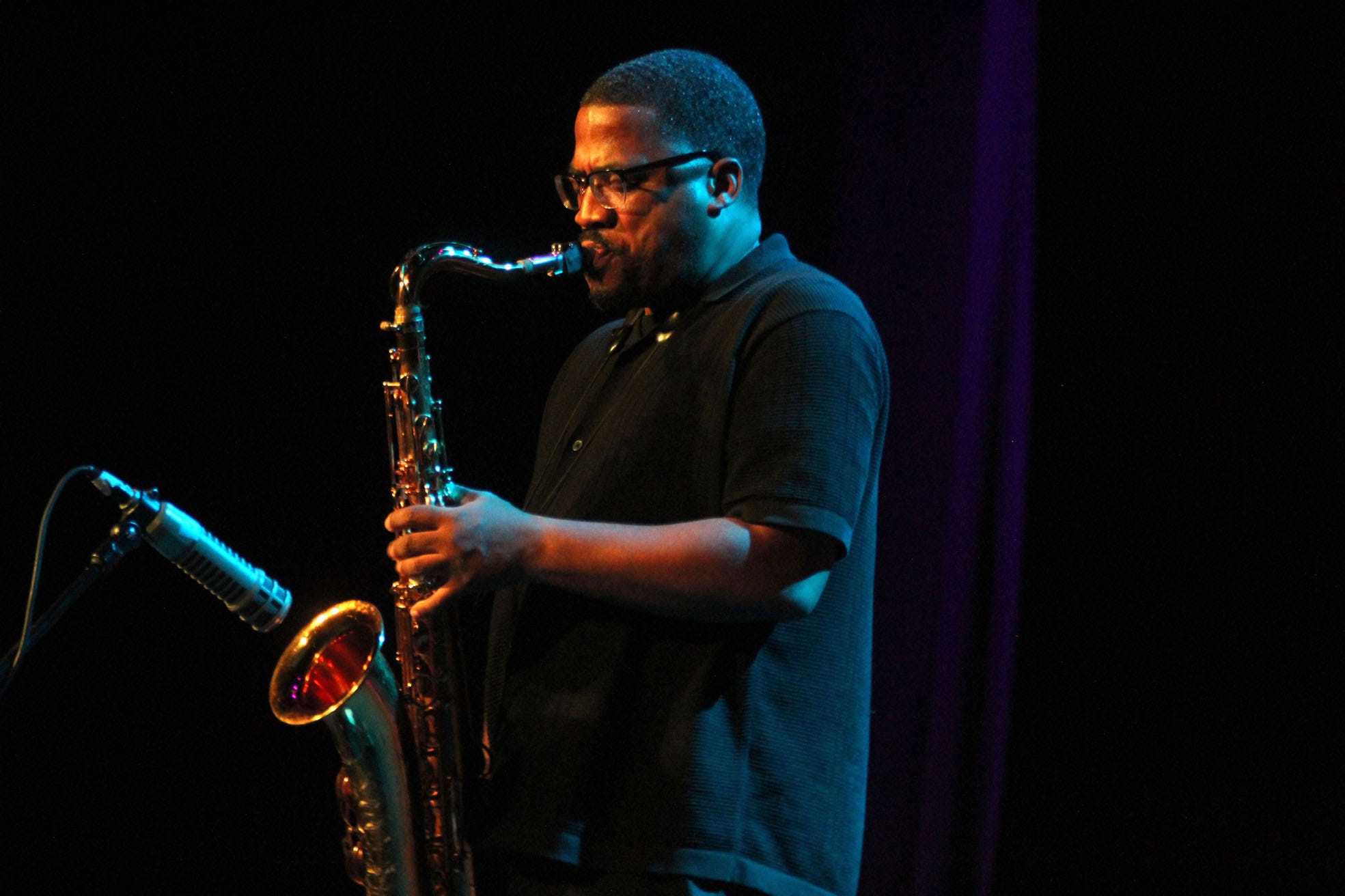
Once again, I was fascinated by Lewis’ talent for playing fantastic solos based on a sense of rhythm or a particular repetitive phrase, rather than the complex spiritual flights we can hear in some of his other lineups. His playing vocabulary is, on the one hand, very recognizable, but at the same time very adaptable and meaningful in different contexts, and that’s always very exciting when I listen to JBL. He can be a free jazzer, a punk and a hip-hopper, while at the same time being, above all, himself.